


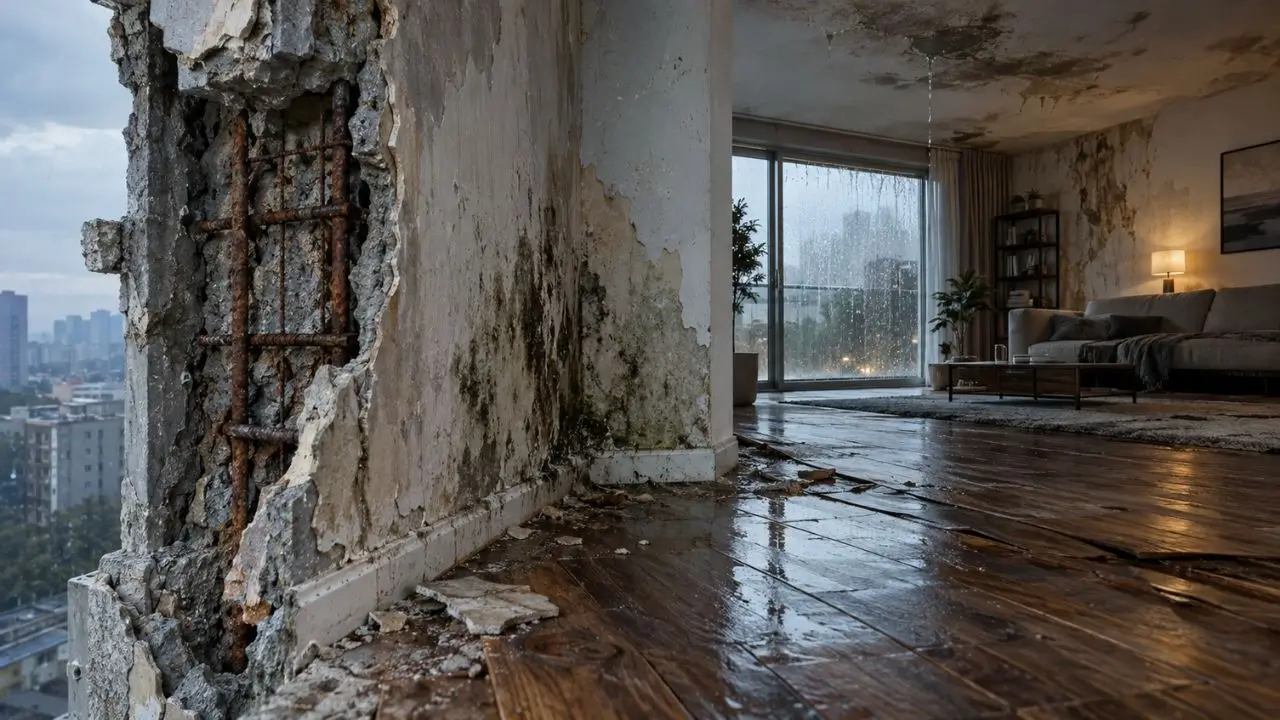
Buying a house starts with a spark of excitement, turning into reality through months of mortgage payments. You think you've created your own sanctuary. Yet, an enemy silently seeping from the very foundation of that sanctuary might be lying in wait to rot all your dreams. Water. Yes, that innocent liquid that gives life and starts wars. Water is the most insidious killer of buildings. Finding a tiny path to leak inside from the foundation, the roof, or cracks in the walls is all it takes. When that critical step, skipped during construction to cut costs, is ignored, you can't even imagine what will happen to you.
I witnessed this last winter in a house a friend of mine had just bought. They mistook a slight yellowing on the wall for a simple paint defect. Six months later, half the house smelled of mold, and the wooden parquet floors were peeling off. There was only one reason for this process, eating the house away from the inside out like an invisible disease: Lack of insulation. Leave the structure you live in defenseless against the ruthless rules of nature, and you will pay the price not just with your wallet, but with your health and safety. Let's take a closer look at the apocalypse breaking out behind those flashy ceramics and imported wallpapers.
1. Reinforcement Corrosion (Rusting of Rebar)
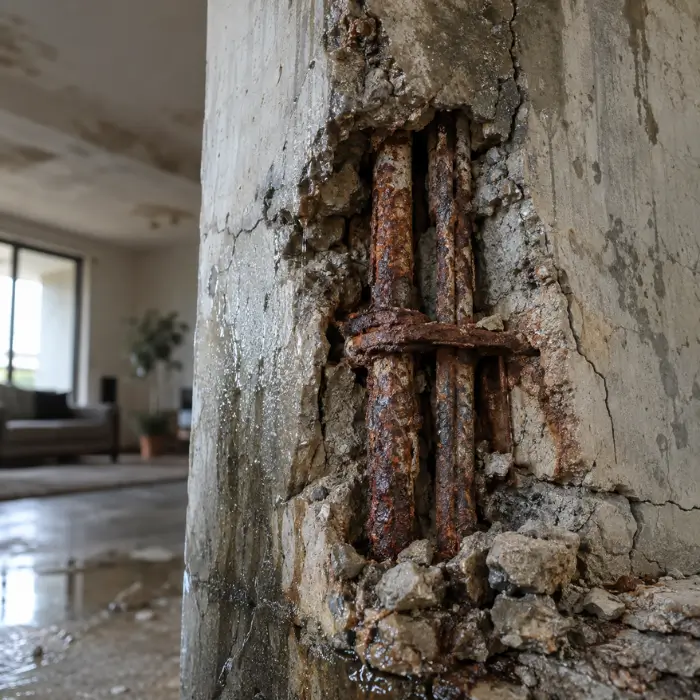
The inside of concrete isn't a sealed box. Water filters through that porous structure, silently advances, and reaches the steel reinforcement—the spine of the building. The moment it hits, a ticking time bomb starts. Those iron bars you thought were strong and unbending suffer a chemical betrayal upon contact with water. They rust. Rusting iron expands in volume, violently pushing the concrete outward, much like yeasted dough swelling inside a narrow bowl.
Cracks begin. At first, they are capillary, escaping your eye. They grow progressively, and concrete layers start peeling off like scabs. The cross-section of the iron thins out. Its load-bearing capacity melts away. That solid structure you sit on and trust is now sick to its core. Iron is the skeleton of the building. A building surrendered to corrosion has as much chance of standing as a living creature with a melting skeleton. On the surface, everything seems fine. Yet, the insides of the columns are vomiting rust. Your home turns into a structure preparing its own demise. The massive load-bearing capacities in engineering calculations succumb to a wet pile of rust. It gets noticed far too late.
The way to prevent this whole disaster scenario is to coat the shell of the building with the right armor. Dryfix waterproofing materials decisively stop water's destructive infiltration attempts before they even reach your building. To keep the skeleton intact and secure the future of your loved ones, you should never leave quality to chance when choosing waterproofing materials.
2. Plunging Earthquake Resistance

When the earth's crust grumbles, the only thing keeping your building standing is its flexibility and resistance. A building without waterproofing doesn't have such a luxury. A structure whose columns have rotted from the inside out due to water exposure throws in the towel instantly against the merciless lateral forces of a tremor. It shatters into pieces. Tens of thousands of dollars spent on earthquake retrofitting projects go down the drain just because of a leak from the foundation. It sounds unbelievable, but it's the truth. Water finishes off the concrete, and the earthquake delivers the final blow to that exhausted concrete.
The table below strikingly shows the loss of resistance over time in a load-bearing column exposed to water leakage for years:
| Exposure Period | Condition of Reinforcement (Rebar) | Loss of Building Load-Bearing Capacity |
| Initial Leak | Slight surface oxidation begins | 0% |
| 2-5 Years | Rusting accelerates, volume expands | 10% - 15% |
| 5-10 Years | Capillary cracks grow, rust leaks out | 30% - 45% |
| 10+ Years | Rebar cross-section loss reaches critical levels | 60% - 70% |
Even looking at the table is terrifying. Just ten rainy seasons are enough to demolish a building's earthquake endurance. Even if it was designed on paper to withstand storms and earthquakes, those water-rotted columns in the field are doomed to collapse like a house of cards the moment they feel the ground shake.
3. The Rotting of Concrete (Carbonation)
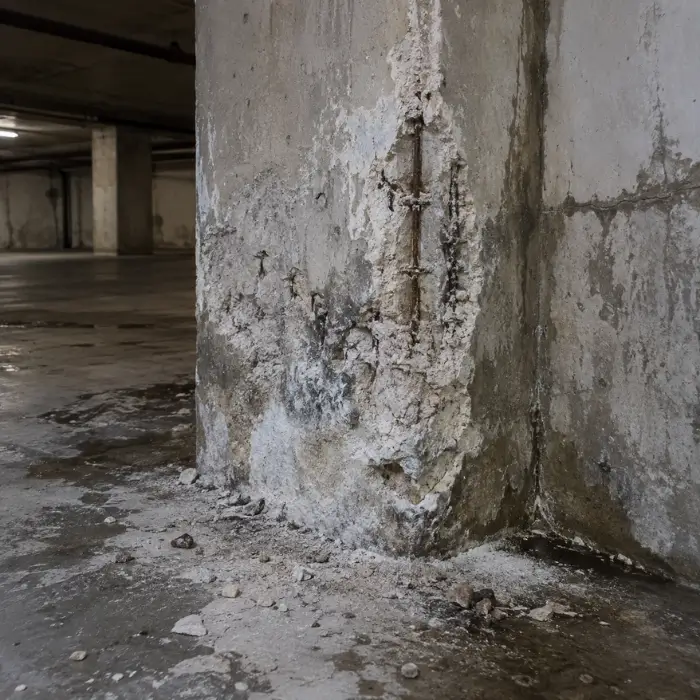
Concrete is inherently a highly alkaline material. This high pH level creates a natural shield that protects the steel inside from corrosion. When carbon dioxide in the air combines with water, it forms carbonic acid. The acid seeps into the concrete. That acidic water slowly neutralizes the alkaline structure of the concrete. The shield is broken.
This process is called carbonation. Not only does it leave the iron defenseless, but it also destroys the concrete's own binding properties. Hard, dense concrete turns into a crumbling, chalky dust when touched. I'm serious, it gets to a consistency you can scrape off with your fingernail. The perception of solidity is now a massive illusion. The rot is invisible to the eye; it happens in the heart of the concrete, in its deepest parts.
If you go down to the basement one morning and see whitish, salty dust accumulations at the base of the columns, know that the structure is bleeding. Carbonation can never progress in a waterless environment. As long as you don't keep that moisture away from the concrete, the building doesn't age; it gets sick. It rots cell by cell.
4. Mold and Fungus Growth
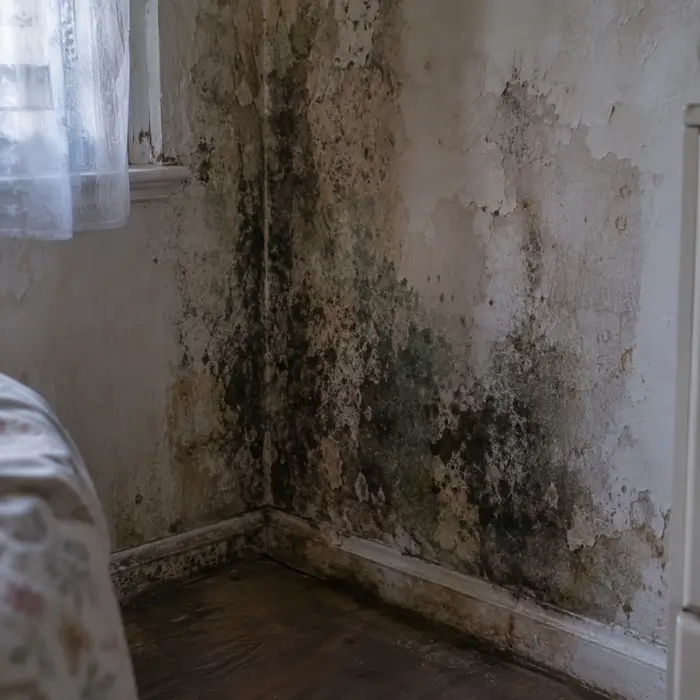
Guests who silently move into your home, pay no rent, yet drain your health. They scatter their spores into the air. With every breath, you pull those microscopic creatures into your lungs. You might think those black, green, fuzzy spots appearing in the corners of the walls are just an ugly sight. Never. They are actually poisonous fields growing inside your house. These spots are the most ruthless enemies of babies, the elderly, and allergic constitutions.
I can list the devastation caused by this biological attack, which we frequently encounter in uninsulated houses, as follows:
- Triggering of unrelenting coughing fits and chronic asthma attacks.
- Unexplained redness, itching, and stubborn eczema-like rashes appearing on the skin.
- A constant feeling of fatigue, inability to wake up in the mornings, and a severe drop in sleep quality.
- Permanent damage to the respiratory tract that is very difficult to reverse.
Wiping won't make it go away. You pour bleach, you wipe it with a cloth, and a week later they return stronger from the exact same spot. The source is inside. Unless that insidious moisture leaking from the wall is cut off, your home will continue to remain a breeding farm for these organisms.
5. Chronic Dampness
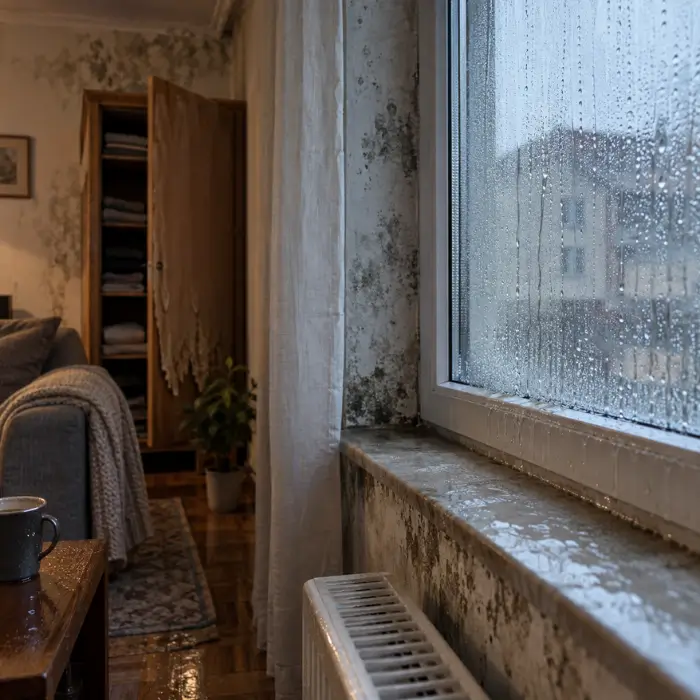
Wetness suspended in the air. That cold, heavy, uncomfortable feeling sticking to your skin. The moisture trapped inside a building without waterproofing wraps the house like a greenhouse. No matter how high you turn up the radiators in winter, that house won't warm up. The boiler works at maximum capacity, the bills burn a hole in your pocket, but you still sit around in thick cardigans. Because what you are heating is not the air, but the water inside the walls.
Your belongings change shape. Wooden cabinet doors swell and won't close properly. Parquet floors creak as you walk, overlapping each other. The fragile motherboards of electronic devices oxidize from that invisible vapor and suddenly break down for no reason. The soul of the house is practically drained. You live together with an invisible mass of water between four walls. When you take your clothes out of the closet, you feel that slightly damp, cold touch on your skin.
An endless sweating begins on the windows. Drops of water trickle down the sills. A constant rush of wiping windows and wringing out cloths. A person shouldn't get this exhausted in their own home. While water is something that should stay outside, it has enthroned itself right in the middle of your living room. Fighting it wears you out. Every intervention made without cutting off the source is like trying to empty the sea with a teacup.
6. Peeling Paint and Plaster
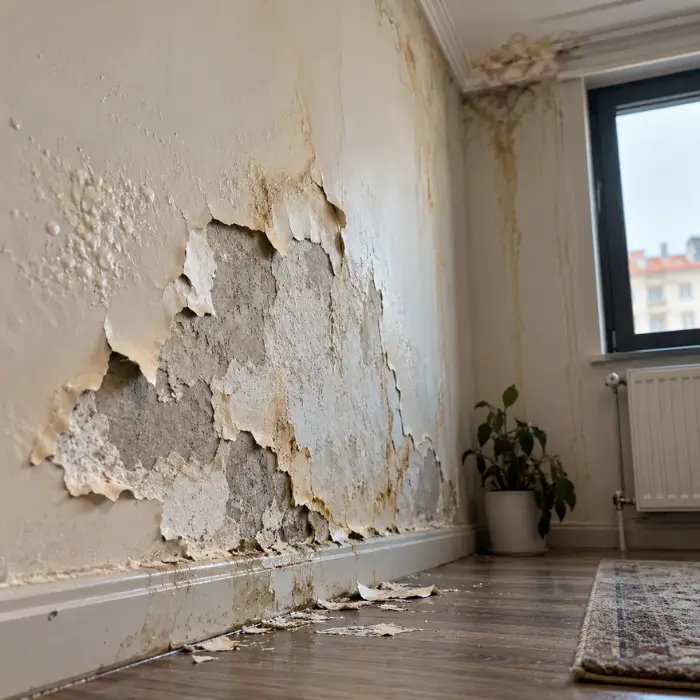
You chose it carefully. You found that perfect shade of beige you searched for days on the color charts. The painters came, painted it, and the house became spotless. Three months. Maybe that glory lasts five months. Then a tiny blister appears on the wall. It pops. A white, disgusting salt efflorescence emerges from underneath.
Water dissolves the minerals inside the building elements and carries them to the surface. It hurls the paint outward from the inside. Those smooth, gleaming surfaces turn into scabbed wounds.
- The area right above the baseboards swells; touch it, and it crinkles, falling to the floor like snow.
- Yellowish, brown, disgusting water rings form on the ceilings.
- Expensive imported wallpapers separate at the seams, curling and drooping down.
- Even the highest quality plasters are doomed to soften like dough and fall off when they soak up the wetness.
You feel ashamed to invite guests over. A constant state of repair, a constant traffic of handymen occurs. It gets scraped, spackled, and repainted. Until the next heavy rain. Unless you cut off that relentless flow coming from the outside, your house will remain little more than a construction site. Aesthetics collapse. Your living space turns into a visual torment.
7. Permanent Foul Odor
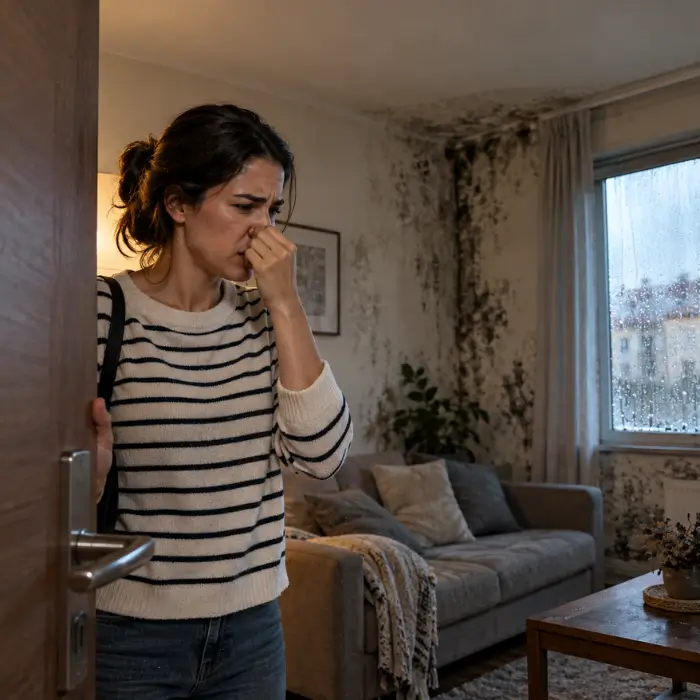
Even if they blindfolded you, you'd know a house lacks waterproofing just from the first breath you take walking through the door. That heavy, earthy, rotting smell that hits your face the moment you open the door. It clings to your throat. You leave the windows open for days, create cross-breezes, the smell goes out to the street, but the moment the wind stops, it returns with all its weight. Because the smell isn't on the furniture; it's deep inside the walls and stones.
Room sprays, expensive aromatherapy candles, chemical incenses... They all remain helpless. No cosmetic perfume can mask the organic stench of rotting concrete and breeding fungi. After a while, your nose gets used to that disaster; you don't feel it in your own home. But the moment a friend from the outside steps in, they swallow that heavy air. That smell permeates the sweaters you wear, your hair, your bed. It even sneaks in and sabotages your social life.
A home should be a place where a person takes a fresh breath and rejuvenates when they close the door. Four walls smelling of dampness, however, are no different from a dungeon. The hours you spend cleaning and the detergents you pour become completely meaningless because of that smell. No matter how spotless your house is, you will always feel a sense of lack, a sense of filth because of that dirty scent etched into your mind. Without getting to the physical root of the problem, you cannot escape this invisible torture.