


From industrial facilities and parking lots to warehouses and decorative home floors, epoxy floor coatings are renowned for their durability and aesthetic appeal. However, for this high-performance coating to integrate seamlessly with the substrate and achieve the desired strength, it must go through a specific curing process. No matter how flawless the application stage is, failing to allow sufficient time for drying and hardening phases can lead to permanent issues such as bubbling, peeling, or premature deformation on the floor.
In this article, we will thoroughly examine the curing processes, which represent the most critical stage of your epoxy floor coating projects. By learning the phases ranging from surface drying to full chemical resistance, along with environmental factors and traffic opening times, you can complete your application smoothly. Proper timing and technical knowledge stand out as the most vital factors that directly extend the lifespan of epoxy floors.
How Long Does the Epoxy Floor Coating Curing Process Take?
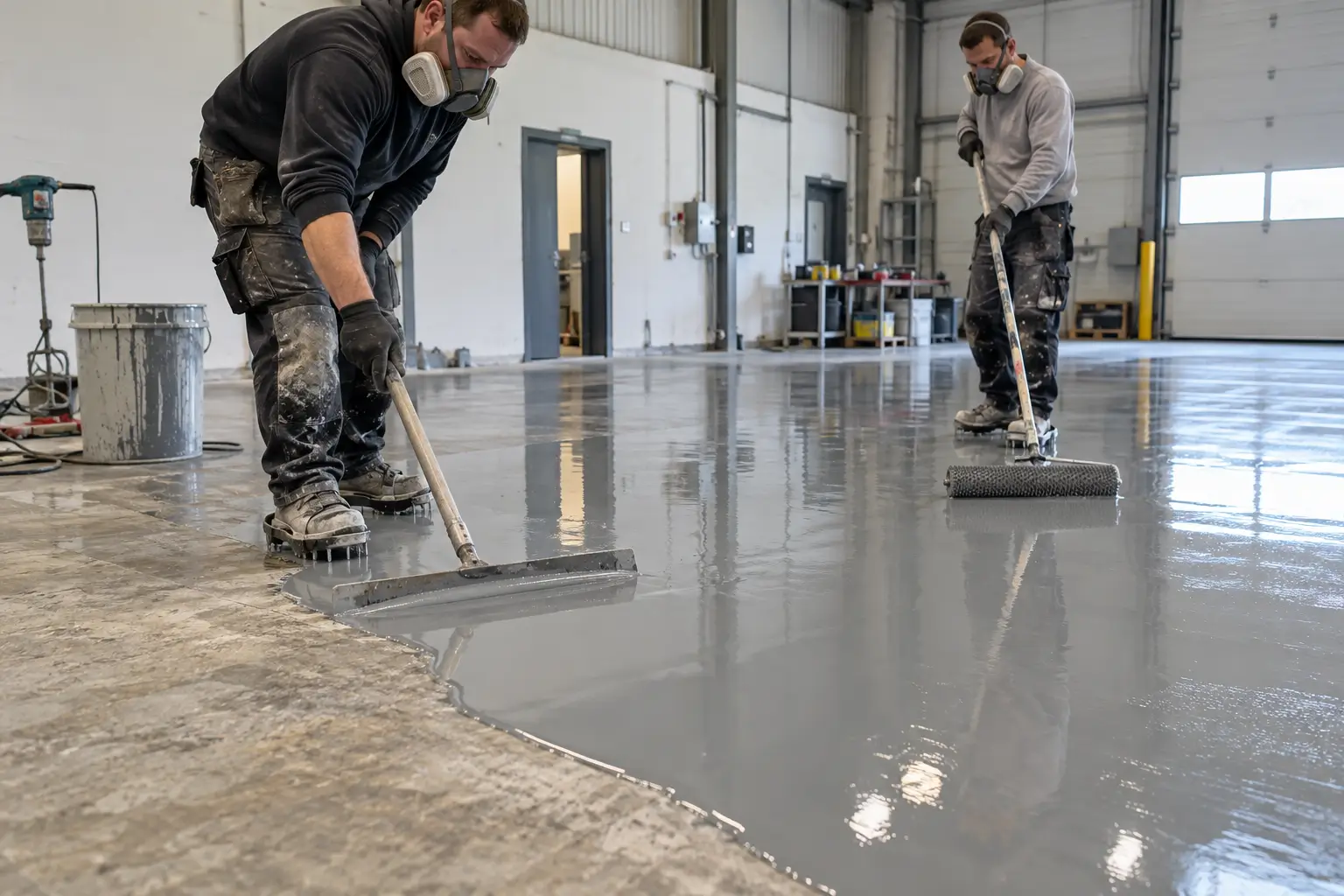
The curing time of epoxy floor coatings is not limited to a single timeframe; this process fundamentally encompasses both the physical solidification and chemical hardening stages of the material. In two-component epoxy systems applied under standard conditions, initial touch dryness occurs within certain hours as the resin and hardener react. However, this does not mean the material is entirely ready for use. The size of the applied area, layer thickness, and the chemical formulation of the epoxy resin used are among the primary factors directly altering this duration.
| Curing Stage | Timeframe | Description |
| Surface Drying | 12 - 24 Hours | The material reaching a consistency where it leaves no fingerprints |
| Foot Traffic | 24 - 48 Hours | Permitting light foot traffic and risk-free walking |
| Full Chemical Hardening | 7 Days | The floor achieving its maximum mechanical and chemical resistance |
The ventilation quality of the application site also directly influences the drying speed. In poorly ventilated and humid environments, the solvent or volatile components of the epoxy cannot escape, resulting in slowed chemical reactions and extended curing times. In professional applications, these periods must be waited out patiently, and the floor must be strictly protected against early loads.
What Is the Difference Between "Surface Drying" and "Chemical Hardening" in Epoxy Curing?
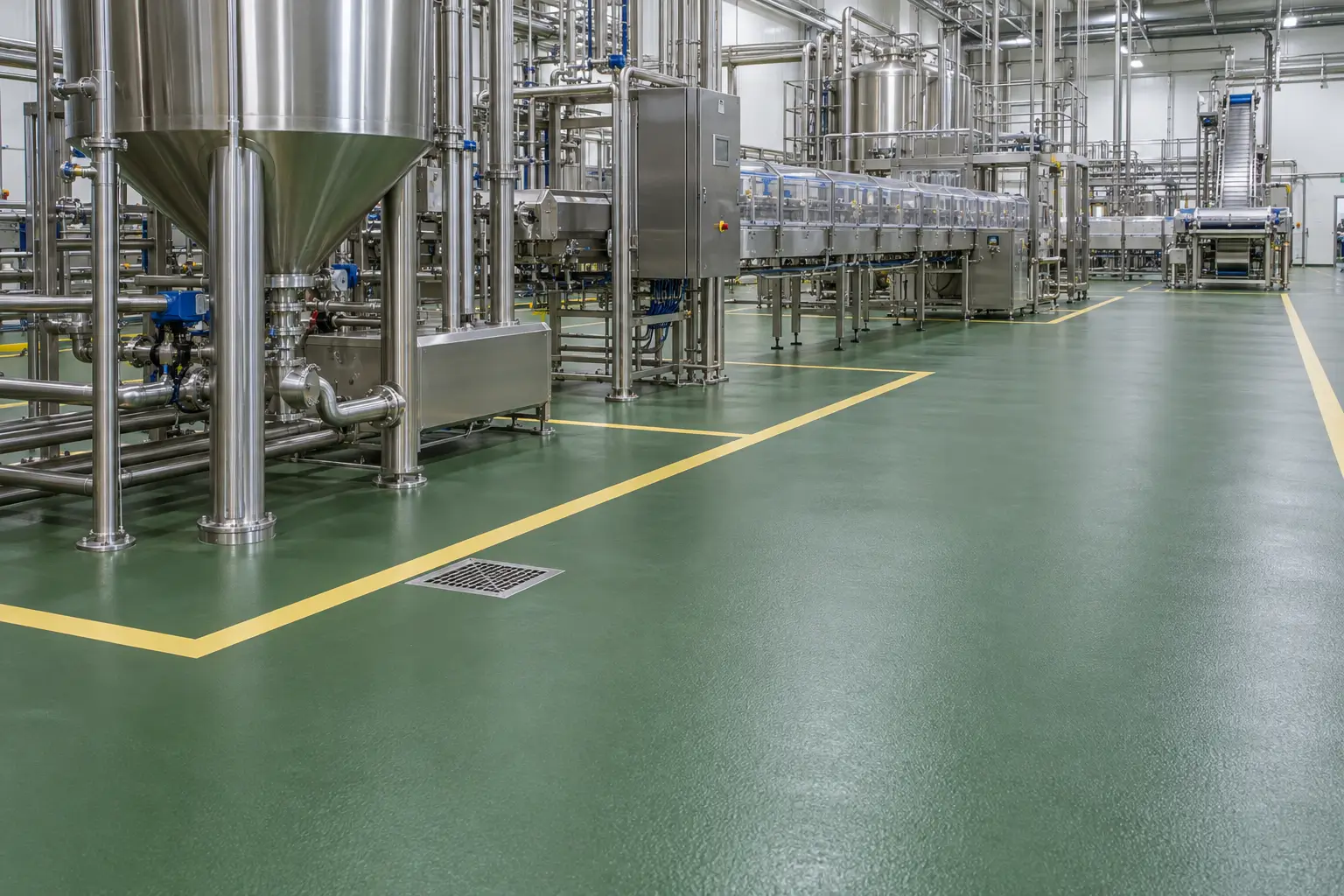
One of the most frequent mistakes made in epoxy floor coating applications is interpreting surface drying as the material being fully cured. Surface drying is the initial phase where the epoxy mixture transitions from a liquid to a solid state, leaves no marks when walked upon, and feels dry from the outside. At this stage, the material is touchable, but the molecular bonds have not yet reached their maximum resistance.
Chemical hardening, on the other hand, is the process by which the resin and hardener continue their internal polymerization reaction following solidification. Even if the surface appears dry, chemical bonds continue to strengthen in the lower layers and deep within the material. Placing heavy loads on the floor or spilling chemical substances before this process is completed will damage the coating's structure.
To ensure epoxy performs to its full potential, the distinction between these two concepts must be clearly understood:
- Surface Drying: The loss of the material's liquid form to solidify and gain initial touch resistance.
- Chemical Hardening: The complete locking of molecular chains to maximize floor strength.
- Critical Threshold: Even after the surface dries, the chemical hardening process can continue for days, meaning haste must be avoided.
What Should Be the Waiting Time Between Coats in Multi-Layer Applications?
Epoxy floor coating systems generally consist of multiple layers, such as a primer, intermediate coat (or self-leveling/orange peel coat), and a topcoat varnish. To ensure each layer adheres flawlessly onto the preceding one, the waiting times between coats must be strictly followed. If the subsequent coat is applied too early, the bottom layer will not have finished its gas release, causing bubbles and surface imperfections.
On the other hand, if the inter-coat waiting time is exceeded and the surface hardens completely into a glassy structure, the newly applied layer will fail to bond with the substrate. In this case, additional laborious procedures such as re-sanding or re-priming the surface may become necessary. Ideal waiting times between coats vary depending on the ambient temperature values.
While managing the inter-coat process during application, the following rules must be observed:
- Between Primer and Intermediate Coat: After applying the primer coat, the solvent is expected to evaporate and leave a slightly tacky texture, which typically takes between 12 to 24 hours.
- Inter-Coat Sanding Limit: If the waiting time exceeds 48 hours, the surface must be mechanically roughened to prevent adhesion loss.
- Topcoat Application: The topcoat varnish should not be applied before the intermediate coat is fully cured; otherwise, color variations and matting issues may arise.
How Do Temperature and Humidity Levels Affect Epoxy Curing Time?
The chemical structure of epoxy coatings relies on an exothermic reaction between two components, and this reaction is highly sensitive to environmental temperature values. As ambient temperature drops, the chemical reaction slows down, which can double or even triple the material's curing time. In very cold environments, epoxy may fail to cure altogether and remain soft.
Excessive heat, on the other hand, accelerates the reaction, shortening the material's pot life and causing premature hardening during application. Humidity also plays a critical role in this process; high relative humidity leads to the formation of a sticky, matte film layer on the epoxy surface known as "amine blushing."
To ensure proper curing conditions, the following factors must be monitored:
- Ideal Application Temperature: Ambient and floor temperatures ranging between 15 and 25 degrees provide the healthiest curing.
- Relative Humidity Limit: An ambient humidity level exceeding 80% disrupts the chemical structure of the epoxy, causing it to lose its gloss.
- Sudden Temperature Fluctuations: Sudden temperature shifts in the room during the curing phase trigger the formation of cracks or stress on the surface.
When Can You Walk on Epoxy Coating? (Opening to Foot Traffic)
Following the completion of an epoxy floor application, one of the primary questions project owners ask is when they can walk on the floor. The duration for opening to foot traffic varies depending on the quality of the material used and environmental conditions. Generally, light foot traffic is permitted within 24 hours after application completion in standard epoxy systems.
However, extreme caution must be exercised while walking on the floor during this initial phase. Hard-soled shoes, work boots, or stiletto heels can leave permanent marks on the early-stage epoxy surface. Therefore, soft-soled shoes or protective booties should be used during the first few days of foot traffic.
The following points must be considered during the transition to foot traffic:
- First 24 Hours: The floor must be strictly closed to human traffic, and dust and foreign objects must be prevented from falling onto it.
- Between 24 - 48 Hours: Mandatory transit is permissible exclusively using clean and soft-soled shoes.
- After 48 Hours: The floor reaches adequate strength to comfortably handle normal foot traffic.
When Is Epoxy Ready for Vehicle and Heavy Load Traffic?
In areas such as industrial floors, parking garages, and logistics warehouses, the ultimate test for epoxy coating is vehicle and heavy load traffic. Even if the surface appears dry and walkable, heavy vehicles like forklifts, automobiles, or pallet jacks exert very high point loads on the floor. This pressure can cause irreversible crushing and lifting on an epoxy floor that has not completed its full chemical hardening.
For epoxy coating to reach the ultimate strength and chemical resistance capable of supporting industrial vehicles, a full 7-day wait is mandatory. During this period, heavy machinery must not be placed on the floor, and wheeled vehicle traffic must absolutely be kept out. On floors entered prematurely, wheel tracks and abrasion caused by friction become inevitable.
| Traffic Type | Waiting Time | Potential Risks (In Case of Premature Intervention) |
| Foot Traffic | 24 - 48 Hours | Footprints and staining on the surface |
| Light Loads | 3 - 5 Days | Minor object dents and scratches |
| Heavy Vehicle / Forklift | 7 Days | Permanent collapse, cracking, and peeling on the floor |