


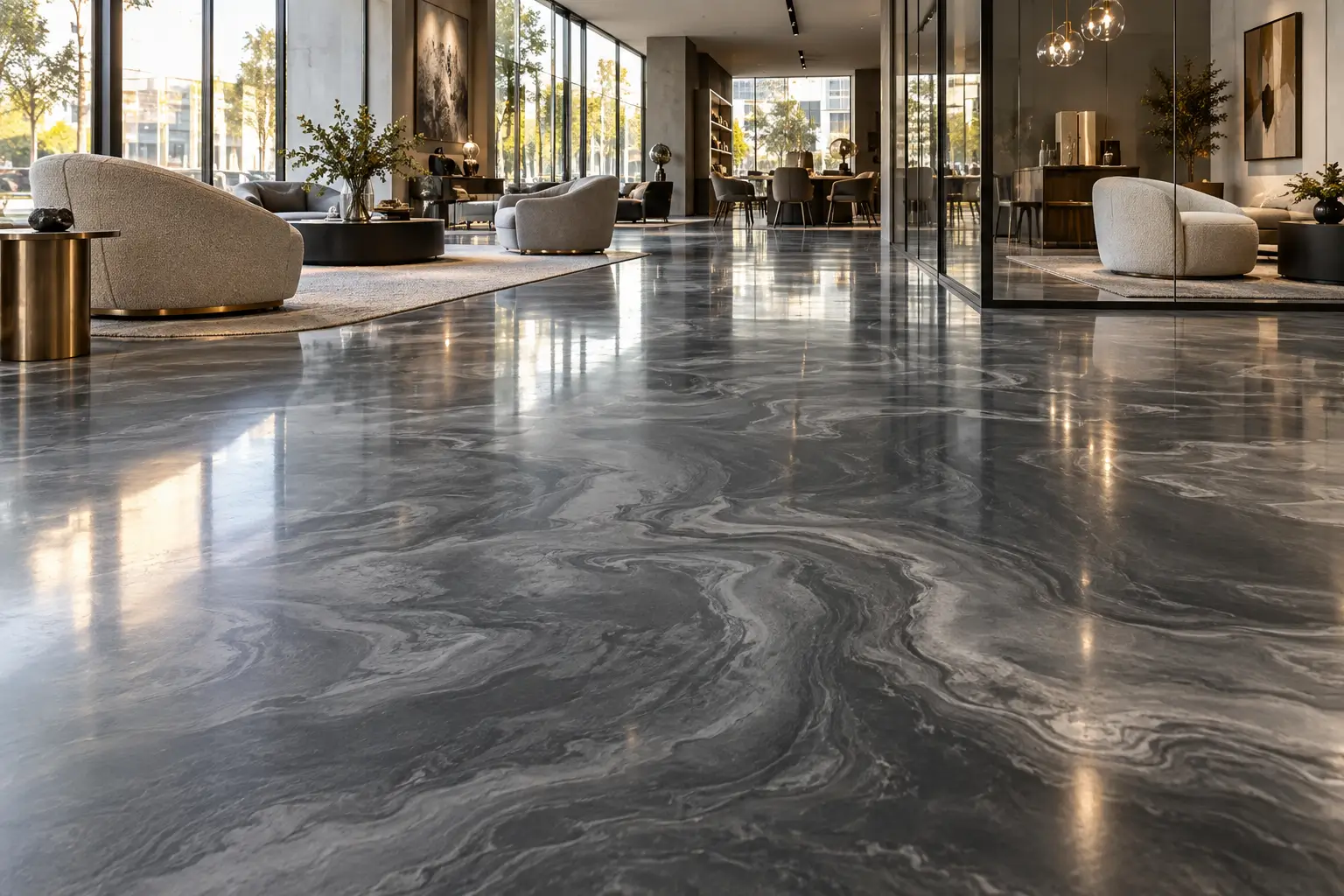
Epoxy flooring is a special resin system that stands out in the modern construction sector for its durability, aesthetic appearance, and hygienic structure. Featuring a two-component composition, this material forms a chemical bond with the surface it is applied to, essentially integrating seamlessly with the floor. Offering a wide range of uses from industrial facilities to residential homes, epoxy applications maintain their quality for many years when executed with correct techniques and professional equipment. In this guide, we will cover all the details you need to know, from the definition of epoxy flooring to its application steps.
Achieving a successful result in flooring projects relies just as much on meticulousness during the application process as it does on material quality. Every stage—from surface preparation and the primer coat to intermediate coats and the final topcoat—carries critical importance. In this article, you can examine in detail the areas where epoxy flooring is preferred, its advantages, preliminary preparations, and step-by-step application processes. Thus, you can make informed decisions for your own projects and achieve long-lasting, flawless floors.
What is Epoxy Flooring and Where is It Preferred?

Epoxy flooring is a high-performance floor coating system belonging to the thermoset resin group, which hardens through a chemical reaction between a resin and a hardener. It creates a seamless, smooth, and monolithic layer on the surface where it is applied. Thanks to its dust-free structure, chemical resistance, and high load-bearing capacity, it has secured an indispensable place in the architecture and construction world. Compared to traditional flooring materials, it offers superior mechanical strength and protects floors against impacts.
This special coating system has a wide range of applications across various sectors depending on the intended use. It is primarily preferred in hospitals, laboratories, and food production facilities where hygiene and sterilization are critical. It is also applied in factories, warehouses, and logistics centers with heavy machinery and forklift traffic to prevent damage to the flooring. Due to its stylish and glossy appearance, it is frequently chosen for offices, shopping malls, parking lots, and even modern home designs where aesthetics take center stage.
What Are the Advantages of Epoxy Flooring?
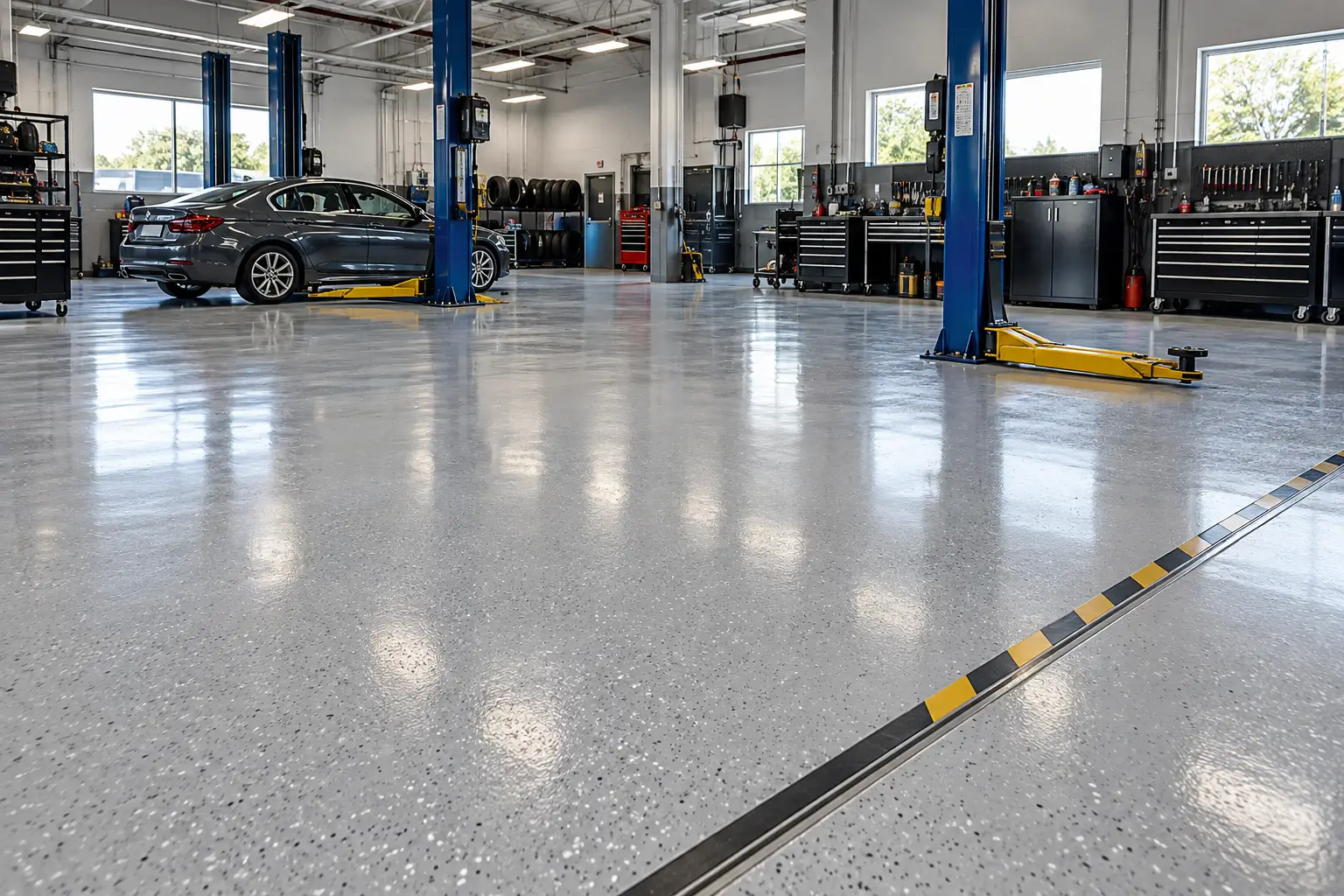
Epoxy flooring systems distinguish themselves from other flooring solutions through unique qualities offered to both industrial and individual users. These coatings extend the lifespan of spaces while reducing maintenance costs to a minimum.
| Advantage Category | Description and Features |
| Durability and Strength | Shows extraordinary resistance to heavy load traffic, forklift movements, and mechanical impacts. |
| Hygiene and Cleanliness | Being seamless and jointless, it harbors no bacteria, fungi, or dust and is easily cleaned. |
| Chemical Resistance | Provides high protection against acids, bases, oils, solvents, and similar chemical substances. |
| Water and Moisture Insulation | Completely cuts off the contact of concrete surfaces with water and moisture, preventing corrosion. |
| Aesthetics and Variety | Adds a modern and stylish look to spaces with glossy, matte, slip-resistant, or colored options. |
These superior qualities ensure that epoxy coating is not merely a surface protection layer, but also a long-term economic investment. A correctly applied epoxy floor can maintain its initial form for years without cracking, wearing down, or losing its color.
Things to Know Before Application and Site Survey
The success of an epoxy flooring application depends directly on preparatory work and a detailed site survey carried out beforehand. Projects started without analyzing the current condition of the surface will encounter problems like bubbling, peeling, or cracking later on. Therefore, the physical and chemical properties of the application area must be meticulously inspected.
First, the moisture rate of the floor concrete must be measured using professional devices. If the moisture content inside the concrete is high, the epoxy resin layer cannot adhere to the substrate and will eventually bubble up and lift. It is mandatory for the moisture level to be at safe ranges.
Second, the compressive strength and surface integrity of the floor are checked. Weak, crumbling, or dusting concrete surfaces cannot undergo epoxy application without being reinforced.
Key factors to consider during the survey stage include:
- Detection of existing oil, dirt, paint residue, and chemical stains on the floor
- Mapping of cracks, pits, and defective areas on the concrete surface
- Evaluation of temperature and ventilation conditions of the application area
- Checking whether there are water leakage or dampness problems in the floor
- Planning logistical details such as electricity, lighting, and workspace safety
What Materials and Equipment Are Needed for Epoxy Flooring?
Choosing the right materials and using proper equipment are vital to achieving professional-grade epoxy flooring. Applications carried out with incorrect tools lead to material waste and reduce floor quality.
Epoxy resin and hardener components must be mixed in correct proportions. Precision scales and drills with high-speed mixing attachments are used in this process. Homogeneous mixing of the material is mandatory for the curing process to occur flawlessly.
The basic materials and equipment needed during application include:
- Primer Material: Special resin that fills concrete pores and ensures epoxy adhesion to the floor.
- Epoxy Intermediate and Top Coat Materials: Resin systems chosen according to the application type (orange peel, self-leveling, or transparent).
- Surface Preparation Equipment: Concrete grinding machines, diamond stones, milling machines, and industrial vacuum cleaners.
- Application Tools: Steel trowel, notched trowel, spike roller (for removing air bubbles), polyester or epoxy roller brushes.
- Personal Protective Equipment: Masks, gloves, protective eyewear, and special spiked shoes (for walking on live epoxy).
How is Epoxy Flooring Applied?
Epoxy flooring application is a professional process consisting of consecutive stages, each requiring great care in itself. The flawless completion of this process ensures that the floor meets both aesthetic and durability expectations.
In the first stage, surface preparation is carried out. The concrete floor is roughened using grinding machines, and all loose layers are cleaned. Then, the floor is completely cleared of dust using industrial vacuums.
In the second stage, the primer coat application takes place. The prepared primer material is applied homogeneously to the floor. The primer creates a solid bridge for subsequent layers by filling all the pores of the concrete. Cracks and pits are repaired with epoxy paste during this stage.
In the third stage, the main coating or intermediate coat is applied. According to the preferred system (e.g., self-leveling system), epoxy mortar is poured onto the path using a trowel, and air bubbles inside are removed using a spike roller. Finally, protective varnish or topcoat paint is applied to complete the process, and the floor is left to cure.