


Water is undoubtedly the greatest enemy of structures. Threatening the structural integrity of a building from foundations to roofs, moisture, mold, dampness, and water leaks lead to serious costs and safety risks when proper waterproofing is not applied. When it comes to waterproofing, two dominant methods stand out in the market: liquid-applied waterproofing and membrane (sheet-based) waterproofing.
The core question that will help you make the right decision for your home or project is: Which of these two systems lasts longer?
In this comprehensive guide, we will answer this question by deeply examining the technical specifications, advantages, disadvantages, and lifespans of both methods.
1. What is Liquid-Applied Waterproofing?
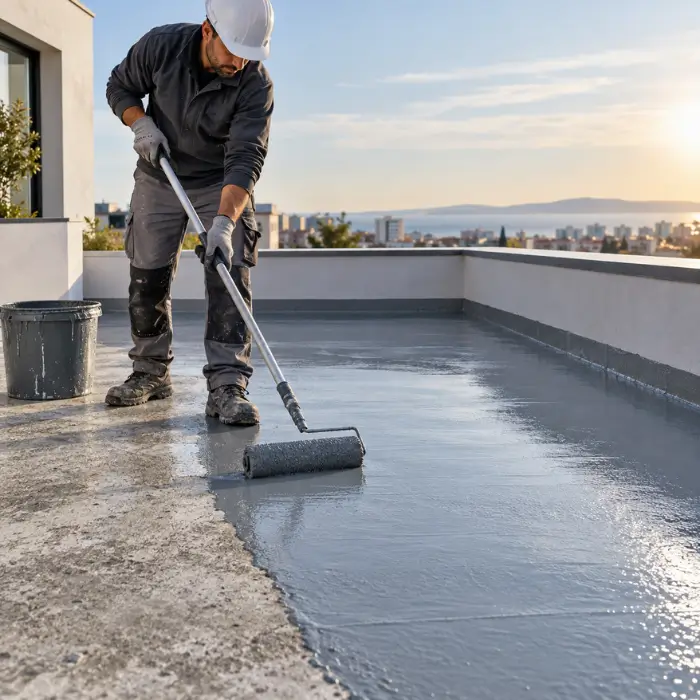
Liquid-applied waterproofing is based on applying liquid-form materials—usually acrylic, polyurethane, cement, or epoxy-based—onto a surface using a brush, roller, or spray method. Upon drying on the surface, it forms a seamless, elastic film layer.
Key Features and Advantages:
- Seamless Application: The absence of joints minimizes weak points where water can leak.
- Excellence in Detail Solutions: Provides perfect compatibility in areas with complex geometries, pipe penetrations, corners, and edges.
- Breathability: Some formulations allow the structure to breathe, preventing vapor pressure accumulation underneath.
- Easy Repair: In case of potential damage, the problematic area can be easily located and repaired by simply applying liquid material over it again.
Average Lifespan:
A high-quality polyurethane or acrylic liquid-applied waterproofing system offers an average lifespan of 10 to 20 years when applied with correct craftsmanship.
2. What is Membrane Waterproofing?
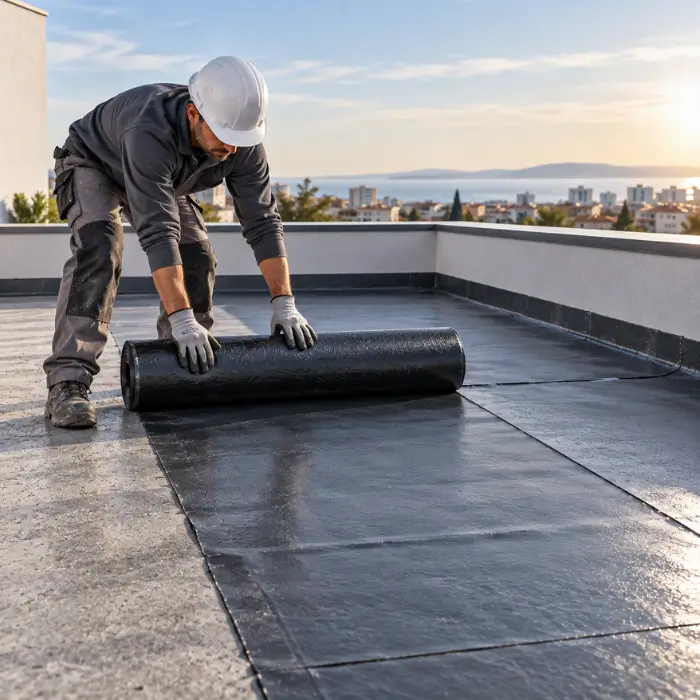
Membrane waterproofing is a traditional and powerful method carried out by laying factory-produced rolls—typically bitumen (asphalt) based or synthetic (PVC, TPO, EPDM) based sheets—onto the surface using heat or adhesives. Polymer-modified bitumens, in particular, are reinforced with glass fleece or polyester felt carriers.
Key Features and Advantages:
- High Strength: Thanks to its thick structure and reinforced carriers, it is highly resistant to mechanical impacts and pressure.
- Speed on Large Surfaces: Can be applied quickly on flat and large areas such as terrace roofs and foundation retaining walls.
- Resistance to Water Pressure: Shows high performance against both negative and positive water pressure.
- Long-Term Proven History: A reliable, field-tested method used in the construction industry for decades.
Average Lifespan:
With quality material selection and flawless application of torch-applied or adhesive techniques, membrane systems can provide a lifespan of 15 to 30 years (and even longer for synthetic membranes).
3. Comparison: Which One Lasts Longer?
There is no single correct answer to the question "Which one lasts longer?" because the application area and craftsmanship quality are just as critical as the material itself. However, making a general comparison:
| Criteria | Liquid-Applied Waterproofing | Membrane Waterproofing |
| Average Lifespan | 10 - 20 Years | 15 - 30 Years |
| UV (Sun) Resistance | Requires a protective topcoat (except some polyurethanes) | Mineral-coated types are generally UV-resistant |
| Detail & Corner Compatibility | Excellent (Penetrates everywhere due to its liquid form) | Moderate/Difficult (Prone to workmanship errors at joints and sharp corners) |
| Mechanical Strength | Low/Moderate (Must be covered with a screed layer) | High (More resistant to direct impacts) |
Important Note: Although membrane systems theoretically have a higher maximum lifespan potential on paper (up to 30 years), this longevity is only valid if the overlaps and joints are fused flawlessly with heat. The weakest point of a membrane is its roll joints. In liquid-applied systems, however, the risk of joint-related leakage is zero because there are no seams.
4. Where Should Each Be Used?
Choosing the right waterproofing depends directly on which part of the building it will be applied to:
- Foundations and Retaining Walls: Water pressure is high in these subsurface areas. Therefore, bituminous membranes or thick, double-coat liquid-applied polyurethane systems should be chosen. Membranes are more durable against soil pressure over the long term.
- Terraces and Roofs: Open terraces are exposed to sunlight (UV) and foot traffic. UV-resistant polyurethane liquid-applied systems are fantastic for preventing water leaks on terraces because they are seamless. However, mineral-coated membranes are also frequently used for heavy-duty conditions.
- Wet Areas (Bathrooms, Balconies, Kitchens): These areas are tight, angular, and feature many pipe penetrations. Membrane application is difficult and risky here. Therefore, elastic liquid-applied waterproofing materials should definitely be preferred in wet areas.
To sum up; while membrane waterproofing offers maximum durability and a longer theoretical lifespan on large, flat surfaces; liquid-applied waterproofing stands out for sealing security thanks to its detail solutions, wet area suitability, and seamless nature. To achieve the longest-lasting result for your project, you must accurately analyze the architectural features of the structure and combine quality materials with expert craftsmanship.
Whether you are looking for the flexibility of liquid-applied membranes or the strength of traditional waterproofing solutions, you can find the right product option for your project in Dryfix's innovative product range. You can immediately discover Dryfix's high-performance waterproofing technologies to protect your structure safely for years and create a permanent solution against water leaks. Get in touch with our expert team to determine the most suitable Dryfix system your building needs and secure your future today!