


Liquid waterproofing systems create the most critical physical barriers in protecting structures against water. Just like selecting the right insulation material, calculating exactly how much of this material will be consumed per square meter plays a vital role in the cost and efficiency planning of the project. Incomplete material usage paves the way directly for water leaks, while applying excess layers strains the budget and seriously disrupts the work schedule by prolonging drying times. For this reason, analyzing the physical properties of the application surface, the chemical structure of the chosen material, and the layer requirements in detail holds great importance.
Material consumption in waterproofing projects is shaped by many independent variables such as the water absorbency of the surface, ambient temperature, type of application tool, and workmanship quality. Every material has minimum and maximum consumption values specified in its technical data sheet. Completing the surface preparation thoroughly before application, removing roughness through mechanical means, and using a primer suitable for the chemical structure ensure the insulation layer spreads over the floor in a homogeneous thickness. This way, the targeted waterproofing performance is achieved with a precisely calculated budget and optimum material quantity.
How Many m² Does 1 Bucket (20 kg) of Liquid Waterproofing Cover?
The area covered by a twenty-kilogram bucket of liquid waterproofing material takes shape according to the polymer density and solid matter ratio in its formula. When applied in two coats on a flat, smooth, and well-primed concrete surface, a 20 kg product completely covers an area between 10 and 15 square meters. Since the first coat application aims to fill micro-voids and capillary cracks on the surface, a consumption of 1 kg to 1.5 kg per square meter occurs. At this stage, the material is expected to penetrate deeply into the floor.
In the second coat application, since the surface reaches saturation, the material spreads more easily under the brush or roller, and the consumption per square meter drops to levels of 0.75 kg to 1 kg. However, these given values remain valid for completely smooth screed or machine-polished concrete floors. When working on a porous, cracked, or deformed old surface, the liquid material acts as a filler by leaking into these gaps, and the coverage area of the 20-kilogram bucket can decline to 7 to 8 square meters. Doing the floor analysis correctly is important precisely for this reason.
Placing a reinforcement mesh between the layers to increase insulation quality is a fundamental factor that directly changes net consumption. Using a mesh creates an extra carrier layer by obligatorily increasing the thickness of the material and elevates absorption. In such meshed applications, a 20 kg insulation bucket provides adequate protection on a floor of a maximum of 8 to 10 square meters to achieve the targeted dry film thickness.
What is the m² Consumption of Cement-Based Liquid Waterproofing?
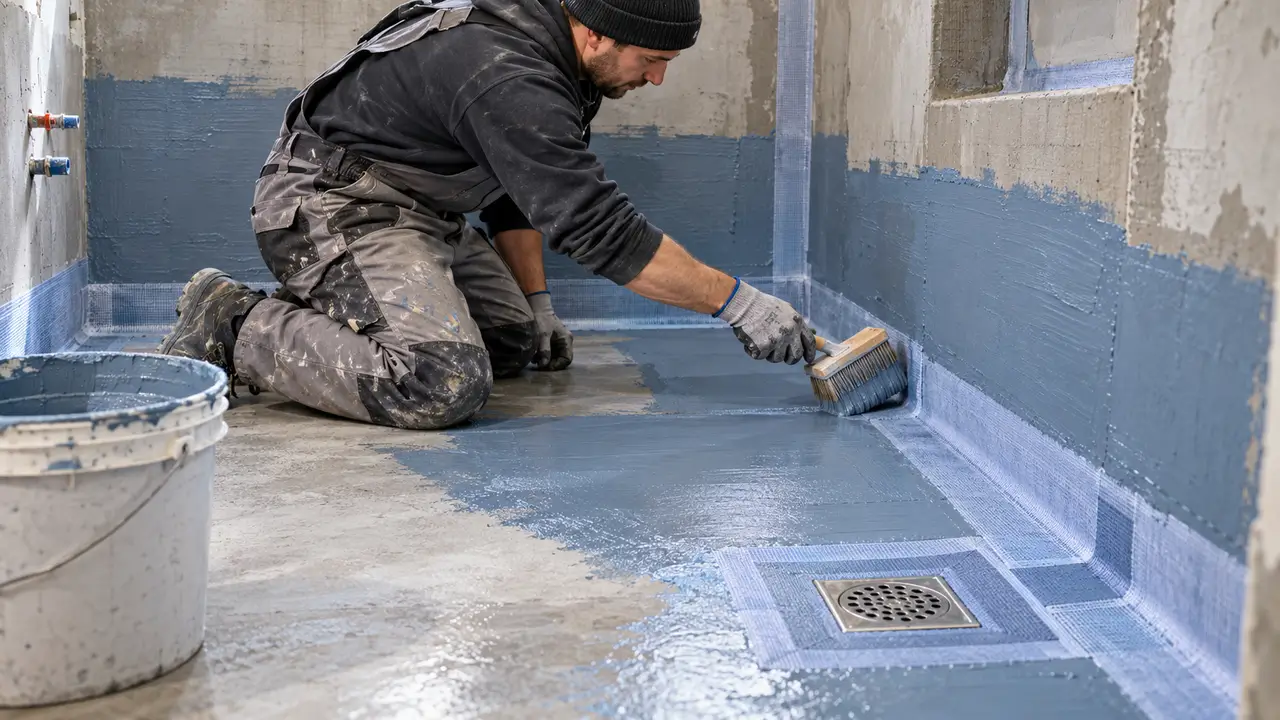
Cement-based liquid waterproofing systems offer high adhesion strength to concrete surfaces in wet areas such as water tanks, foundation walls, and bathrooms. The consumption of these systems, consisting of two components as powder and liquid polymer, is determined by the severity of the water pressure to be countered, the absorbency of the surface, and the number of layers. We can list the factors affecting the total consumption amount and the net consumption rates per square meter as follows:
- Protection Against Moisture (1st Coat): In single-coat applications made solely to cut off floor moisture and block light dampness, 1.5 kg to 2 kg of mixture is spent per square meter.
- Non-Pressurized Waterproofing (2-Coat System): In areas such as bathrooms, kitchens, or balconies, a two-coat application is mandatory to keep surface waters away from structural elements. In this scenario, the total consumption falling per square meter varies between 2.5 kg and 3.0 kg.
- Waterproofing Against Pressurized Water (3-Coat System): To stop negative and positive water pressure in water tanks or deep foundation walls, a thick three-layer structure is built. Here, a total of 4.0 kg to 5.0 kg of cement-based product is used per m².
- Applications with Reinforcement Mesh: In dynamic floors with a risk of cracking or settling, a glass fiber reinforcement mesh is placed between the layers. Since an extra layer is applied to completely embed and cover the mesh, the consumption amount climbs to levels of 3.5 kg and 4.5 kg.
How Many m² Does Polyurethane Liquid Waterproofing Cover?
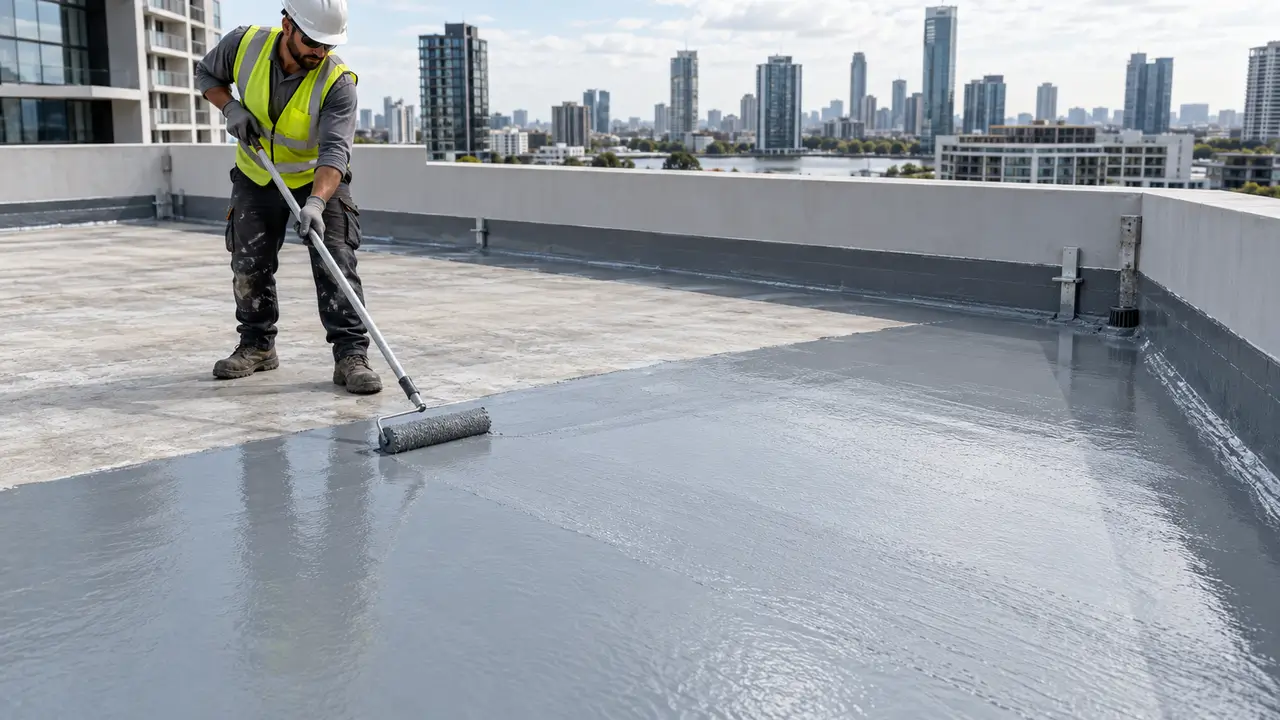
Polyurethane liquid waterproofing materials display flawless performance on open terraces, parking lot roofs, and rooftops thanks to their high elasticity, UV resistance, and heavy mechanical resistance properties. Its liquid structure forms a seamless and integrated rubbery membrane layer on the applied surface. The square meter consumption of polyurethane products is shaped according to the roughness degree of the surface, the number of layers applied, and the type of tool used (brush, roller, or airless spray machine). To completely stop absorbency on the surface, using a polyurethane or epoxy primer before application is mandatory. The primer layer optimizes consumption and maximizes adhesion power by preventing the main polyurethane material from being trapped in the depths of the floor. In the table below, consumption amounts per square meter in different usage scenarios of polyurethane insulation are detailed:
| Application Type and Layer | Application Purpose and Function | Expected Dry Film Thickness | Consumption per m² (kg) |
| Polyurethane Primer Coat | Cutting surface absorbency, binding dust, and increasing adhesion | 0.15 mm - 0.20 mm | 0.200 - 0.250 kg/m² |
| 1st Coat Polyurethane Membrane | Creating the basic waterproofing barrier seamlessly | 0.60 mm - 0.80 mm | 0.700 - 0.900 kg/m² |
| 2nd Coat Polyurethane Membrane | Completing the protective layer and increasing water pressure resistance | 0.60 mm - 0.80 mm | 0.700 - 0.900 kg/m² |
| Total System with Mesh (3 Coats) | Providing maximum crack bridging and extreme mechanical resistance | 1.50 mm - 2.00 mm | 2.200 - 2.500 kg/m² |
m² Consumption of Bitumen-Based (Liquid Membrane) Waterproofing
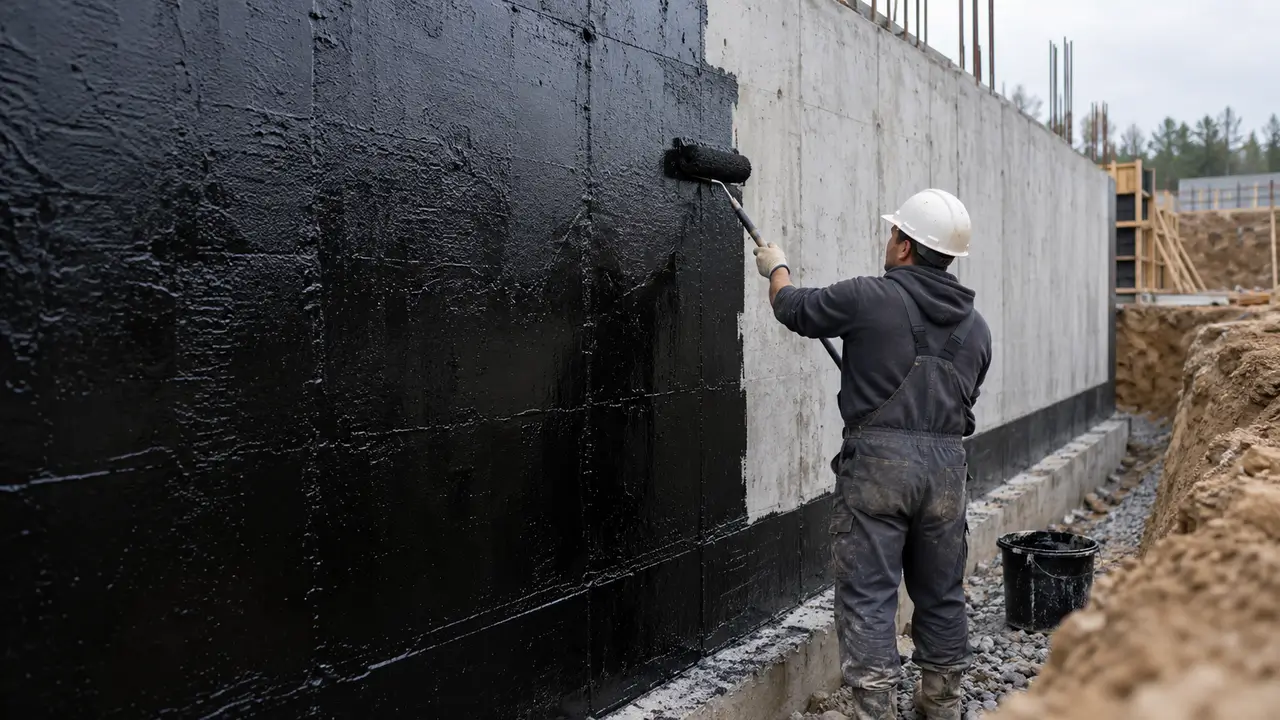
Bitumen-based liquid membranes harbor superior water-cutting properties, especially in deep foundation walls remaining underground, retaining walls, and basement waterproofing projects. The consumption amount of these materials, produced by modifying them with rubber or polyurethane-added formulas, is adjusted according to whether the surface is in direct contact with soil and the hydrostatic pressure of the groundwater it will be exposed to. Bitumen-based products applied with the help of a brush to dry or slightly damp surfaces form a thick and flexible layer as they dry, keeping the water completely outside the structure.
In the bitumen-based liquid waterproofing process applied in two coats, the consumption amount per square meter is in the range of 3 kg to 4 kg. The first layer is applied to the surface as a primer by thinning it with a certain amount of water or thinner; thus, the material is ensured to penetrate deeply into the capillaries of the concrete. After the first coat dries completely, the pure second coat, applied without any thinning process, constitutes the main waterproofing body. In this layer, approximately 2 kg of dense material per m² is left directly on the surface.
In large projects where capillary cracks, floor settlements, or movement potential exist on the ground, an alkali-resistant insulation mesh or geotextile felt is integrated between the liquid membrane layers. To fully saturate this reinforcement with liquid bitumen and protect it against external factors, one more extra layer of material must be fed to the surface. In systems with felt or mesh, the total consumption per square meter of bitumen-based insulation reaches the 4.5 kg to 5.5 kg band, maximizing ultimate physical durability.
Average Consumption in Acrylic Liquid Waterproofing
Acrylic resin-based liquid waterproofings yield effective and practical results in areas exposed to very light pedestrian traffic, such as balconies, hidden gutters, pitched roofs, and wooden surfaces. The per square meter consumption of these products, which draw an eco-friendly profile and dry fast thanks to their water-based formulations, is calculated according to the climatic conditions of the application area, the water absorption capacity of the surface, and the desired ultimate film thickness. Their dilution rates with water and layered structures directly determine the total kilogram amount to be spent.
- Primer Preparation and Consumption: Acrylic materials are diluted by 50% with clean water within themselves and evaluated as a floor primer. At this stage, only 0.2 kg to 0.3 kg of pure acrylic product is spent per square meter.
- First Coat Application: In this stage where the undiluted acrylic material is applied to the surface on a horizontal plane with the help of a roller or brush, a square meter consumption between 0.6 kg and 0.8 kg occurs on the floor.
- Second Coat and Closing: After ensuring the full drying of the first coat, the consumption in the second coat applied at a right angle (on a vertical plane) to the first coat is again in the 0.6 kg to 0.8 kg range. With this two-coat system, the total consumption is stabilized around 1.5 kg.
- Carrier Reinforced Roof System: The insulation mesh placed in between in regions with a high probability of water accumulation, such as hidden gutters and roof troughs, pulls the consumption up. To ensure safe thickness in meshed acrylic insulation systems, a total of 2.5 kg to 3 kg of material is consumed.
How Much Does Primer Application Reduce Liquid Waterproofing Consumption?
Primer application forms the cornerstone of all waterproofing systems and strictly prevents the expensive main insulation material from being absorbed unnecessarily by the surface. In operations performed without a primer, the floor rapidly absorbs the binding resins of the liquid insulation material like a sponge; this situation both disrupts the chemical structure of the insulation, leading to cracks, and causes much more material to be spent to create sufficient thickness. A correctly chosen primer suitable for the surface binds fine dust, completely closes capillary pores, balances surface absorbency, and guarantees that the liquid insulation focuses solely on creating a protective film layer on the top coat. In the table below, the savings rates created by primer usage on the main material consumption per square meter across various floor types are clearly formulated:
| Floor Type to be Applied | Primerless Insulation Consumption (Two Coats Total) | Primed Insulation Consumption (Two Coats Total) | Net Material Savings per Square Meter |
| Porous Exposed Concrete | 2.5 kg - 3.0 kg/m² | 1.8 kg - 2.0 kg/m² | 0.7 kg - 1.0 kg/m² |
| Old and Worn Screed Surfaces | 3.0 kg - 3.5 kg/m² | 2.0 kg - 2.2 kg/m² | 1.0 kg - 1.3 kg/m² |
| Brick and Aerated Concrete Walls | 3.5 kg - 4.0 kg/m² | 2.2 kg - 2.5 kg/m² | 1.3 kg - 1.5 kg/m² |
| Glossy Ceramic and Tile Floors | 1.8 kg - 2.0 kg/m² | 1.2 kg - 1.5 kg/m² | 0.5 kg - 0.6 kg/m² |
How Much Material is Used per m² in Terrace Waterproofing?
Terraces are the surfaces of buildings most exposed to snow, continuous rain, freeze-thaw cycles, extreme temperature differences, and burning UV rays. Waterproofing in these open areas must possess a much thicker, resistant, and highly flexible structure compared to standard indoor (bathroom, toilet) applications. In terraces where water can form puddles at certain points due to floor slope errors, the insulation layer being weak even on a micron basis directly starts leaks to the lower floors. Due to these mandatory reasons, the amount of insulation material spent per square meter in terrace projects is calculated higher than in all other building spaces.
In an open terrace waterproofing built from scratch or renovated, UV-resistant pure polyurethane or advanced hybrid polymer liquid waterproofings are preferred. In a two-coat liquid insulation system applied with a roller over a strong epoxy primer, a square meter consumption between a minimum of 2.5 kg and 3.0 kg must be planned. If the terrace will be walked on or tables and chairs will be placed, a protective aliphatic topcoat paint is applied to the topmost layer to reduce the wearing effect of sun rays to zero and provide resistance to pedestrian traffic. This topcoat paint brings an extra consumption load of 0.250 kg to 0.350 kg per square meter to the system.
Parapet wall bottoms, chimney edges, ventilation pipes, drain surroundings, and expansion joints on terraces are the weak points where water leaks most easily. Using corner chamfer tapes, polyurethane elastic mastics, and carrier reinforcement meshes in these regions is a vital necessity. When a fully equipped system with mesh is constructed on the entire terrace, the consumption per square meter of the main insulation material easily reaches levels of 3.5 kg. This consumption amount, correctly calculated and applied, guarantees the absolute watertightness of the terrace against all external weather conditions and severe mechanical strains for long years.