


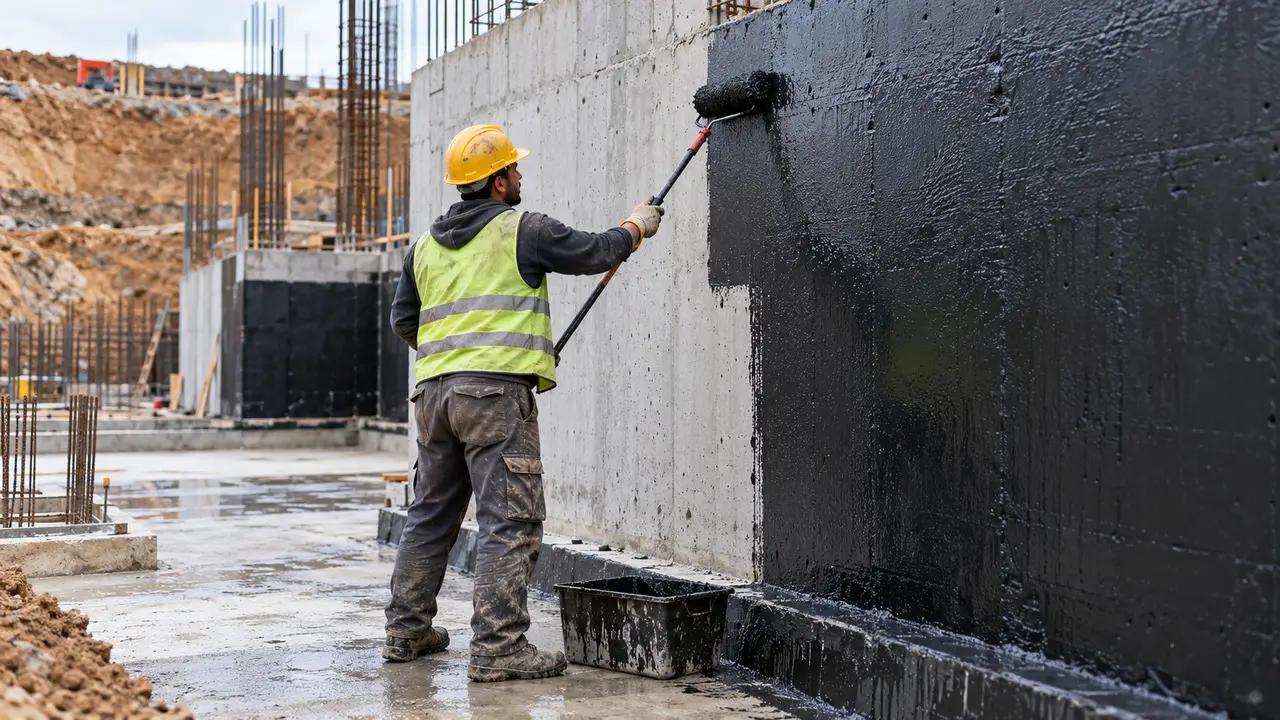
The most vital engineering phase that determines a structure's lifespan, durability, usage quality, and structural integrity is the foundation construction and the professional waterproofing systems applied unyieldingly in this area. Reinforced concrete load-bearing elements below ground level are under the constant, relentless threat of massive hydrostatic pressures created by groundwater, as well as sulfates, chlorides, carbonates, and other corrosive organic/inorganic chemicals. Failure to select the correct, high-performance waterproofing materials suitable for the project and resistant to harsh conditions leads to the rapid oxidation and corrosion of iron reinforcement bars, causing the concrete to completely lose its load-bearing capacity, compressive strength, and tensile strength. This irreversible destruction ultimately causes the structure's risk of collapse to increase dramatically. Water seeps in through the smallest capillary voids below ground level, millimetric hairline cracks, expansion joints, and cold joints, silently rotting the building's load-bearing spine from the inside. The only way to stop this destructive physical and chemical process is through the flawless application of top-tier, innovative waterproofing technologies that demonstrate absolute resistance to high hydrostatic pressure, aggressive chemical attacks, and severe corrosion. Considering building safety, international earthquake regulations, and long-lasting, sustainable building design criteria holistically, foundation insulation is never an item to be compromised on budget or done cheaply; on the contrary, it is the strongest, most unbreakable line of defense that ensures the building remains standing for generations.
The precise, scientific selection of the barrier material to be used in foundation waterproofing in modern construction projects depends directly on the geotechnical data in detailed soil survey reports, the regional seasonal groundwater map, the aggressive chemical composition of the water, the climatic conditions determining freeze-thaw cycles, and the total static weight the building transfers to the ground. In deep excavated foundations, raft foundations, or wide continuous foundation systems exposed to high hydrostatic pressure, elastomeric-based products with high breaking strength, tensile strength, and elasticity coefficients carry a vital, indispensable importance. In shallower areas where the groundwater level is relatively low and only seepage water or superficial rain runoffs exist, active chemical-based materials that penetrate deep into the concrete and form an inseparable crystal network exhibit superior insulation performance. To guarantee long-term, absolute structural safety, to eradicate the formation of moisture, mold, fungi, and bacteria threatening human health indoors, and to preserve the compressive strength of the concrete from the day it was poured for decades, it is imperative to examine proven waterproofing technologies in the industry in detail. Incorrect material selection, the combined use of incompatible layers, or faulty, sloppy workmanship leads to heavy repair processes that are physically almost impossible and highly costly after massive tonnage soil backfilling is done. With this engineering awareness, it is a profound necessity to evaluate the most resistant foundation waterproofing materials—which have successfully passed rigorous chemical and mechanical tests in laboratory environments—with all their technical details and performance features.
Bitumen-Based Waterproofing Materials
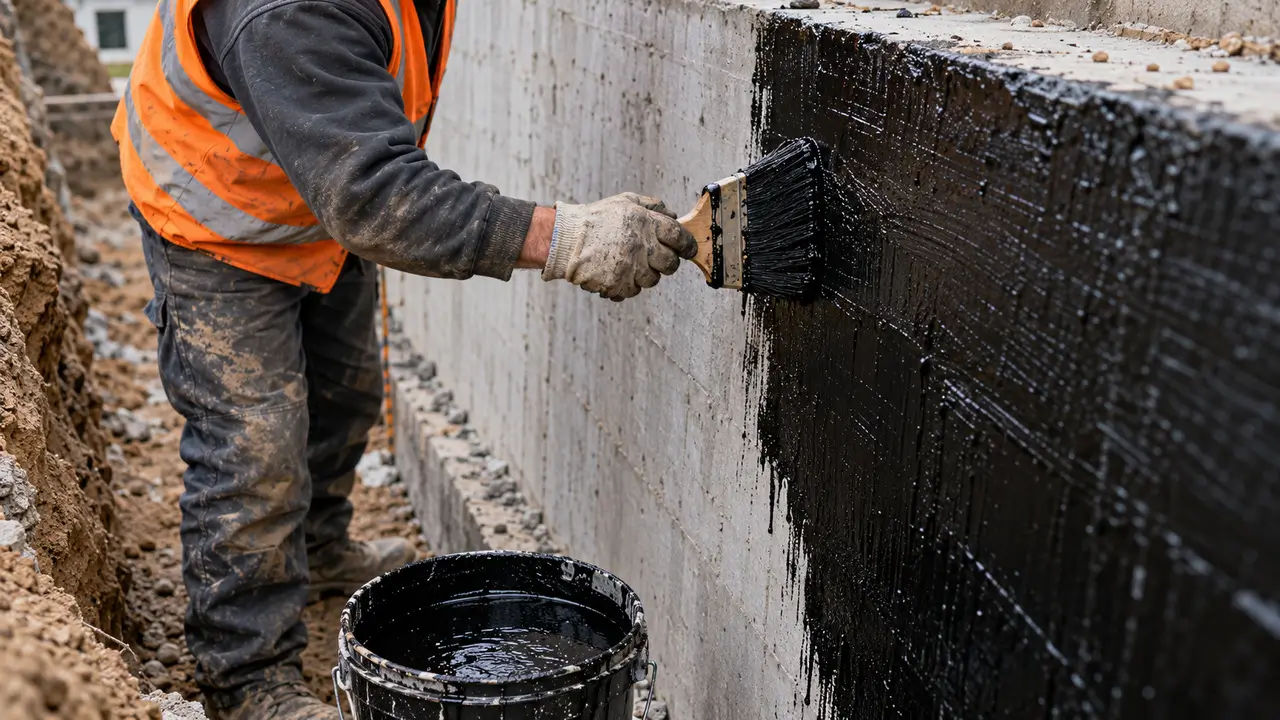
Bitumen-based waterproofing materials are robust products with a hydrocarbon composition obtained through petroleum refining, providing absolute impermeability. These membranes, specially modified with elastomeric or plastomeric polymers, along with two-component liquid waterproofing coatings, create a definitive, unyielding impermeability shield on building foundations and retaining walls. By exhibiting extremely high elasticity against dynamic movements under the soil, structural settlements, temperature changes, and seismic shocks, they completely eliminate the risk of tearing, breaking, or cracking.
During the application phase, rolled membranes melted onto the surface with a blowtorch or cold-applied liquid coating systems integrated into the concrete surface with a brush adhere perfectly to the structure. By establishing flawless adhesion with the surface, they definitively prevent water from seeping through the concrete pores. Fiber-reinforced, thickly applied bitumen-rubber based liquid waterproofing materials act as flawless armor in deep foundations where groundwater and pressurized leaks are intense, as they form a seamless layer.
To ensure the longevity of these materials, it is mandatory to support them against mechanical damage with XPS thermal insulation boards or high-density drainage membranes before the soil backfill is executed. The superior chemical resistance naturally offered by bitumen against acidic, salty, and sulfate soils protects the building's concrete rebars against corrosion.
Polyurethane-Based Waterproofing Materials
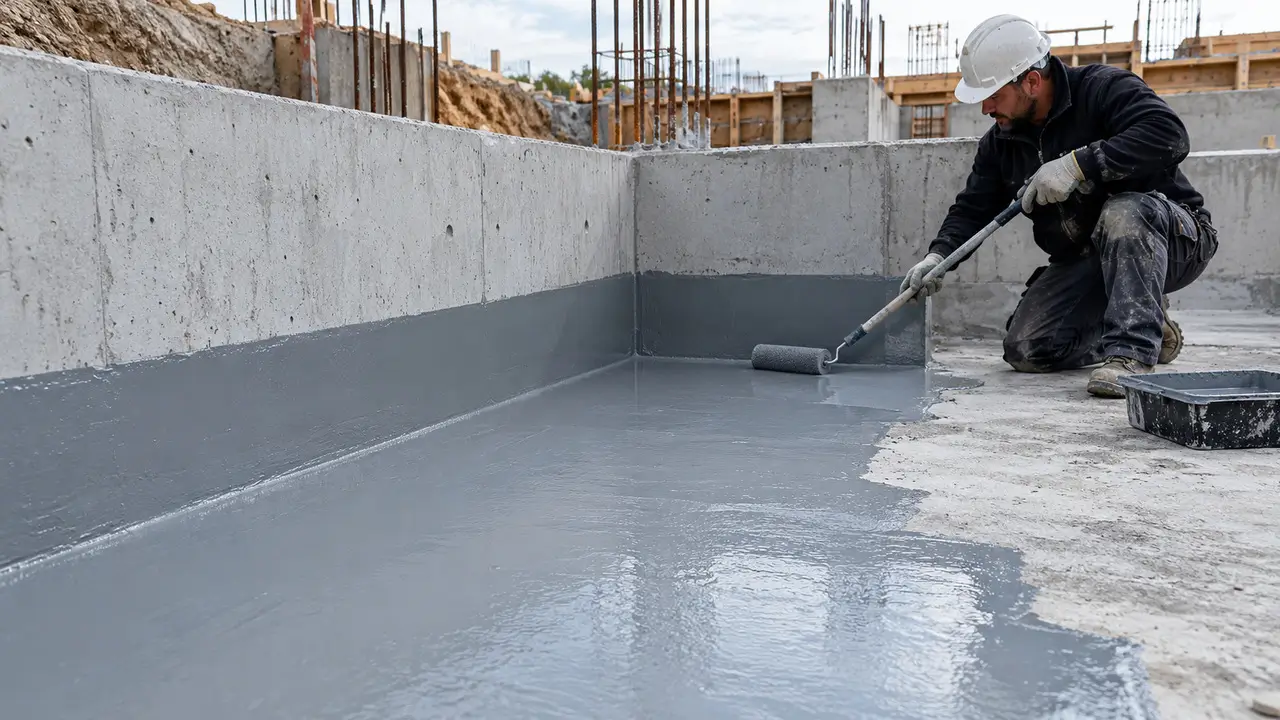
Polyurethane-based waterproofing materials are high-tech products composed of advanced reactive resins that form a seamless, highly flexible, and absolutely waterproof membrane after curing. When applied in liquid form, they deeply fill the capillary voids of the concrete, integrating with the structure as almost a single body. They flawlessly bridge capillary cracks that may occur as a result of structural movements, providing high-level structural safety in foundation concrete thanks to their unique tear resistance against harsh weather conditions and mechanical impacts. The main advantages of polyurethane systems in foundation insulation are listed below:
- Seamless protection shield: Since it is applied by rolling or spraying in liquid form, it contains no joints, thereby completely neutralizing weak overlapping points where water could seep.
- Extreme elasticity structure: It demonstrates extraordinary resistance to tearing by preserving its original form during structural settlements, temperature differences, and earthquake-induced micro-movements.
- Root-resistant property: It definitively prevents aggressive plant roots from piercing the insulation layer and reaching the concrete, instantly stopping biological and organic destruction.
- Fast curing time: It freezes rapidly with moisture or a two-component chemical cross-linking reaction, accelerating the construction process and saving time and labor.
- Chemical barrier: It completely blocks corrosive salt, acid, sulfate, and alkali components found in groundwater from reaching the load-bearing rebars.
Cementitious Waterproofing Materials
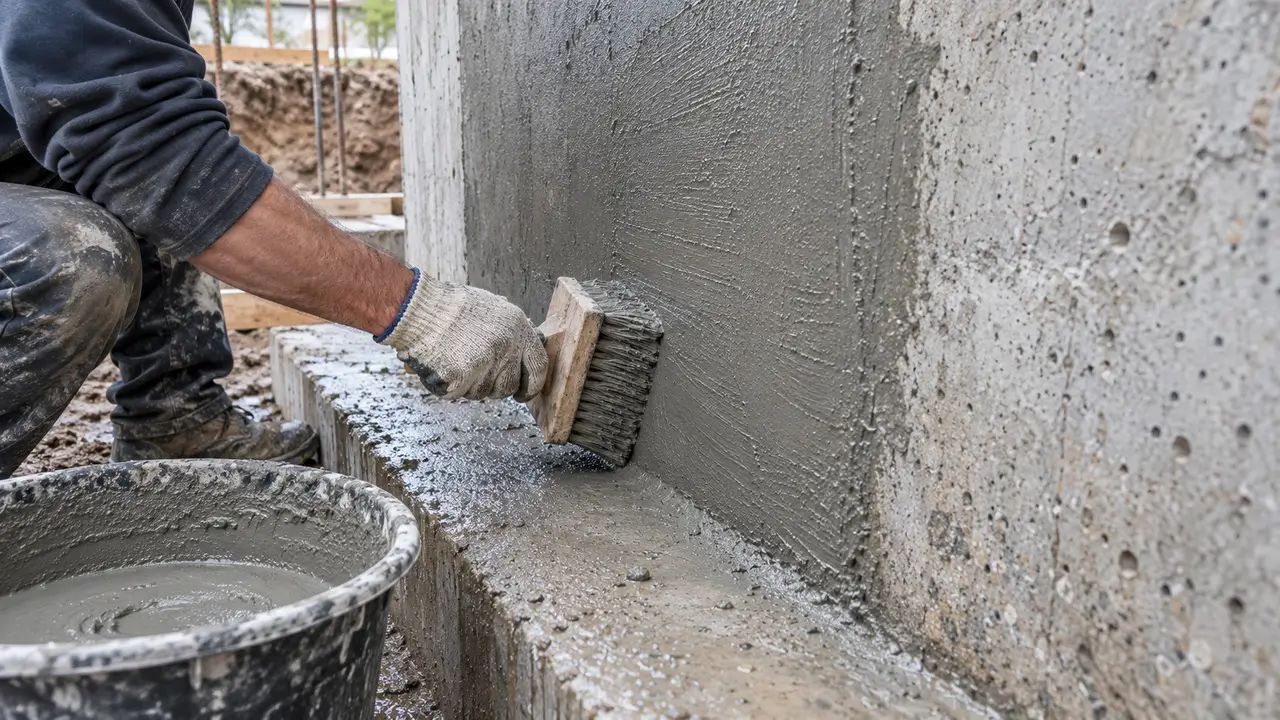
Cementitious waterproofing materials distinguish themselves in the sector with unique formulas containing inorganic special polymers, pure silica sand, and reactive active chemical additives. When applied to concrete with a brush or trowel, they react chemically with the free calcium hydroxide and moisture within the structure to produce insoluble needle-like crystals. These crystals deeply fill the concrete's capillary voids, pores, cold joints, and hairline cracks for centimeters, completely blocking water from both positive and negative sides.
The following table presents measurable quantitative data specifying the technical capacities and performance limits of different cementitious waterproofing systems used in industrial foundation projects:
| Performance Criterion | Crystalline Cement | Fully Flexible Cement | Semi-Flexible Cement |
| Water Pressure Resistance | 13 - 14 Bar | 5 - 7 Bar | 3 - 4 Bar |
| Application Thickness | 1.0 - 1.5 mm | 2.0 - 3.0 mm | 2.0 - 2.5 mm |
| Full Curing Time | 5 - 7 Days | 3 - 5 Days | 3 - 4 Days |
| Crack Bridging Capacity | Up to 0.4 mm | Up to 2.0 mm | Up to 1.0 mm |
During the application of cement-based products, the concrete surface must be saturated with water, wet, or moist as the main condition for the crystallization reaction to begin. During the curing process, the material must not dry out and requires continuous watering. The continuous moisture underground keeps this chemical process active for years, guaranteeing that the concrete will self-heal new cracks that may form in the future.