


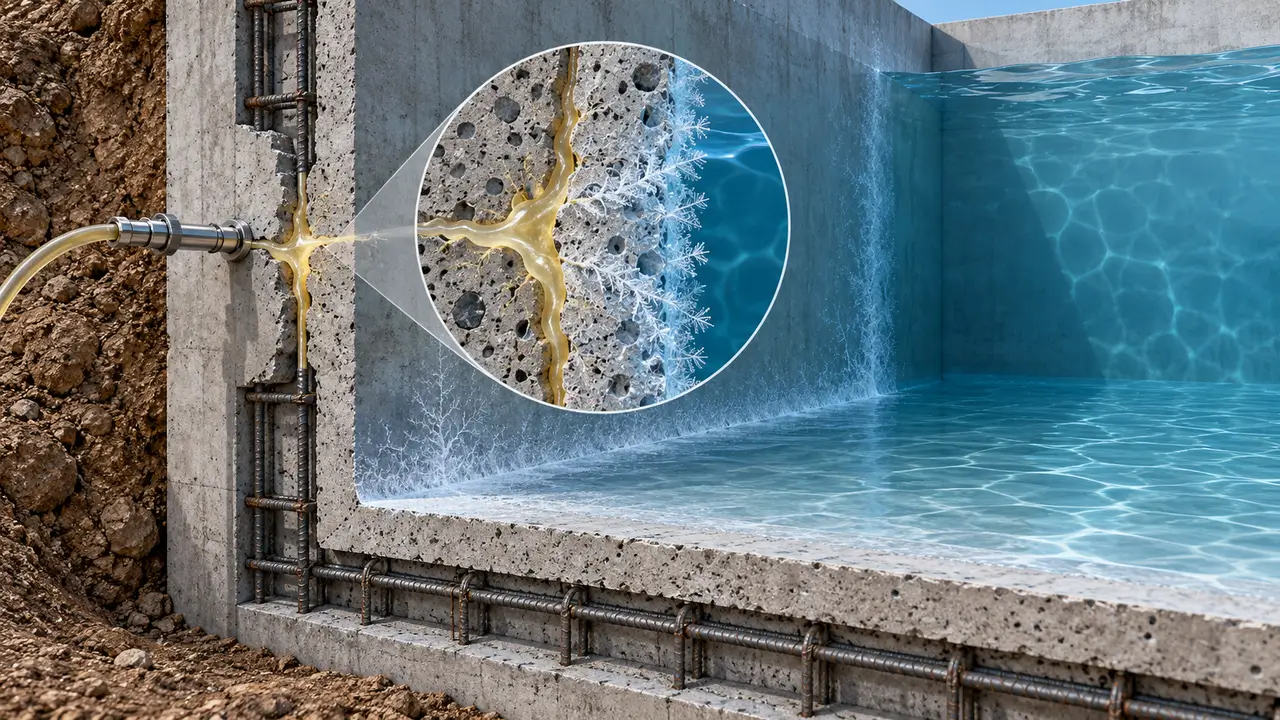
Reinforced concrete water tanks are critical structures that ensure the safe storage of clean water, from residential projects to industrial facilities. Over time, hydrostatic pressure, ground movements, and changes in the chemical structure of the concrete lead to water leaks. These leaks reduce the storage capacity of the tanks, cause corrosion in the load-bearing reinforcement, and rapidly deplete the static life of the structure.
Solving sealing problems in water tanks with traditional surface coating methods does not always provide permanent results. Polyurethane injection and crystalline waterproofing technologies, which have come to the forefront in recent years, provide high-performance protection by intervening in the internal structure of the concrete. In this guide, we will examine the causes of leaks in reinforced concrete water tanks and convey the technical details of polyurethane and crystalline solutions.
Why Do Leaks Occur in Reinforced Concrete Water Tanks?
Water leaks that occur in reinforced concrete water tanks over time emerge due to a combination of multiple physical and chemical factors. Many factors, from the design phase to application errors, constitute the main source of these leaks.
The main factors causing leaks in tanks are:
- Cold Joints (Segregation): Failure to ensure a continuous process during concrete pouring leaves weak connection points between old and new concrete.
- Capillary Cracks and Shrinkage: Shrinkage movements during the concrete drying process and temperature differences create invisible microscopic cracks.
- Incorrect Vibrator Use: Voids and pores formed in the structure as a result of inadequate compaction of the concrete pave the way for water progression.
- Hydrostatic Water Pressure: The continuous pressure applied by the water inside the tank to the walls and floor forces the weak points in the concrete, leaking outwards.
- Reinforcement Corrosion: Rusting caused by leaking water reaching the reinforcement rebars cracks the concrete from the inside out.
These factors cause severe damage to structural integrity if not intervened in a timely manner.
The Role of Polyurethane and Crystalline Solutions in Waterproofing
Polyurethane and crystalline systems in waterproofing have a different mechanism of action than traditional membrane or coating-based materials. Instead of creating a surface layer, these solutions, which are directly integrated into the concrete, build a long-lasting barrier against hydrostatic pressure. Both systems aim to maximize the impermeability level of reinforced concrete structures.
Polyurethane-based materials instantly stop active leaks with their flexible structures and rapid expansion capabilities upon contact with water. These reactive chemicals, injected into the cracks under high pressure, completely prevent the progression of water by maintaining their flexibility even in the moving joints of the concrete. Thus, the urgent intervention requirements caused by pressurized water are met quickly.
Crystalline waterproofing systems are solutions that react with moisture and free lime in the capillary voids of the concrete to produce an insoluble crystal structure. This technology, which makes the concrete completely waterproof from the inside out, remains active throughout the life of the structure. When evaluated together, both systems offer holistic protection in both urgent repairs and permanent waterproofing strategies of water tanks.
What is Polyurethane Injection and How Does It Work?
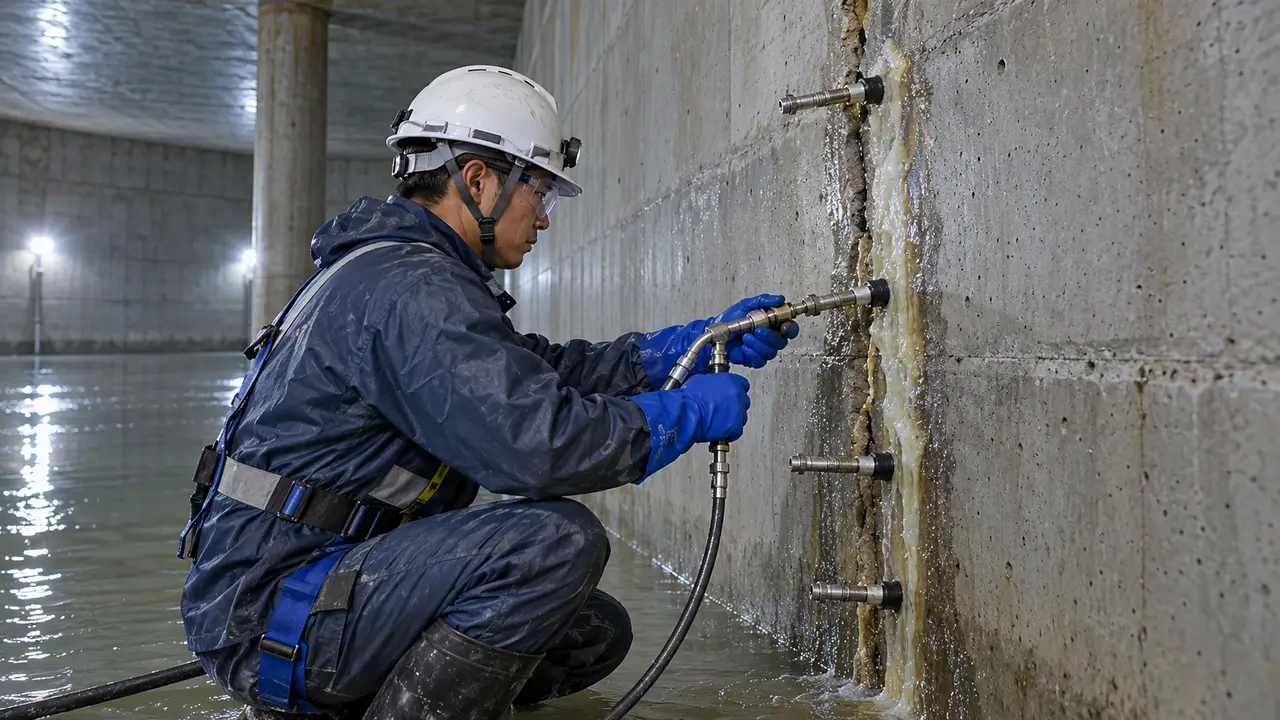
Polyurethane injection is a reactive liquid resin technology preferred to cut off active water flowing from capillary cracks, cold joints, and voids in reinforced concrete structures. The system is transferred to the concrete with the help of high-pressure injection equipment and reacts chemically the moment it contacts water.
The working mechanism and application steps of the system are as follows:
- Crack Detection and Packer Installation: Holes are drilled at 45-degree angles around the line where the water leak occurs, and injection packers are driven in.
- High-Pressure Injection: Polyurethane resin is pumped towards the deepest points of the crack through the packers using special machines.
- Foaming and Reaction: Liquid polyurethane, upon encountering water inside the crack, expands 30 to 40 times its volume and turns into a flexible foam structure.
- Sealing Closure: The expanding reactive material tightly fills all capillary channels through which water passes and cuts off the water flow completely within seconds.
Polyurethane, which does not lose its flexibility, maintains its sealing performance even under micro-vibrations the structure will be exposed to later.
What is Crystalline Waterproofing and How Does It Protect Concrete?
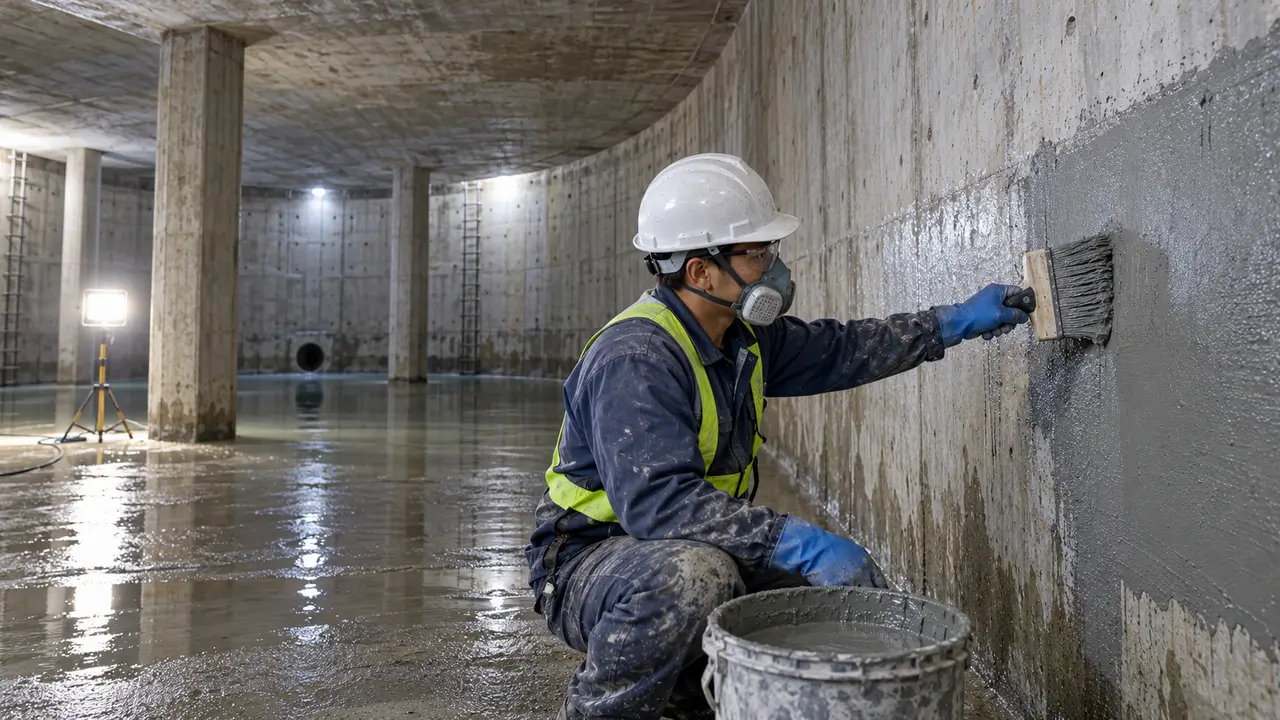
Crystalline waterproofing is an active cement-based technology that reacts chemically with free lime and moisture in the structure of the concrete. When this material is applied to the concrete surface, it spontaneously penetrates inward from the capillary lines followed by water. As a result of the chemical reaction, insoluble needle-like crystal structures are formed. These crystals permanently plug all pores and capillary cracks within the concrete.
The biggest advantage of this technology is that it does not merely protect the concrete with a surface coating but transforms the concrete itself into a waterproof mass. The crystal formation process continues as long as the structure exists. If a new capillary crack forms in the concrete in future years and water tries to enter, the dormant chemicals reactivate upon contact with water and crystallize again. Thus, the concrete gains a self-healing ability. Crystalline systems, which show equal resistance against negative and positive water pressure, offer the most reliable protection in water tanks.
In Which Situations Should Polyurethane or Crystalline Be Chosen?
The selection of the right waterproofing method in reinforced concrete water tanks varies depending on the condition of the leak, the current moisture level of the structure, and the position of the intervention area. Incorrect material selection leads to time and cost losses.
| Feature / Criterion | Polyurethane Injection | Crystalline Waterproofing |
| Leak Type | Pressurized, active, and gushing water | Moisture, dampness, and passive leaks |
| Application Area | Cracks, joints, and pinpoint leaks | All concrete surfaces (floor and wall) |
| Reaction Speed | Instant reaction within seconds | Gradual crystallization over days |
| Flexibility | High flexibility (Moving cracks) | Rigid structure (Fuses with the concrete body) |
| Water Pressure Direction | Interventions made directly to the source | Both negative and positive pressure |
When there is pressurized and active water flow, the first intervention must be made with polyurethane injection. If it is desired to make the tank surfaces completely waterproof as a whole and provide permanent protection, crystalline waterproofing should be preferred.