


When the July heat beats down on you, even breathing turns into torture. If you live on the top floor, that massive concrete block absorbs the sun all day long. Come nightfall, just like a giant radiator, it slowly releases that trapped fire into your rooms. Fans merely slap hot air against your face. As you lower the AC temperature, the desperate hum of the motor grows louder. I will never forget that peculiar, dry smell of baking tiles on the roof of our summer house during my childhood; it felt as though the entire building had been thrown right into the middle of a massive stone oven. Back then, we assumed enduring this hellish heat was an unchangeable rule of summer.
Cranking the AC to the max and staring at the electric bill with fearful eyes is not your only option. That ultra-thin layer applied to the roof surface acts as an invisible shield, repelling the heat before it even touches the building. I am not talking about some miraculous formula. I am talking about the life-saving touch of an innovative material where simple physics rules are cleverly applied. A cool, peaceful home. Nights of deep, sweat-free sleep.
What is Thermal Paint and How Does it Work on Roofs?
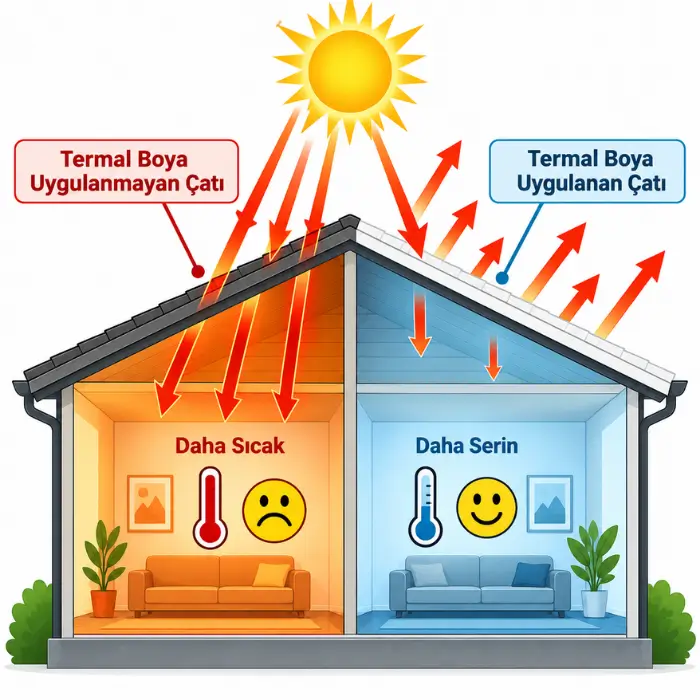
Looking at an ordinary bucket of paint, you might assume it is just colored water inside. Yet the chemistry of these products is entirely different. Hidden within the paint's formula are millions of ceramic or glass microspheres. Those blistering infrared waves from the sun strike these spheres. Instead of penetrating the building, they bounce straight back into the void of space. Think of it like thermos logic; a thin but incredibly powerful barrier that refuses to let outside heat seep in.
Protect your roofs and facades that overheat in the summer months with Dryfix Thermal 100. Cool your living spaces and save energy with its high reflective power. Dryfix Thermal 100 is a water-based reflective coating system featuring an 89% solar reflectance value. While traditional dark-colored surfaces absorb solar energy and transfer it inside the structure, Thermal 100 bounces a massive portion of that solar energy back, ensuring surface temperatures remain at ideal levels.
How Does Thermal Paint Work? The product's working principle relies on pushing heat away at its source before it penetrates the structure. When applied to a surface, it shows the following effects:
- Prevents solar rays from getting trapped by reflecting them at a high rate.
- Minimizes the rise in surface temperature.
- Lowers the overall heat load the building is exposed to.
- Reduces the need for air conditioning and cooling systems.
- Creates a much more stable and comfortable climate indoors.
Do not let the heat drain your life energy. Transform your roofs into a powerful heat shield with Dryfix Thermal 100. Start enjoying coolness and comfort right now!
5 Core Advantages of Using Thermal Paint on Roofs
It can be hard to believe that spreading a single layer on a roof will change life this much. Most people approach it with suspicion at first. However, the numbers and that distinct freshness felt in the summer heat do not lie.
1. Bill-Busting Energy Savings
It cuts out that endless drone of the AC motor. That tense expression on your face while looking at the end-of-month electricity bill gives way to a faint smile. With the inside of the house already staying cool, cooling devices find the opportunity to rest for hours.
2. Wear-and-Tear Shield for Roof Materials
Solar rays mercilessly exhaust roof tiles, concrete, and membranes. Expanding from the heat by day and suddenly contracting by night, the material eventually cracks. This special reflective layer breaks that thermal shock. It significantly extends the physical lifespan of the roof.
3. Application Practicality and Speed
We are not talking about days of construction dust or demolition work. Crews won't turn your house into a war zone. Grabbing a roller or spray gun and applying it to the ground with the right primer is enough. Fast. Clean. Chaos-free.
4. Eco-Friendly, Cool Cities
The concept they call carbon footprint is not just a problem for massive corporations. Reducing the heat your own home emits lightens that notorious urban heat island effect. You even slightly freshen the air in the street where the birds fly.
5. Goodbye Stifling Air, Indoor Comfort
That heavy, unbreathable air on the upper floor disappears entirely. Tossing and turning in bed from the heat on summer nights becomes history.
Which Roof Surfaces Are Suitable for Thermal Paint?
Every surface has its own unique character. Grabbing a bucket of material and smearing it directly onto dirt, dust, or a moss-covered tile is throwing money in the street. When you choose the right primer, there is almost no surface this material cannot grip. The rough texture of concrete offers a fantastic adhesion area for the coating. For metal roofs, the situation is completely different; stopping corrosion and rust is always the absolute first step.
| Surface Type | Adhesion Performance | Prep Requirement |
|---|---|---|
| Concrete and Screed | Very High | Crack repair, dusting, moisture control. |
| Galvanized / Sheet Metal | High | Rust stain cleaning, anti-corrosive primer application. |
| Roof Tiles | Good | Replacing broken ones, washing off surface moss and dirt layers. |
| Membrane / Shingle | Medium-High | Complete drying of the surface, detailed inspection of joints. |
Fusing the material with the ground requires flawless harmony. The moment you strike that balance, the roof serves you flawlessly for years. Skipping cracks and just painting over them is merely covering up the problem temporarily.
Thermal Paint Lifespan and Maintenance Tips for Long-Term Performance
Protecting something is just as crucial as building it. This marvel of technology layer you applied to the surface will eventually tire out if you leave it completely to its own devices. The reflective feature depends on the surface remaining stark white and spotless. The city's dirty air, bird droppings, sticky resins falling from trees, the sneaky soot layer left by exhaust smoke... These dull and grey that bright surface within months. A grey surface pulls heat. The system slowly waves the flag of surrender.
Keeping the performance just like the first day is much more effortless than you think:
- Hit it with a low-pressure water hose once a year. Watching the dirt wash away is strangely relaxing.
- While clearing autumn leaves that clog the drains, take away the mud puddles on the surface with a soft brush. Stay away from stiff brushes.
- Locally touch up visible physical damage with a small brush immediately after a storm or hail. Do not leave an open wound.
Follow these simple steps and the coating will offer you peak performance for years. Otherwise, expecting a miracle from a surface buried under a thick layer of filth creates massive disappointment. Show some care. Let your roof gift you unmatched coolness in return.