


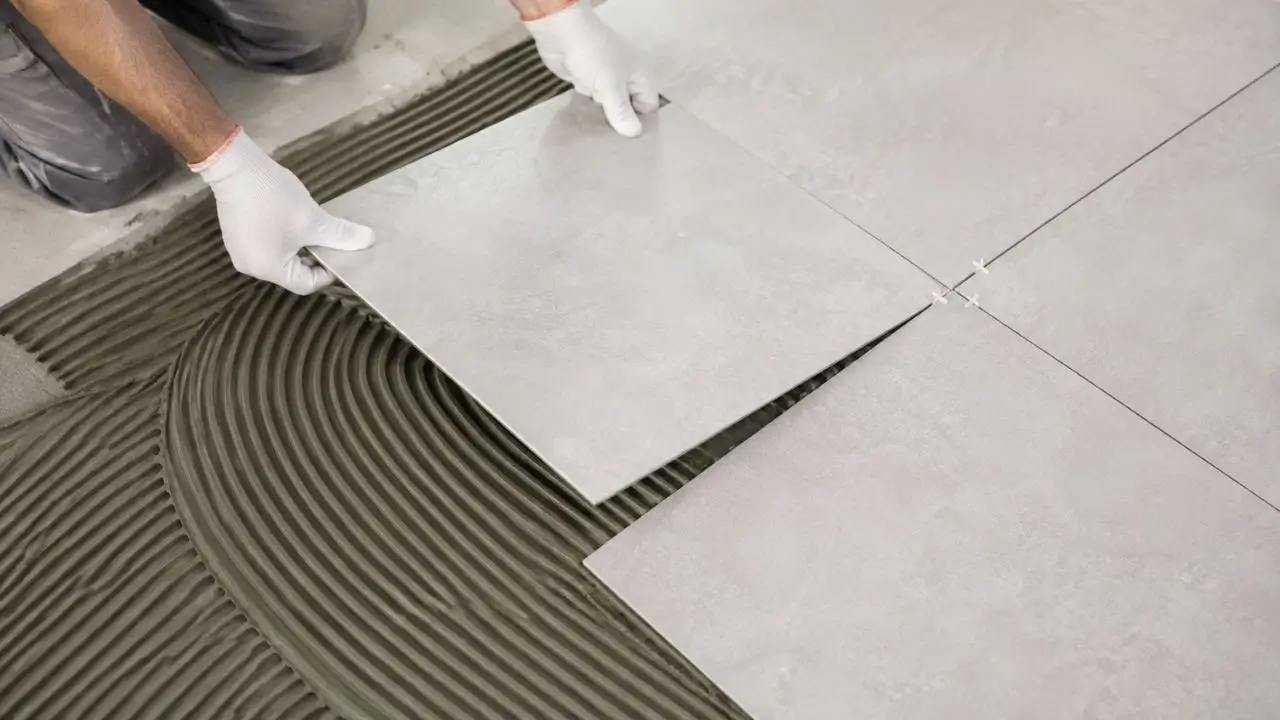
Tile installation is a highly unforgiving trade where the quality of the hidden adhesive layer dictates the longevity of the entire floor system. Even the most expensive porcelain will fail if the structural bond beneath it is severely compromised. As professional installers, you clearly know that call-backs for loose, cracked, or tenting tiles rapidly destroy profitability and ruin professional reputations. These massive failures are rarely due to defective materials; instead, they stem from minor oversights during standard installation procedures. Understanding the fundamental mechanics of these failures is the absolute first step to eliminating them entirely from your daily professional workflow.
The margin for error in modern tile setting is thinner than ever, especially with the rapid industry shift toward massive formats, non-porous materials, and complex underfloor heating systems. Adhesives are heavily engineered to perform under highly specific conditions, and blatantly deviating from manufacturer specifications inevitably leads to a massive loss of sheer strength. By closely analyzing the most frequent points of failure, experienced tradesmen can drastically refine their precise techniques, easily adapt to challenging site conditions, and reliably deliver absolutely flawless results. This comprehensive guide thoroughly breaks down the five most critical installation errors and provides highly actionable professional strategies.
1. Improper Surface Preparation
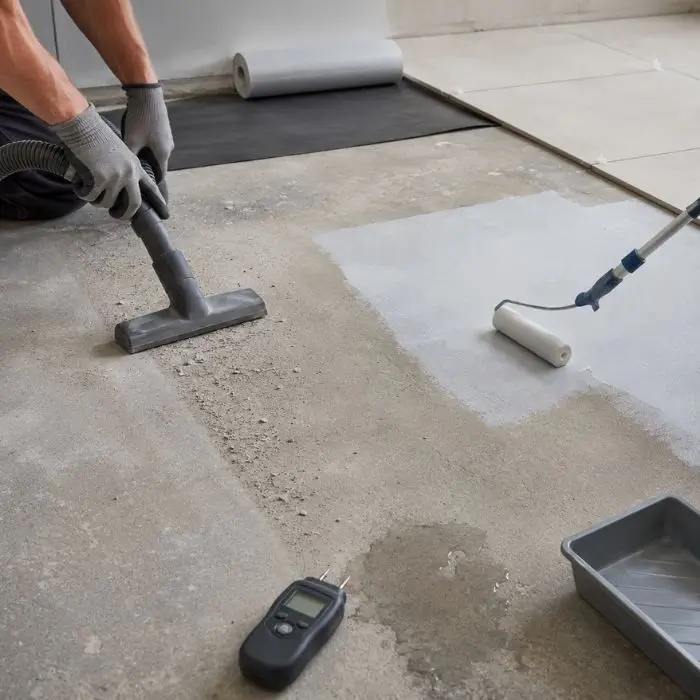
The absolute foundation of any successful tile installation lies directly in the rigorous preparation of the substrate, yet it persistently remains the leading cause of adhesive failure. Dust, laitance, grease, curing compounds, and old adhesive residues act as a highly effective physical barrier, completely preventing the new mortar from mechanically interlocking with the subfloor. When you carelessly apply mortar over a dusty concrete slab, the adhesive inherently bonds only to the loose dust rather than the solid structural concrete. As the adhesive cures and slightly shrinks, this exceptionally weak surface bond rapidly breaks, immediately leading to dangerously hollow-sounding loose tiles.
Moisture content and structural substrate porosity also play massive roles in overall adhesive performance, strictly requiring careful professional assessment before any troweling actually begins. Highly absorbent substrates like raw drywall or highly porous concrete will rapidly suck the vital water out of the thinset mortar, causing it to flash-set improperly. This severely halts the essential chemical hydration process completely, leaving the cured adhesive powdery and dangerously lacking in necessary tensile strength. Conversely, completely non-porous surfaces aggressively prevent proper drying and strictly require heavily modified polymers to achieve a secure grip. Applying the correct architectural surface primer completely neutralizes these specific porosity issues immediately.
- Cleanliness: Mechanically remove all old residues and vacuum surface dust completely before spreading.
- Moisture: Conduct required structural moisture tests and apply necessary vapor barriers immediately.
- Porosity: Prime highly absorbent architectural surfaces properly prior to the final tile installation.
2. Incorrect Mixing Ratios
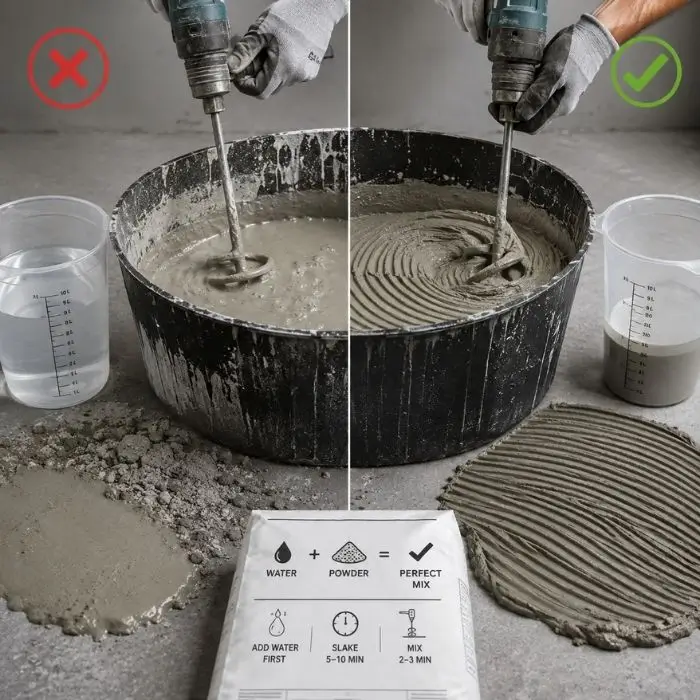
Modern thinset mortars are incredibly complex chemical compounds strictly formulated with highly precise ratios of Portland cement, fine sand, and water-retentive polymers. When professional installers actively deviate from the explicitly specified water-to-powder ratio, they fundamentally alter the adhesive’s highly engineered properties. Adding far too much water—often incorrectly done to make the mortar substantially easier to spread—drastically dilutes the vital polymers and severely weakens the cement's final cured structural strength. This bad habit creates a highly porous, exceptionally brittle adhesive bed that cannot properly support the heavy tile. Over-watered mortar also aggressively shrinks excessively as it slowly dries during the curing phase.
Conversely, manually mixing mortar with significantly too little water aggressively prevents the Portland cement from fully hydrating chemically, resulting in a stiff, highly unworkable mix that fails to transfer adequately. This severe lack of internal moisture strictly prevents the adhesive from achieving the absolute minimum required coverage, intentionally leaving massive hidden voids that inevitably become critical structural stress points. To actively avoid these catastrophic failure scenarios, professional setters must always strictly measure their clean water using distinctly marked buckets rather than visually guessing. Furthermore, consistently using a heavy-duty, low-speed mixing drill successfully prevents actively entraining dangerous excess air into the mortar.
| Mixing Error | Consequence on Adhesive Performance | Solution for Professional Installers |
| Excess Water | Severely weakened sheer strength and highly excessive mortar shrinkage | Use precise measuring buckets always and strictly avoid re-tempering. |
| Insufficient Water | Incomplete chemical hydration and extremely poor back-tile transfer | Follow exact bag instructions meticulously and allow slaking time. |
3. Lack of Double Buttering (Butter-Floating) on Large Format Tiles
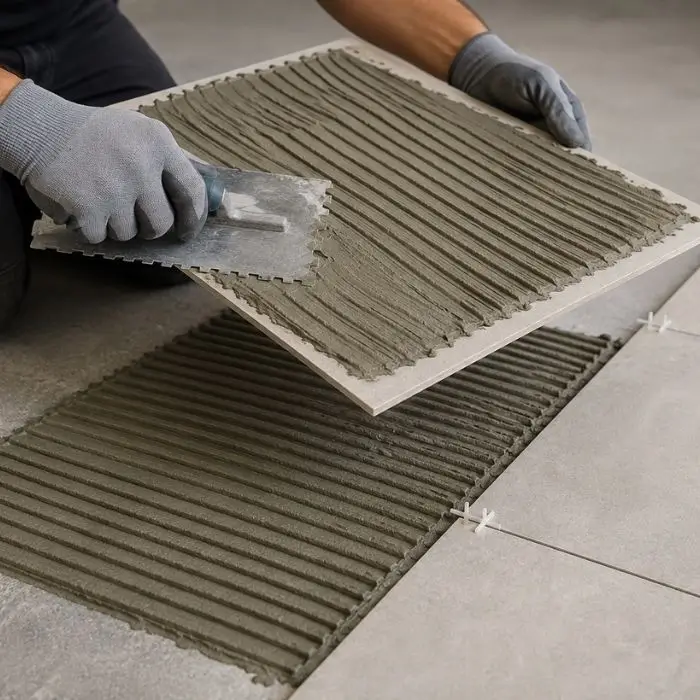
The rapidly increasing global popularity of massive large format tiles and highly heavy stone panels has fundamentally changed the rigorous physical requirements of professional tile setting. A critical structural failure point frequently occurs when busy installers heavily rely solely on merely troweling the flat substrate without appropriately back-buttering the massive tile itself. Massive architectural tiles are extremely rarely perfectly flat; they frequently feature slight warpage or crowning directly resulting from the intense high-temperature manufacturing process. When placed directly into a standard combed mortar bed, these unavoidable surface irregularities aggressively prevent the tile from making absolute full contact with the spread adhesive securely.
To consistently achieve the highly strict industry-mandated minimum coverage for massive large format or demanding wet-area tiles, double buttering is an absolute professional necessity on every single job. This extremely essential manual technique simply involves using the completely flat side of the heavy trowel to forcefully key a highly thin layer of mortar directly into the tile's back. This incredibly critical foundational step completely fills in the deeply textured release pattern on the back of the massive tile, firmly ensuring an immediate robust chemical bond. Troweling both the structural substrate and the massive tile in exact parallel straight lines guarantees maximum air evacuation.
Furthermore, blatantly failing to deliberately collapse the combed mortar ridges properly during manual placement directly exacerbates the dangerous lack of coverage issue exponentially. Installers must always deliberately press the completely double-buttered tile into the substrate and firmly shift it back and forth perpendicularly directly against the straight trowel lines. This highly specific perpendicular directional motion fully collapses the rigid mortar ridges deeply into the empty valleys, transforming the combed adhesive into a solid monolithic bed. Combining proper professional notch trowel sizing, highly strict directional troweling techniques, and extremely meticulous back-buttering successfully eliminates all dangerous hidden hollow spots entirely beneath the installed tile.
4. Ignoring Open Time and Working Time
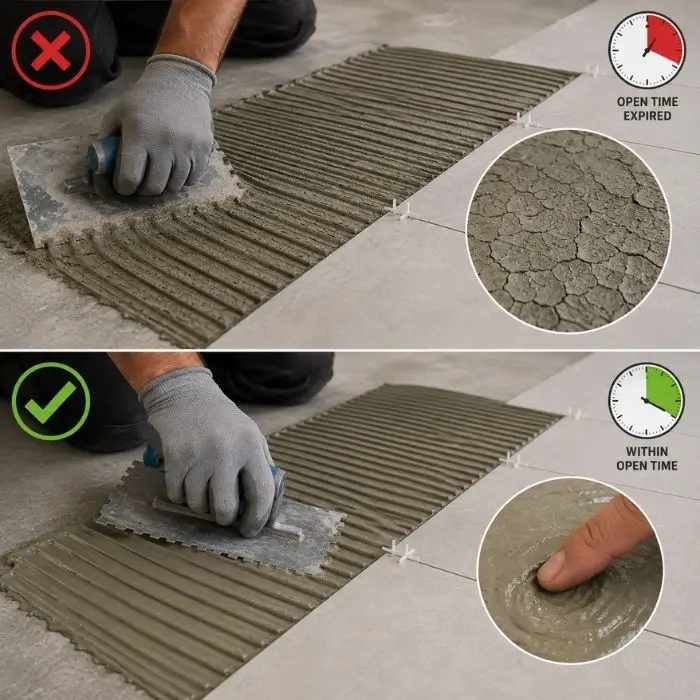
Every single highly specific modern tile adhesive fundamentally possesses a strictly defined workable open time, which dictates exactly how long the spread mortar can safely remain on the substrate. Professional master installers frequently encounter absolutely devastating failures when they prematurely trowel out far too much wet adhesive at once, especially in exceedingly hot or aggressively windy site conditions. Once that extremely delicate, thin dry skin inevitably forms on the troweled surface, the mortar completely loses its fundamental chemical ability to successfully adhere to the tile surface. Even if the heavy massive tile is aggressively pressed incredibly firmly into the heavily troweled mortar bed, it will never properly structurally bond.
To highly effectively prevent this incredibly detrimental rapid surface skinning effect, highly skilled professional tradesmen must constantly monitor ambient environmental site conditions and proactively adjust their daily working pace. High extreme site temperatures and extremely low structural humidity levels drastically reduce both the workable open time and the mortar's overall chemical pot life directly within the mixing bucket. Installers should frequently perform a highly simple physical touch test by lightly pressing a completely clean finger directly into the freshly combed wet mortar bed immediately; if the wet adhesive does not aggressively stick to the skin, it must be completely manually removed.
5. Inadequate Joint Width
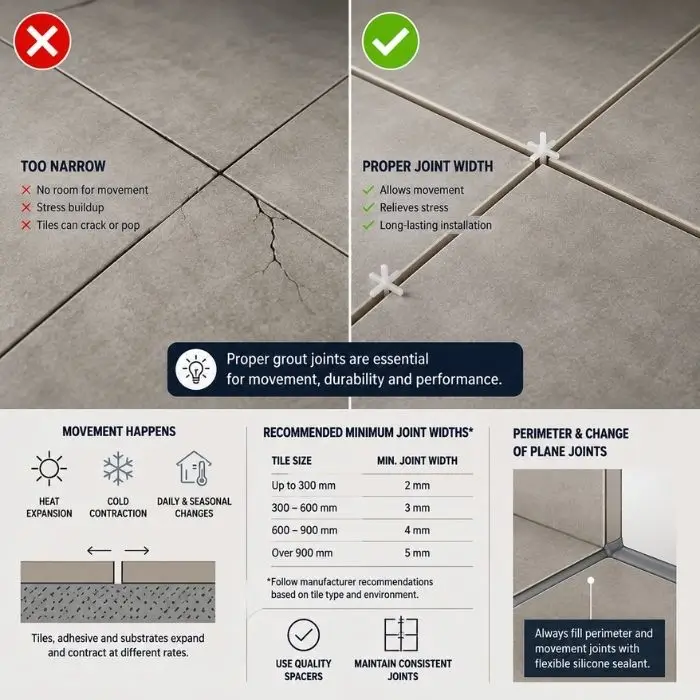
The extremely popular modern architectural demand for incredibly seamless, highly monolithic structural surfaces has aggressively driven a massive design trend toward dangerously razor-thin narrow grout lines. Tiles, heavily engineered modern adhesives, and rigid structural substrates all inherently expand and aggressively contract at vastly different specific rates due to intense seasonal thermal fluctuations. Proper professional grout joints essentially function as incredibly essential structural pressure relief valves, actively absorbing this continuous invisible micro-movement and completely preventing the highly rigid building materials from binding destructively. When delicate thin joints are incorrectly set far too tightly, the immense trapped compressive forces literally have absolutely nowhere to escape.
Dedicated expert professional installers must absolutely always strictly adhere to the specific adhesive and structural tile manufacturer's heavily researched recommended absolute minimum joint widths strictly for the particular environment. Critical architectural areas exposed directly to intense direct sunlight, intricate complex underfloor heating systems, or extreme exterior weather conditions absolutely strictly require significantly wider expansion joints constantly. Utilizing exceptionally highly precise rigid tile spacers robustly ensures absolute pristine visual consistency strictly across the entire massive installation and strongly maintains the overall structural grid integrity. Additionally, firmly ensuring that all critical structural perimeter expansion joints are completely filled with highly flexible silicone is essential.
To guarantee your meticulous surface preparation and flawless techniques are never wasted, trust the advanced engineered strength of Dryfix tile adhesive products for every demanding professional installation. Formulated with premium moisture-retaining polymers to provide exceptional workable open times and superior structural bond strength, Dryfix ensures your massive large format and high-stress projects remain securely anchored for decades. Elevate your professional reputation and permanently eliminate costly call-backs by upgrading your daily workflow with the uncompromising reliability of Dryfix today.