


Water is one of the biggest environmental factors threatening the lifespan of structures. In particular, groundwater, rain, and soil moisture seep into the reinforcement of reinforced concrete structures, causing corrosion over time and seriously reducing the durability of the load-bearing system. Developed to eliminate these risks, bitumen-based liquid-applied waterproofing is one of the strongest shields protecting structures against water thanks to its elastic structure and seamless application capability. Obtained by enriching bitumen, a petroleum derivative, with rubber or polymer additives, these materials adhere completely to the surface to form a monolithic barrier.
It is essential that the correct insulation material is used in the right details so that structures can stand safely and not require maintenance for many years. Liquid-applied bituminous materials offer ease of application with the help of a brush or roller, while providing flawless waterproofing even in complex detail solutions. In this guide, we will examine in detail the critical application areas, structural details, and engineering advantages where bitumen-based liquid waterproofing is most preferred.
Bitumen-Based Waterproofing in Foundations and Retaining Walls
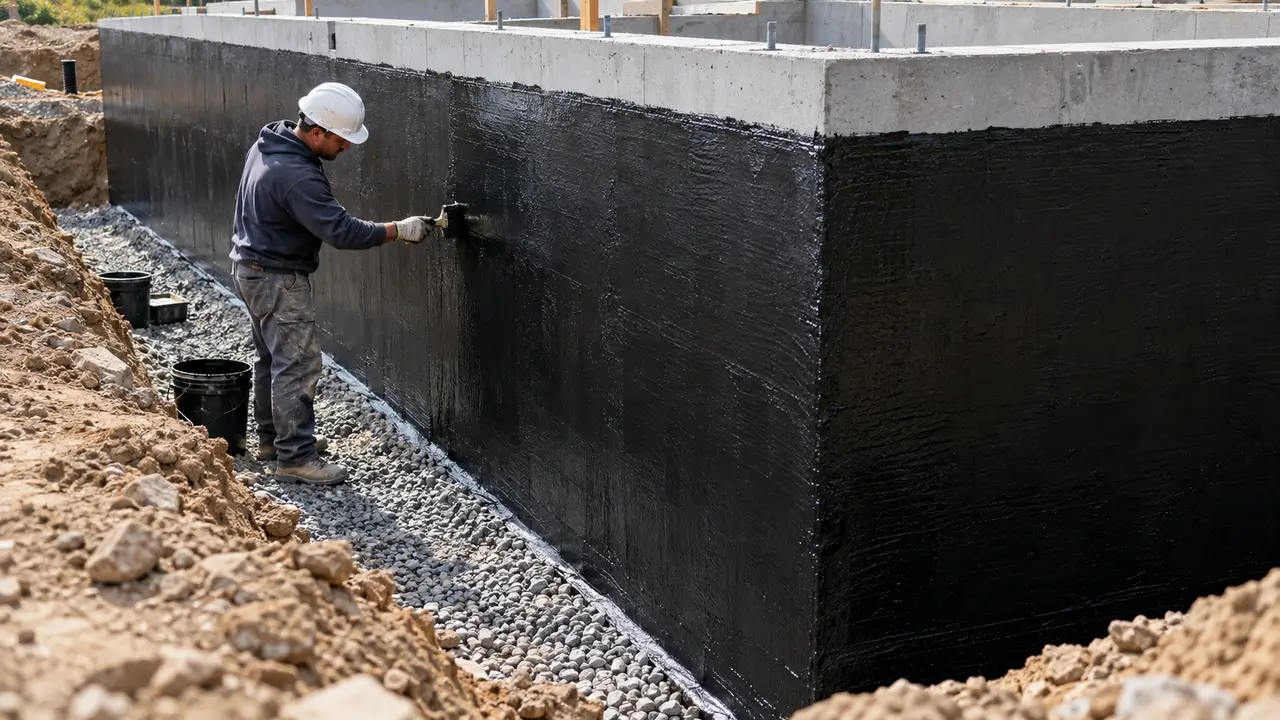
The most critical parts of structures that come into contact with the ground are foundations and retaining walls. These areas are constantly exposed to the hydrostatic pressure of groundwater, soil moisture, and rainwater. Bitumen-based liquid waterproofing forms a seamless layer on these surfaces, completely preventing water from seeping into the building's load-bearing system. Ensuring the surface is smooth and clean during application directly increases the bonding strength of the material to the concrete.
Waterproofing applied from the positive side on retaining walls extends the life of the concrete while preventing moisture and mold problems that may occur inside. The following table lists the core technical characteristics and advantages of bitumen-based materials used in foundation and retaining wall waterproofing:
| Feature / Parameter | Bitumen-Based Liquid Waterproofing | Traditional Methods |
| Application Method | Brush, roller, or spray (Seamless) | Torch-applied / Overlapping |
| Elasticity | High (Crack-bridging ability) | Low (Risk of opening at joints) |
| Surface Adaptation | Full adaptation to complex details and corners | Difficulty in application at corners and details |
| Pressure Resistance | Resistant to high hydrostatic pressure | Weakening at joints under pressure |
After application, mechanical protection should be provided with boards or drainage membranes during backfilling to prevent damage to the insulation layer. This precaution directly extends the life of the insulation.
Meet Dryfix bitumen-based liquid waterproofing solutions immediately to protect your structures against the destructive effects of water and extend their lifespan. Providing flawless waterproofing even in the most challenging details with its superior elasticity and seamless application advantage, Dryfix products bring a long-lasting and reliable shield to your projects. Choose the right product right now and discover flawless waterproofing so you do not leave your structural safety to chance!
Why Should Bitumen Be Preferred in Terrace and Roof Waterproofing?
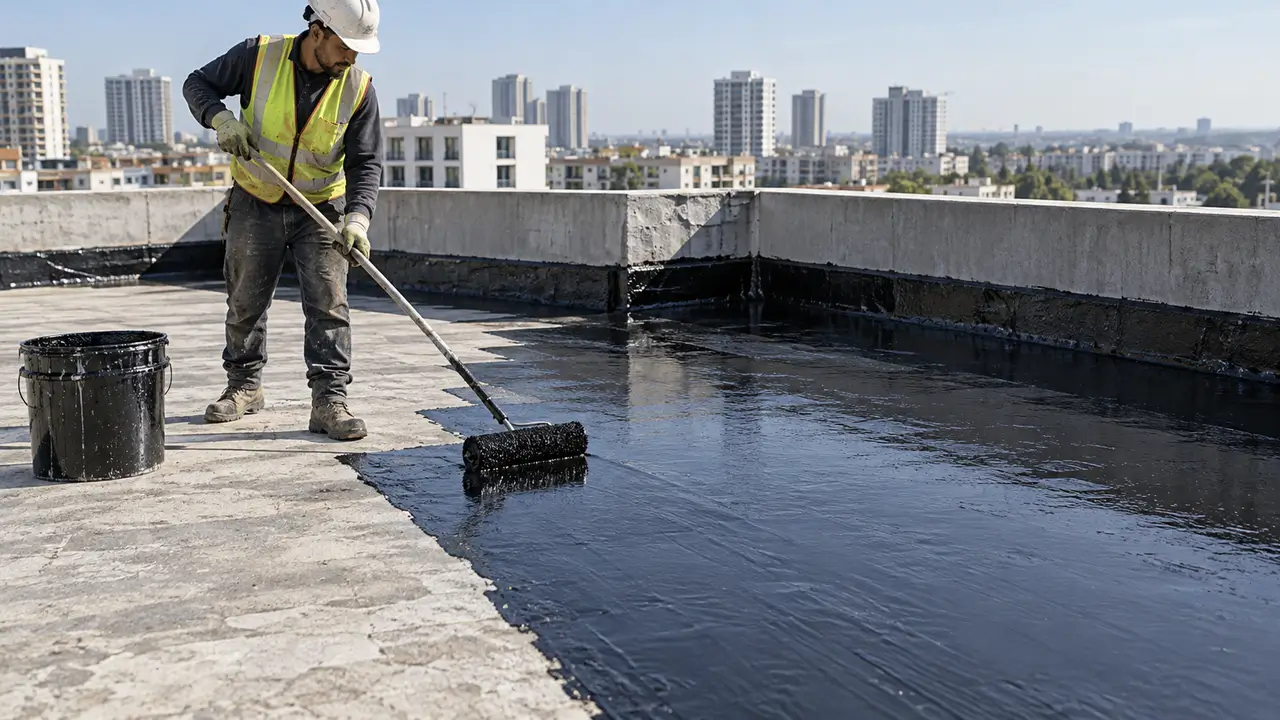
Terraces and open roofs are exposed to harsh weather conditions such as direct sunlight, freeze-thaw cycles, and heavy precipitation. Bitumen-based liquid waterproofing shows high resistance against expansion and contraction caused by temperature changes in these areas. The polymer additives contained in the material provide elasticity, preventing capillary cracks that may form on the surface from tearing the insulation.
One of the biggest advantages of this system is that it can be easily applied with a brush even on flat roofs or roofs with complex geometries. Extra safety can be provided by increasing the layer thickness at points where water accumulation may occur. The basic steps to consider in roof waterproofing are:
- Surface Preparation: All dust, oil, loose pieces, and mortar residues on the roof are cleared, and rough areas are leveled with repair mortar.
- Primer Application: Bituminous primer is applied to prevent surface dusting and increase the bonding strength of the main insulation material.
- Layered Application: Liquid bitumen is applied in at least two coats, leaving drying time between coats and usually with mesh reinforcement.
Waterproofing in Underground Parking Lots and Shelters
Underground parking lots and shelters, which occupy a large place in modern urban architecture, are under constant threat of flooding and moisture because they are located below ground level. Protecting the reinforced concrete structure in these areas is essential not only for structural integrity but also for the safety of vehicles and people inside. Bitumen-based liquid waterproofing systems offer a fast and reliable insulation opportunity on large surfaces.
Forming a seamless shield on the ceilings, floors, and vertical walls of shelters and parking lots, these materials completely prevent external water from seeping inside. It also creates a healthy indoor atmosphere by blocking potential gas or moisture transitions that may occur inside. In engineering calculations, bitumen application at the correct thickness is preferred by taking into account the loads these areas will be exposed to.
Bituminous Liquid Waterproofing Applications in Elevator Pits
Elevator pits, which are the deepest points of buildings, are the areas most vulnerable to water leaks because the groundwater level is generally at or above the foundation level. Water leaking into the pit causes rusting of elevator mechanisms, electrical contact failures, and the complete shutdown of the system. Therefore, high-pressure water-resistant bitumen-based liquid waterproofing is used in elevator pits.
During application, the direction from which water comes (usually negative or positive) must be correctly identified, and special bituminous solutions suitable for surface moisture should be chosen. Chamfers are made at corners and joints to prevent the material from piling up and cracking in these critical areas. Thanks to its seamless structure, it exhibits excellent waterproofing performance even in the narrowest spaces.
Bitumen-Based Liquid Waterproofing on Raft Foundations
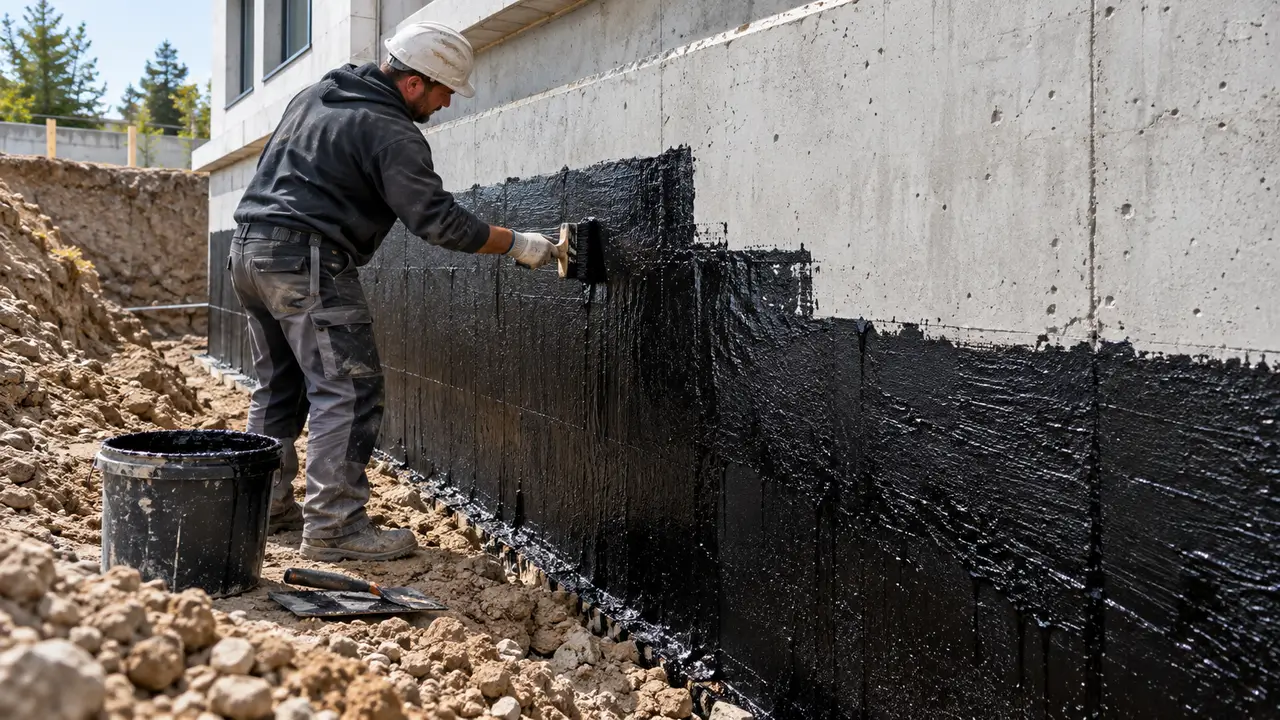
Raft foundations, which safely transfer the entire weight of the structure onto the ground, are the most vital load-bearing element of a building. Groundwater and soil moisture that may come from under the foundation cause iron reinforcements to corrode, reducing the bearing capacity of the structure. In raft foundation applications, bitumen-based liquid waterproofing is applied as a seamless layer before concrete is poured or directly onto the foundation footings.
This system creates an impermeable barrier between the building and the rubble or lean concrete surface beneath the foundation concrete. The high flexibility of the material prevents the insulation layer from tearing during the settlement and movement processes of the building. Thus, foundation safety is kept at the maximum level throughout the building's lifespan.
Waterproofing Under Heavy Loads in Tunnels, Bridges, and Viaducts
Transportation structures such as tunnels, bridges, and viaducts are constantly exposed to dynamic traffic loads, vibrations, and harsh weather conditions. In these massive engineering structures, water seeping into the concrete causes the concrete to break apart and the reinforcements to rot along with freezing events. Bitumen-based liquid waterproofing stands out with its flexible structure showing superior performance in these heavy-duty areas.
Special modified bituminous liquid systems used under asphalt pavement or reinforced concrete slabs are resistant to high temperatures and heavy vehicle loads. Thanks to its high bonding strength, it is not adversely affected by the heat and pressure of hot asphalt poured over it, thus offering a maintenance-free insulation life for many years.
Liquid Insulation in Foundation Waterproofing (Tanking) Systems
Foundation waterproofing (tanking) is the process of completely wrapping the foundation and retaining walls of a structure from the outside to cut off contact with water. In this method, bitumen-based liquid waterproofing ensures the integration of horizontal and vertical surfaces, creating a zero-water-permeability pool effect. Insulation starting from under the foundation is carried upward along the retaining walls and completed seamlessly.
The chemical resistance of bituminous materials used in tanking systems protects the structure against aggressive substances and sulfates in the soil. The care shown to details during application guarantees the water safety of the entire building. Combined with correct workmanship, foundation waterproofing is the most effective isolation strategy that directly doubles the economic lifespan of the structure.