


The right waterproofing is one of the most critical processes that extend the service life of structures and prevent the harmful effects of moisture and water. The variety of materials used in the construction industry often causes project owners to struggle during the decision-making stage. The physical conditions of every area, from foundations to roofs, differ from one another, requiring unique solutions.
There are three main systems most preferred in the market: Bitumen-based, cement-based, and polyurethane-based materials. In this article, you will find the details that will help you make the right decision for your building by examining the technical features, application areas, and advantages of each material.
1. Bitumen-Based Waterproofing: Classic and Economical Choice
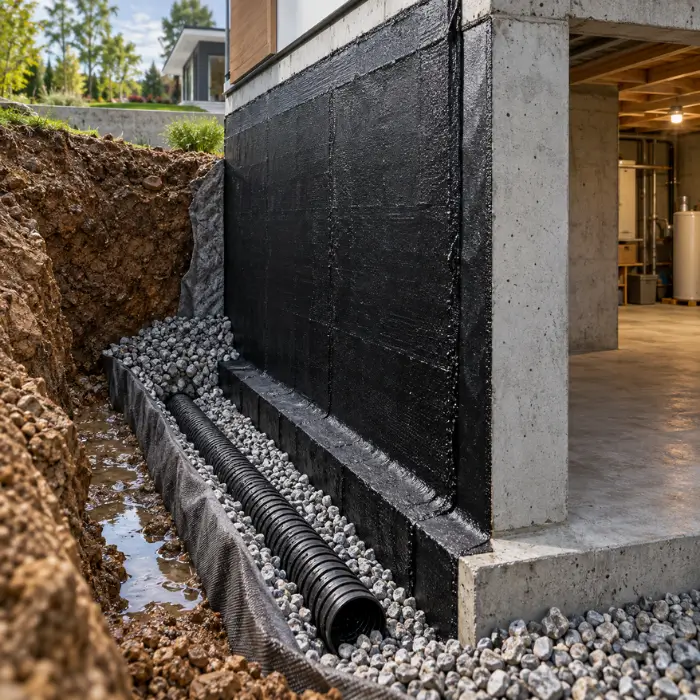
Bitumen-based waterproofing materials, with their tar-based structures derived from petroleum, have been the cornerstone of the construction industry for many years and offer the most established solutions. Thanks to their water-repellent properties, they create a strong shield against water leaks, especially in foundations, basements, and retaining walls remaining underground. High bonding strength and economic cost advantage play a leading role in selecting this system primarily in large-scale construction projects.
They are produced and offered to the market in the form of rolls, liquid-applied forms, or membranes. Torch-applied bonding methods or cold application options provide application teams with great flexibility on site. It shows high strength especially in retaining walls exposed to high groundwater, under foundations, and in wet-room sub-grade transitions.
However, its weak resistance to sunlight limits its single-use on exposed terraces. For this reason, its surface must be covered with a screed, ceramic, thermal insulation, or protective filling material. When applied with correct detail solutions, it protects building foundations from water for many years and prevents corrosion.
2. Cement-Based Waterproofing: The Indispensable Choice for Wet Rooms

Cement-based waterproofing materials are two-component mortars consisting of a homogeneous combination of mineral fillers and special polymer additives. They achieve a flawless chemical compatibility with reinforced concrete structures, completely integrating with the applied surface to form a monolithic layer. They yield flawless results for ceramic-under applications in wet areas such as water tanks, bathrooms, kitchens, and balconies, while increasing surface durability.
The prominent technical features and advantages of this material are as follows:
- Integration with Concrete: It penetrates deeply into the capillary cracks of concrete, creating a crystallized structure and blocking water at its source.
- Breathability: It does not block the air circulation of the structure, thus preventing moisture accumulation inside walls or floors.
- Easy Preparation: It becomes ready for application in a short time by practically mixing powder and liquid components with a low-speed mixer.
- Drinking Water Suitability: Thanks to special formulas containing no toxic chemical components, it is safely preferred in drinking water tanks.
- Surface Compatibility: It adheres very strongly to different mineral surfaces such as brick, aerated concrete, and cement-based plaster.
During application, the surface must be saturated with moisture and applied in at least two coats using a brush or spray gun. Formulations specially designed to withstand both negative and positive water pressure are also available in the market, maximizing structural safety.
3. Polyurethane-Based Waterproofing: Modern and High Elasticity
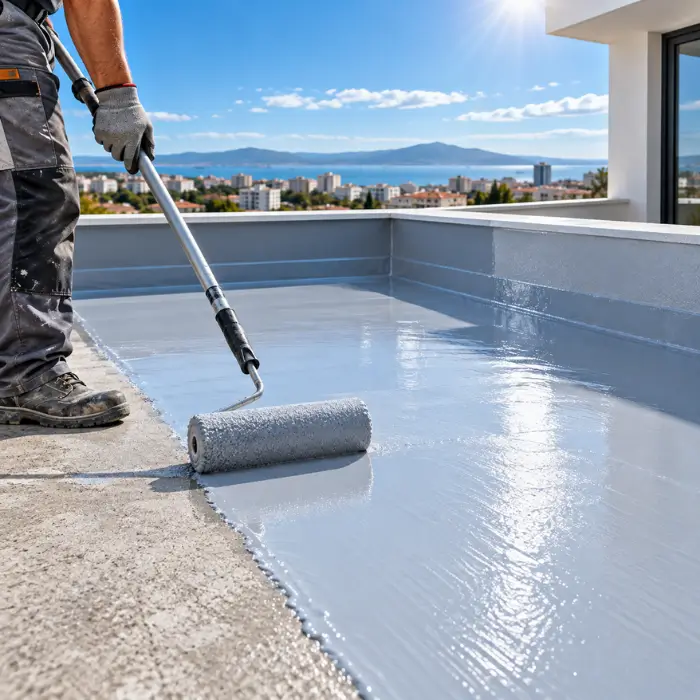
Polyurethane-based waterproofing systems have become indispensable for roof and terrace waterproofing with recent developments in building technologies. Applied in liquid form and forming a seamless, completely monolithic membrane layer after curing, these products provide superior protection against even the most challenging water leaks. A very high elasticity coefficient enhances the ability to perfectly bridge capillary cracks caused by thermal movements and ground settlements of the building.
Thanks to its high resistance to ultraviolet sun rays, it can be safely applied directly exposed on terraces, facades, and open parking lot floors. It is easily applied with rolls, brushes, or airless spray guns, bonding completely chemically to the concrete surface to prevent water from leaking under the insulation layer. Heavy-duty final coat versions resistant to mechanical impacts, abrasion, and heavy pedestrian traffic allow terraces to become active living spaces.
Due to its high-tech structure, the material cost is slightly higher compared to standard systems. On the other hand, the long-lasting protection and maintenance-free surface quality it offers allow the initial investment cost to be amortized in a short time. Especially in roof parapets and water drain details with complex details, it provides flawless waterproofing and grants architectural freedom.
Quick Comparison for Choosing the Right Material
When choosing the most suitable waterproofing material for your project, you must meticulously consider the physical conditions of the space, your project budget, and the water pressure the structure will be exposed to. Choosing the wrong material can lead to the waterproofing system completely losing its function in a short time and much more costly repairs in the future. Completely different areas such as foundations, terraces, roofs, and wet rooms require waterproofing solutions with unique technical features and determine the fate of the project.
The table below allows you to quickly compare the prominent characteristic features of the three main insulation systems we examined in detail and make an informed decision:
| Feature | Bitumen-Based Waterproofing | Cement-Based Waterproofing | Polyurethane-Based Waterproofing |
|---|---|---|---|
| Application Area | Foundation, retaining wall, basement | Wet rooms, water tanks | Terrace, roof, open parking lot |
| Cost | Economical | Affordable and economical | High |
| Flexibility | Low / Medium level | Low | Very High |
| UV Resistance | Weak (Requires protection layer) | Weak | Excellent |
| Application Method | Roll, torch, liquid-applied | Brush, trowel application | Roll, airless spraying |
By blending the technical data in the table with the geographical location and budget of your project, you can choose the right product and safeguard your structure against the destructive effects of water for many years.
A Note on Brand Solutions: You can choose Dryfix product groups to protect your structure from the wearing effects of water for a lifetime and bring the most accurate waterproofing solution to life. Dryfix bitumen, cement, and polyurethane-based systems produced with advanced technology show flawless performance in your projects. Get in touch with our expert team right now to choose the most suitable Dryfix solution for your building and safely invest in the future.