


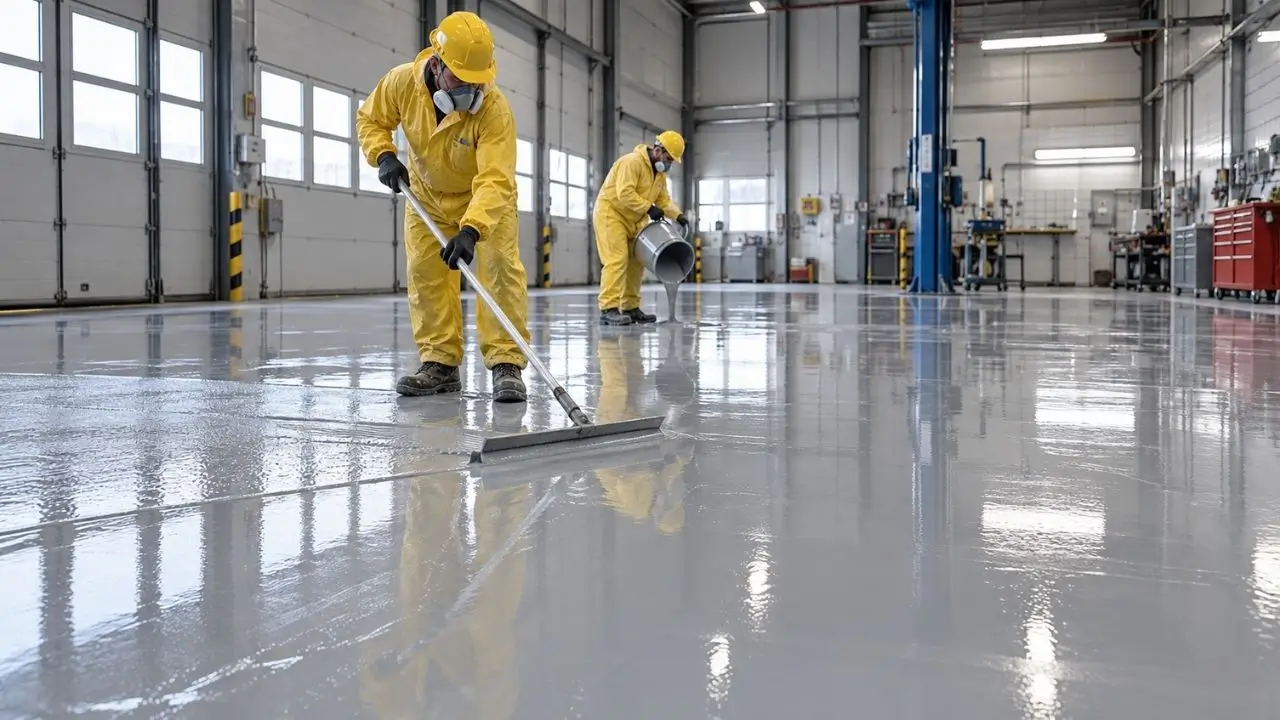
Floors stand as the silent witnesses beneath our footsteps. Countless footsteps, heavy loads, and spilled liquids leave deep marks on these surfaces over years. Without the right coating choice, even luxury buildings quickly turn into neglected appearances. Epoxy systems step in precisely at this point, taking the raw structure of concrete under protection and completely transforming the character of the space.
Spanning a wide range from industrial workshops to modern offices, this resin technology transcends a mere paint layer. Through its chemical structure that integrates with the surface, it defies challenges it faces. This protective shield extends the lifespan of the space, earning preferred status in architectural projects.
1. Durability and Strength
Concrete surfaces, regardless of their sturdy appearance, remain vulnerable to heavy traffic and mechanical impacts. Forklift wheels, dropped heavy tools, and continuously moving personnel create dusting, pitting, and cracks on the floor over time. Epoxy resin completely eliminates this weakness. The moment it is applied, it penetrates the pores of the concrete, transforming it into a monolithic, armored mass. Tensile and compressive strength climb to incredible levels.
Remaining unflexed or uncrushed even under high weights, these surfaces hold vital importance for heavy industrial facilities. Hammer blows, vibrating machines, and metal-wheeled cargo carts fail to damage an epoxy-coated floor. Reducing maintenance costs almost to zero, this structure makes businesses forget about floor repair troubles for years.
Dryfix DFC 310, a two-component, solvent-free epoxy resin-based topcoat, is designed to create a non-slip, smooth, and durable surface on industrial floors. Offering a practical solution thanks to its easy application feature, it is frequently preferred in industrial areas, on floors, or walls. DFC 310 stands out with its excellent adhesion property, resistance to chemicals and abrasion, long service life, and aesthetic appearance.
2. Hygiene and Easy Cleaning
Dusting concrete floors directly lower indoor air quality, posing a significant risk for facilities engaged in sensitive production. Food factories, hospitals, and pharmaceutical laboratories must remain sterile. Offering a smooth and seamless surface, epoxy leaves no micro-cracks where bacteria, fungi, or dust can shelter. Its stain-resistant structure prevents spilled liquids from penetrating the floor.
| Cleaning Criterion | Traditional Concrete Floor | Epoxy Floor Coating |
| Liquid Permeability | High (Absorbent porous structure) | Zero (Complete sealing) |
| Dusting Condition | Intense (Continuously produces dust) | None (Monolithic and dust-free) |
| Sterilization Ease | Difficult and time-consuming | Practical and fast washing |
Cleaning processes gain speed thanks to this attribute. A simple mop stroke or industrial floor washing machines render the surface hygienic instantly. Protecting employee health, this structure ensures businesses pass inspections without trouble.
3. Chemical and Water Resistance
Contact of chemical substances, acids, oils, and solvents with concrete causes the material to rapidly deteriorate and dissolve. Encountering such liquids in production facilities or parking lots remains inevitable. Epoxy floors display extraordinary resistance against chemical attacks. Fuel, hydraulic oils, and aggressive cleaning chemicals fail to damage the surface.
Moisture and water leaks can rot the foundation of buildings from the inside. Epoxy assumes a waterproof barrier role, preventing moisture from reaching the concrete. Basements, wet areas, and parking lots thus become completely free from humidity and corrosion threats. Maintaining their first-day resistance for long years, these floors surrender none of their protective power.
4. Aesthetics and Diversity
Industrial areas now demand not only functionality but also visual satisfaction. The gray and boring concrete appearance gives way to vibrant color transitions and glossy surfaces. Removing boundaries in floor design, this material offers color options matching the corporate identity of the space.
- The ability to make spaces look wider, more spacious, and brighter.
- Depth and modern touches achieved through transparent applications.
- Special aggregate surface alternatives for sloped areas requiring slip resistance.
- Flawless integration of directional lines and warning signs onto the floor.
Through light-reflecting properties, serious savings are achieved in lighting expenses. Warehouses and showroom areas acquire a much more professional appearance. Uniting aesthetics and functionality in the same resin, these systems directly increase the value of spaces.