


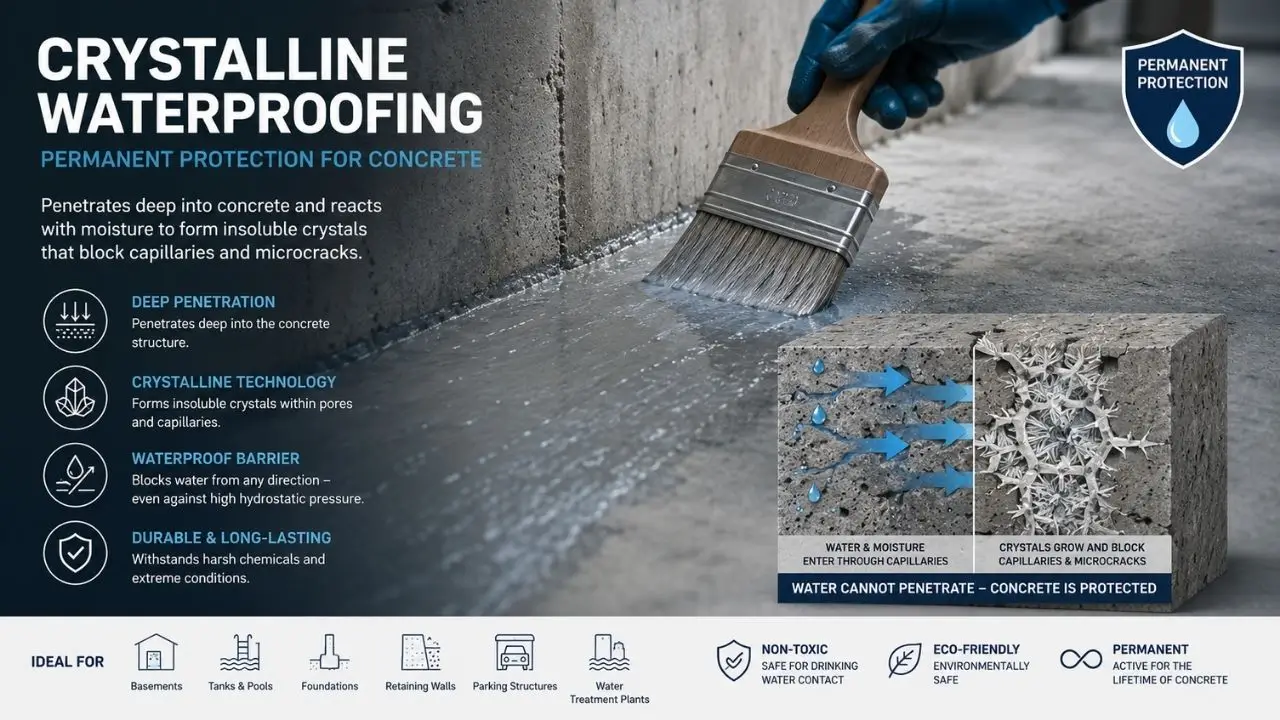
Concrete is undeniably the most widely utilized construction material in the world, renowned for its immense structural strength and durability. However, despite its solid appearance, concrete is inherently a porous material filled with microscopic capillaries, voids, and micro-cracks. When exposed to moisture, these natural pathways act like a sponge, drawing liquid deep into the structural core through capillary action. This moisture infiltration leads to severe structural degradation over time, including the corrosion of reinforcing steel rebars and general chemical deterioration. Protecting concrete from water ingress is not just an aesthetic preference; it is an absolute engineering necessity for ensuring the structural integrity of any building project. Therefore, finding an effective, permanent waterproofing solution is paramount for construction professionals today.
Traditional waterproofing methods have long relied on applying external barriers or surface membranes to keep water out. While these surface-level solutions can be effective initially, they are incredibly vulnerable to physical damage, environmental degradation, and natural deterioration over time. Once a traditional membrane is punctured, water easily bypasses the defense system and wreaks havoc on the underlying concrete base. This vulnerability has driven the construction industry to seek a more integrated, permanent solution that goes beyond mere surface protection. Enter crystalline waterproofing, a revolutionary chemical technology that transforms the concrete itself into a highly effective, impenetrable water barrier. By reacting internally with the concrete matrix, this advanced approach offers an innovative, proactive defense mechanism against water penetration.
What is Crystalline Waterproofing Technology?
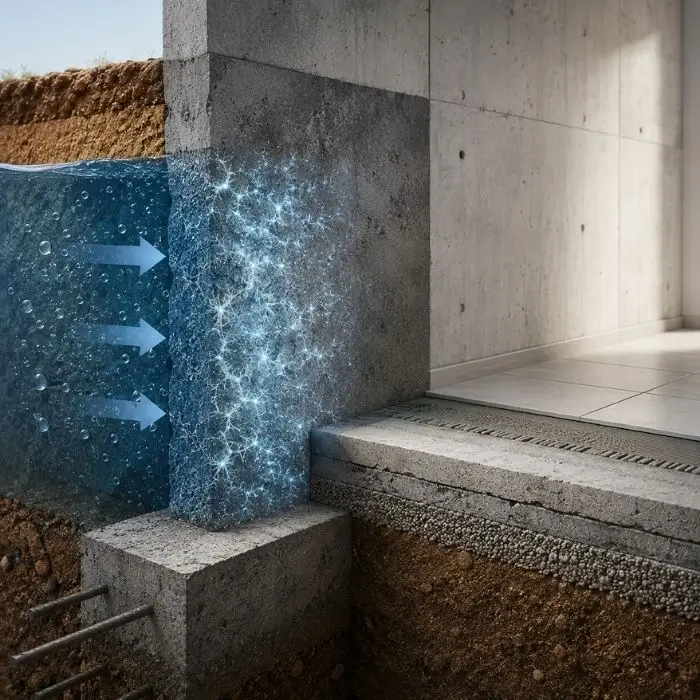
Crystalline waterproofing technology represents a paradigm shift in how we protect concrete structures from moisture damage and hydrostatic pressure. Unlike conventional methods that apply a separate physical membrane to the surface, this technology utilizes a specialized blend of active proprietary chemicals, Portland cement, and fine silica sand. When these active chemical components are introduced to the concrete matrix, they fundamentally alter the material's internal behavior. Instead of acting as an external shield, crystalline waterproofing becomes an integral part of the concrete mass itself. The chemicals penetrate deeply into the porous network, utilizing the moisture present within the concrete as a catalyst to initiate a continuous, complex chemical reaction that blocks water ingress permanently from any direction.
The primary objective of this technology is to permanently eliminate the interconnected pathways that allow water and aggressive chemicals to migrate through the structure. By chemically modifying the internal environment, crystalline waterproofing ensures that the concrete matrix can resist extreme hydrostatic pressure. This integral protection is highly advantageous for subterranean structures, such as deep basements and retaining walls. Furthermore, creating a perfectly dry, moisture-free substrate is critical for subsequent finishing works. For example, a completely dry concrete base ensures that professional tile adhesives—such as high-performance Dryfix products—can achieve maximum bond strength without facing the critical risks of adhesive failure or efflorescence caused by underlying moisture transmission pushing through the concrete matrix.
The Science Behind Crystalline Growth in Concrete
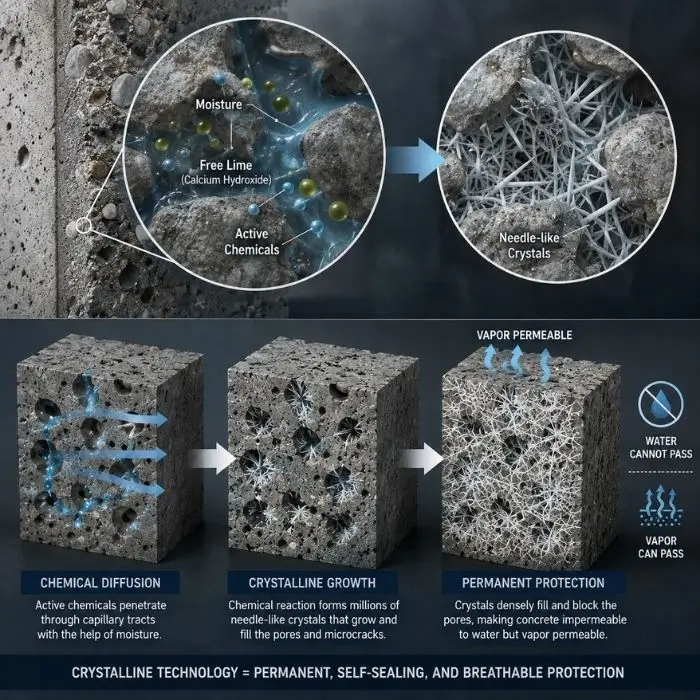
The underlying scientific mechanism of crystalline growth relies on a complex chemical reaction between the proprietary active ingredients, water, and the natural by-products of cement hydration. When Portland cement hydrates, it naturally produces calcium hydroxide, commonly referred to as free lime. Under normal circumstances, this free lime remains relatively dormant within the concrete pores. However, when crystalline waterproofing chemicals are introduced, they act as powerful catalysts. These active molecules aggressively seek out moisture and unhydrated cement particles. Upon contact, an intense catalytic reaction is triggered, causing the formation of millions of microscopic, non-soluble, needle-like crystals. This chemical reaction is thermodynamically driven to continue as long as moisture and free lime are present within the surrounding structural matrix.
This fascinating crystallization process is not a temporary physical state but a permanent chemical transformation of the concrete's internal structure. The crystalline formation is highly dependent on the principle of chemical diffusion. The active chemicals migrate through the saturated capillary tracts of the concrete, driven by the concentration gradient between the chemical treatment and the untreated concrete mass. As the reaction progresses, the newly formed needle-like crystals begin to densely populate and bridge the microscopic gaps. This intricate crystalline web physically chokes off the pathways, rendering the concrete completely impermeable to liquid water while still allowing natural vapor to transmit, thus letting the concrete safely breathe and preventing the buildup of trapped vapor pressure inside the elements.
How Crystalline Structures Block Micro-Pores and Capillaries
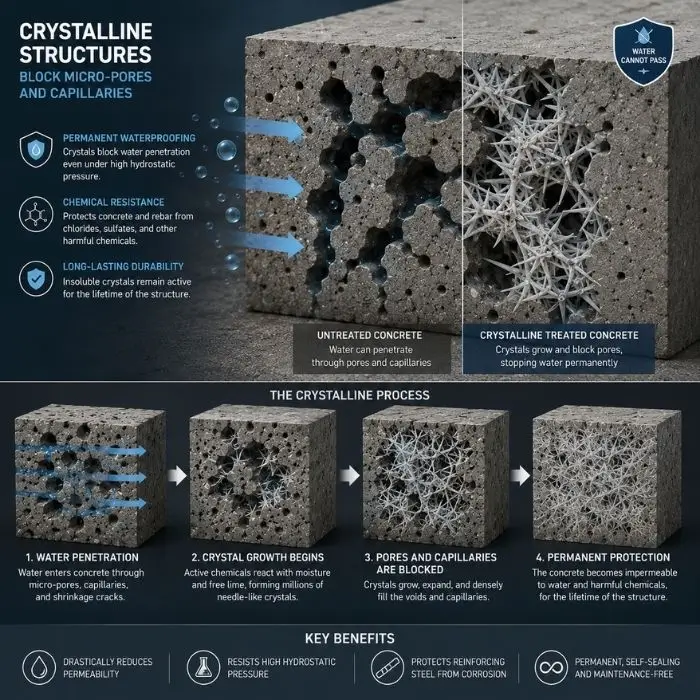
Concrete naturally possesses a vast network of interconnected micro-pores, capillary tracts, and shrinkage cracks that form during the initial curing process. These microscopic channels are the primary avenues through which water penetrates the rigid structure. When the crystalline growth phase is initiated, the insoluble crystals systematically grow and spread throughout this intricate internal network. The sheer density and geometric shape of these crystals are critical to their overall effectiveness; their long, fibrous structures physically intertwine and pack tightly against one another within the narrow confines of the pores. This intense physical crowding creates a robust, impenetrable blockage that stops the migration of water molecules dead in their tracks, even under significant hydrostatic pressure from the surrounding groundwater environment.
The physical blockage of these capillaries yields several remarkable benefits for the overall durability of the concrete elements. First, the densely packed crystals drastically reduce the permeability of the concrete, completely shutting off the flow of bulk water. Second, the crystalline matrix prevents the penetration of harmful waterborne chemicals, such as chlorides and sulfates, which notoriously cause rapid deterioration of embedded reinforcing steel. Third, because the crystals are insoluble and permanently fixed within the concrete matrix, the waterproofing effect never degrades over time, unlike surface treatments that wear away. By thoroughly filling the micro-pores and capillaries deep within the concrete mass, the structural core is fully shielded from the corrosive elements that typically compromise conventional construction projects.
The Self-Healing Mechanism: Reactivating with Water Exposure
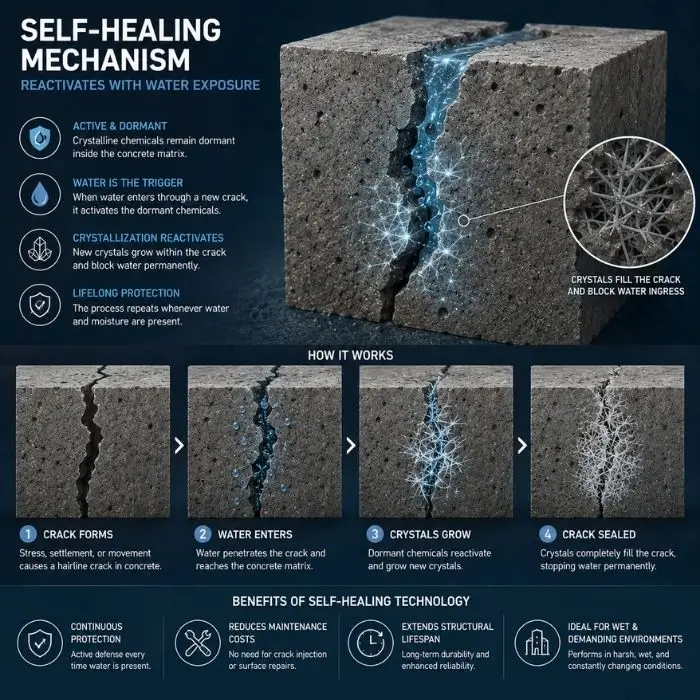
One of the most extraordinary and unique features of crystalline waterproofing technology is its innate ability to self-heal future micro-cracks. Concrete is a rigid material that inevitably experiences stress, settlement, and thermal movement, often leading to the formation of hairline cracks long after the curing process is complete. In traditional waterproofing systems, a crack in the concrete usually means a crack in the protective membrane, immediately compromising the water barrier. However, the active chemicals in a crystalline-treated concrete remain dormant within the matrix. When a new crack forms and water begins to seep through, this intruding moisture serves as a powerful trigger. The dormant chemicals instantly reactivate, restarting the crystallization process to generate new protective crystals.
This remarkable self-healing capability fundamentally changes the maintenance lifecycle of concrete structures, providing an active, responsive defense system that lasts forever. When moisture infiltrates a new fissure, the chemical reaction quickly bridges internal gaps, permanently blocking the water ingress without any need for human intervention or costly manual repairs. This continuous reactivation cycle means that the concrete actively fights against deterioration every time it is exposed to harsh moisture. By eliminating the necessity for extensive crack injection or surface patching over the years, the self-healing mechanism drastically reduces long-term maintenance expenses and significantly enhances the structural reliability and overall safety of infrastructure projects exposed to wet, demanding, and constantly shifting environmental conditions across the globe.
Crystalline Waterproofing vs. Traditional Surface Membranes
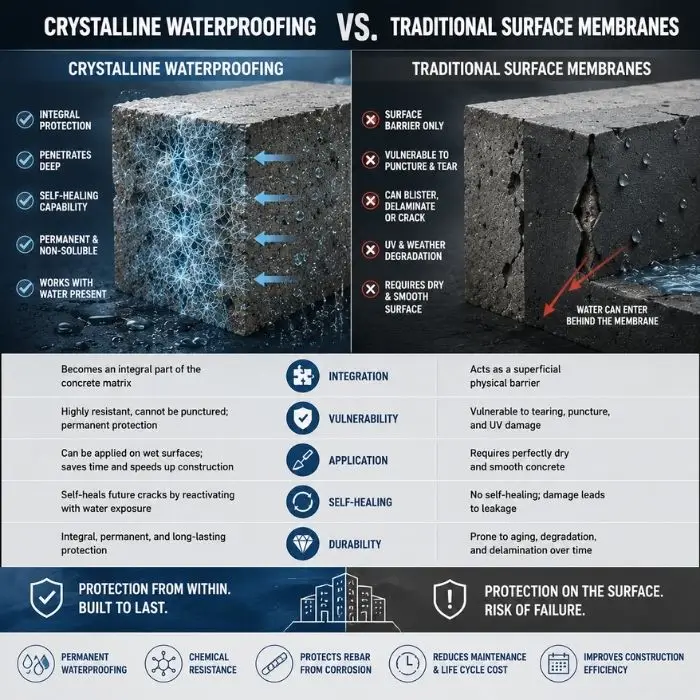
When evaluating waterproofing solutions, comparing crystalline technology directly against traditional surface membranes reveals stark differences in operational performance. The following points highlight the critical distinctions between these two methodologies:
- Integration: Crystalline becomes an integral part of the concrete matrix, whereas traditional membranes act as superficial physical barriers.
- Vulnerability: Crystalline is highly resistant and cannot be punctured, while traditional membranes are vulnerable to tearing and UV damage.
- Application: Crystalline can be applied on wet surfaces, while membranes require perfectly dry and smooth concrete. This comparison clearly illustrates why modern engineering increasingly favors integral chemical solutions over external physical barriers for ensuring robust structural protection, guaranteed longevity, and improved efficiency during demanding construction timelines.
Traditional surface membranes, such as bituminous coatings or thick polyurethane sheets, inherently suffer from a fundamental flaw: they are completely separate from the structure they attempt to protect. If a membrane blisters, delaminates, or gets accidentally punctured during heavy backfilling operations, water will effortlessly seep behind the installed barrier. Once water enters, it becomes trapped between the membrane and the concrete, accelerating deterioration and making it incredibly difficult to locate the exact source of the leak. In contrast, crystalline waterproofing is immune to such physical damage because the active protection resides deep within the concrete itself. Furthermore, it saves significant construction time since it does not require a dry surface for successful application, ensuring projects stay on schedule.
Transform your vulnerable concrete into an impenetrable fortress with the permanent, self-healing power of Dryfix crystalline waterproofing products. Don't settle for temporary surface fixes when you can deeply integrate a lifetime of active moisture protection directly into your structural core. Secure your project's future today by choosing Dryfix, and contact our expert team to build with absolute confidence!