


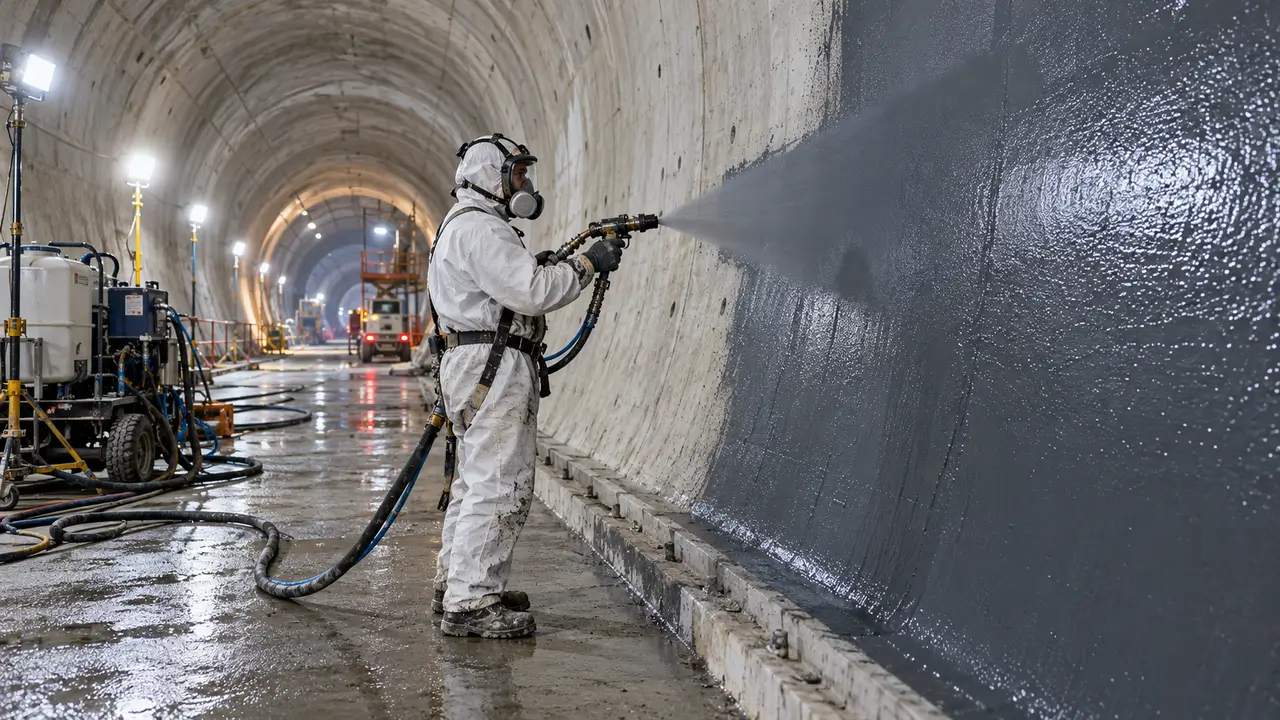
Modern urbanization and increasing transportation demands are constantly expanding the scope of underground structures and major infrastructure projects. Tunnels and underpasses are critical engineering marvels built to ensure long-lasting, safe, and uninterrupted traffic flow. However, these structures are continuously exposed to groundwater hydrostatic pressure, soil movements, and environmental factors. Inadequate or faulty waterproofing leads to structural decay, reinforcement corrosion, and ultimately major property damage.
Accordingly, professional insulation technologies used in tunnel and underpass projects play a vital role in protecting the integrity of the structure. In contemporary engineering applications, multi-layer insulation systems have been developed that completely prevent water leaks even under the harshest soil conditions. Offered in a wide range from geosynthetic membranes and injection resins to drainage panels and special waterstops, these technologies guarantee the safety and durability of infrastructure projects.
Fundamental Principles and Engineering Importance of Waterproofing in Tunnels and Underpasses
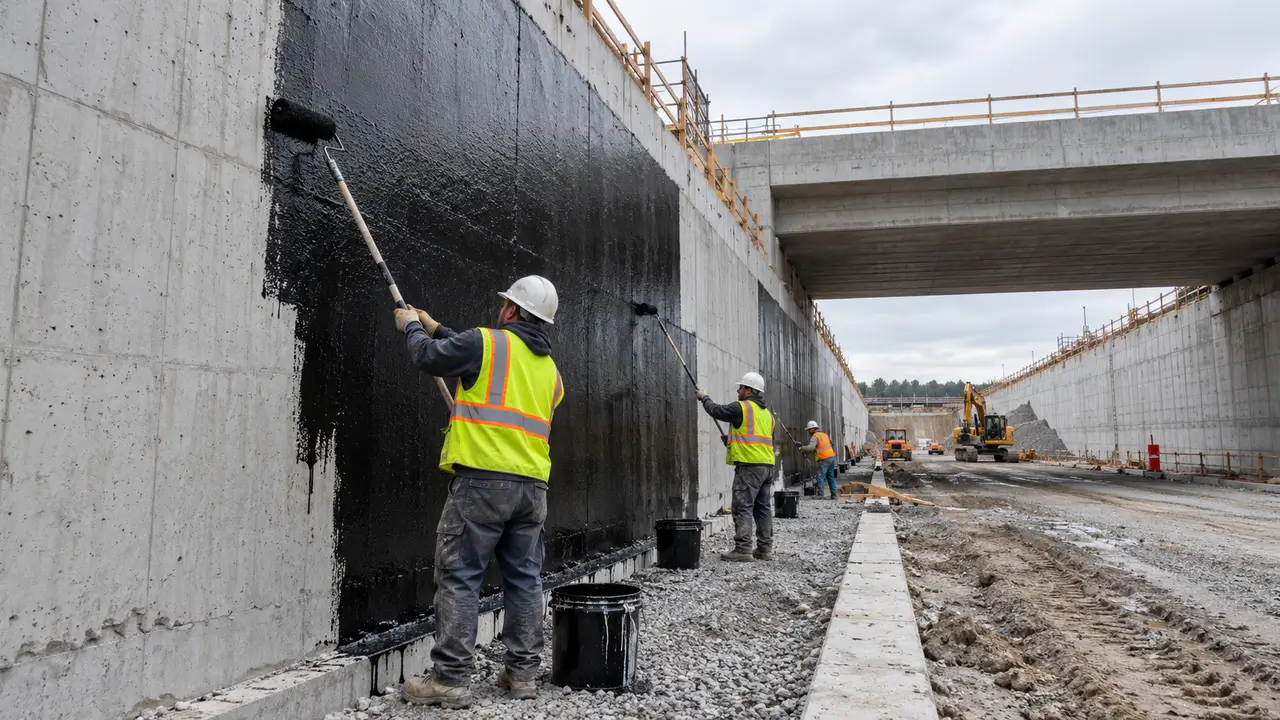
Waterproofing in tunnel and underpass construction is one of the fundamental engineering disciplines that directly determines the service life of the structure. The potential damage that groundwater may cause to reinforced concrete structural elements during construction and operation phases must be anticipated in advance, and appropriate strategies must be determined. During the design phase, soil surveys are meticulously examined to calculate hydrostatic pressure levels.
Waterproofing systems isolate the structure from external factors while ensuring that the internal environment remains dry. This protective shield, which extends the static life of the structure, prevents the steel inside the concrete from rusting. Corrosion is among the major risk factors leading to a reduction in load-bearing capacity, and insulation technologies aim to eliminate this risk.
It is essential to implement quality control mechanisms fully during the application process. Even the smallest error or flaw in a joint detail causes water to seep into the structure over time. Therefore, engineers design holistic systems that provide continuity and flexibility of insulation layers, thereby guaranteeing project safety.
Geosynthetic Membranes and PVC-TPO Technologies
Synthetic membranes are heavily preferred to ensure impermeability in major infrastructure projects. Polycvinyl Chloride (PVC) and Thermoplastic Polyolefin (TPO) based membranes stand out due to their high strength and flexibility. These materials are laid on geotextile fleeces spread across the tunnel excavation surface and joined using hot-air welding to form a seamless layer.
The main factors to consider when choosing membranes include:
- Durability against site conditions with high puncture and tear resistance.
- Superior resistance to chemical substances and groundwater acids.
- Ability to adapt to structural movements with long-term elasticity capability.
- Perfection in joining via hot-air welding and providing impermeability guarantees.
Protective layers are added during the application to prevent damage to the membranes. Special precautions are taken against mechanical impacts that may occur during secondary concrete pouring, protecting the integrity of the insulation layer.
Injection Systems and Leakage Control Methods
Unexpected water flows or leaks at expansion joints in underground construction are eliminated using injection technologies. Polyurethane, epoxy, and acrylate-based injection resins penetrate even the finest capillary cracks thanks to their low viscosities. Expanding upon contact with water, these materials completely fill the gaps within the concrete, acting as a permanent plug.
The following table compares injection resin types and their primary application areas:
| Resin Type | Key Feature | Application Area |
| Polyurethane | Swells rapidly upon contact with water | Active water leaks and capillary cracks |
| Epoxy | Provides high mechanical strength | Structural integrity and dry cracks |
| Acrylate | Low viscosity, high elasticity | Joint insulation and injection curtain |
This method delivers fast and effective results in solving localized water issues arising after tunnels are commissioned, thereby extending the structure's lifespan.
Drainage Systems and Groundwater Management
The most important complement to insulation technologies is professional drainage systems that divert groundwater away from the structure. Drainage channels and perforated pipes constructed at the base of tunnels and underpasses allow water to be evacuated without creating hydrostatic pressure. Consequently, the pressure on the membranes is kept to a minimum level.
In drainage design, water flow rate and volume are determined in advance through engineering calculations. Collected water is safely transferred to surface rainwater lines or natural receivers via pump stations. Filter fabrics and geotextiles are integrated into the system to prevent pipe blockages.
In projects lacking effective drainage management, water accumulations can lead to ground settlements and structural damages. Therefore, drainage networks that minimize water contact time with the structure constitute an indispensable part of tunnel engineering.
Shotcrete and Secondary Lining Integration
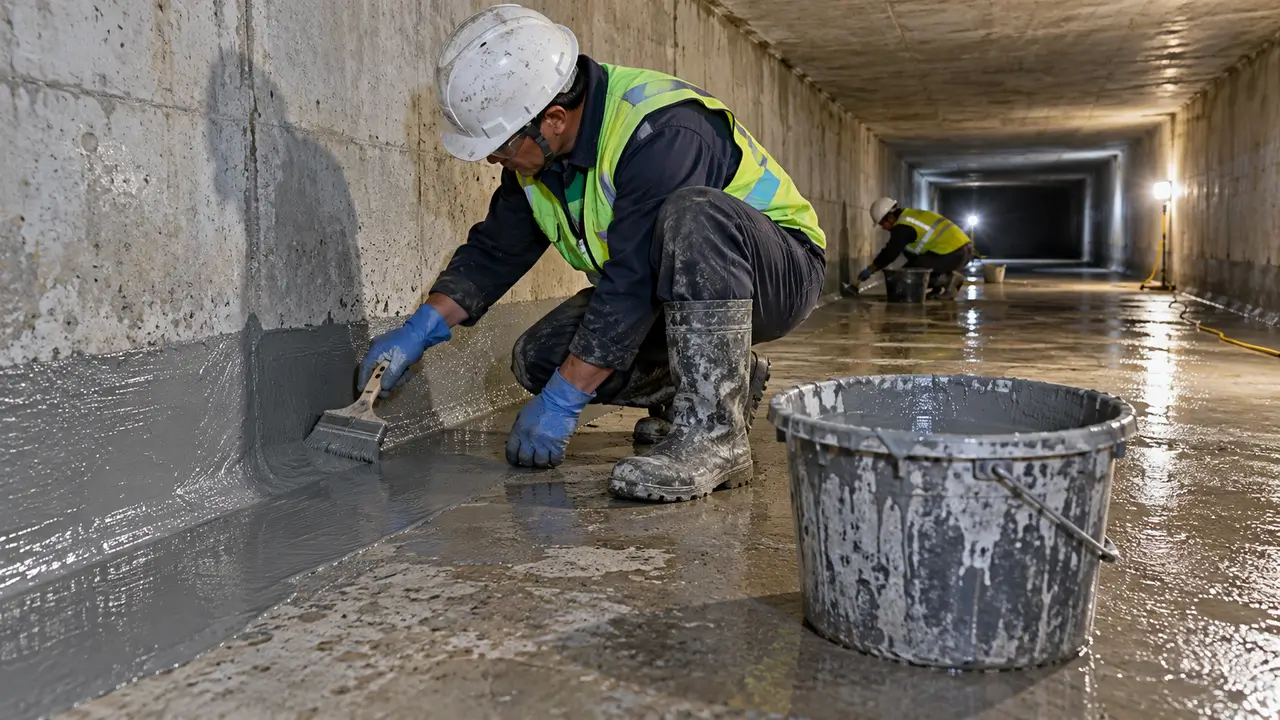
Shotcrete applied immediately after tunnel excavation operations ensures ground stability while laying the groundwork for the waterproofing layer to be spread over a smooth surface. Irregularities on the shotcrete surface are sealed with special mortars to prevent membrane punctures. This integration requires flawless layering in tunnel engineering.
The steps considered during secondary lining integration are:
- Stabilization of the excavation surface and shotcrete application.
- Elimination of surface roughness and application of leveling mortars.
- Spreading the geotextile protection layer and insulation membrane.
- Placement of load-bearing steel reinforcement and final layer concrete pouring.
Each of these steps represents critical engineering operations that directly affect the lifespan of the insulation and is executed with great precision.
Joint Details and Waterstop Applications
Construction joints and movable or fixed connection points of tunnels and underpasses are critical areas where water leaks occur most frequently. PVC or rubber-based waterstops specially produced for the insulation of these points are used. Placed in the middle of the joint during concrete pouring, these bands adapt to the movements of the structure and block water passage.
The following table details waterstop types and their application areas:
| Waterstop Type | Material Structure | Application Location |
| Internally Placed Band | PVC / Rubber | Construction joints and expansions |
| Externally Applied Band | Elastomeric Rubber | Tunnel outer surface joints |
| Swelling Bands (Bentonite) | Sodium Bentonite | Cold joints and pipe penetrations |