


One of the most critical elements determining the lifespan and comfort of a building is its first point of contact with the sky. Roofs serve as armor, withstanding harsh seasonal transitions, scorching sun rays, and relentless precipitation. A roof that is not correctly isolated allows moisture to seep into the reinforced concrete structure over time, leading to the corrosion of iron reinforcements and the formation of unhealthy mold in living spaces. Therefore, waterproofing is more than a simple construction item; it is a vital line of defense that guarantees the future of your property.
With the advancement of technology, revolutionary solutions have emerged in the world of insulation. We now possess next-generation materials that not only stop leaks but also provide energy savings and protect the structural integrity of the building. Even though the needs of every project vary, specific systems stand out in terms of durability and performance. Detailing the four most efficient options offered by modern engineering to determine the most suitable method for your needs will form the basis of constructing a healthy structure.
1. Liquid Membranes
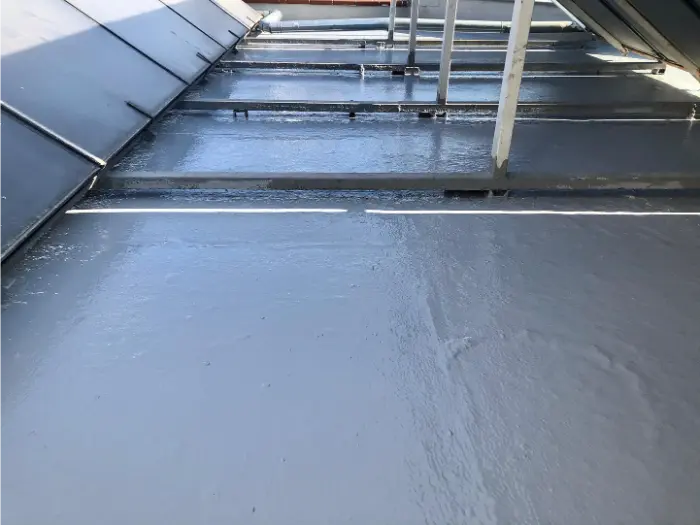
Liquid membranes are modern insulation solutions applied by spreading, which form a seamless, elastic layer on the surface upon drying. Frequently produced from acrylic, polyurethane, or bitumen-based resins, these materials adapt perfectly to the most remote corners of the roof, chimney edges, and water drains due to their liquid form. Ease of application and success in detail solutions make this material indispensable in complex architectural structures.
The greatest advantage of this system is its full adhesion to the surface. Applied with rollers, brushes, or spray machines, the liquid membrane takes on a rubber-like structure after curing. This structure exhibits high flexibility against the natural movements and thermal expansions of the building. Its resistance to tearing and breaking is quite high. Furthermore, thanks to UV-resistant versions, it protects the roof surface like a shield against the abrasive effects of the sun.
Application Principles and Points to Consider:
- Surface Preparation: The ground to be treated must be cleared of dust, oil, and loose particles. The use of a special primer is mandatory on damp surfaces.
- Layered Structure: Instead of a single layer, it is recommended to apply at least two layers, waiting for the drying time between them.
- Reinforcement Mesh: Placing an insulation mesh between layers to increase strength significantly extends the life of the system.
Liquid membranes are frequently preferred for under-tile insulation, especially on terrace roofs and areas with foot traffic. When applied correctly, they reduce the risk of leakage to zero while not adding extra load to the building due to their lightweight nature.
The Water Block product manufactured by Dryfix is a highly adhesive, flexible, and durable waterproofing product. Moreover, you can achieve high-level waterproofing by applying the Izolatör product to roof cladding sheets.
2. Bituminous Based Materials
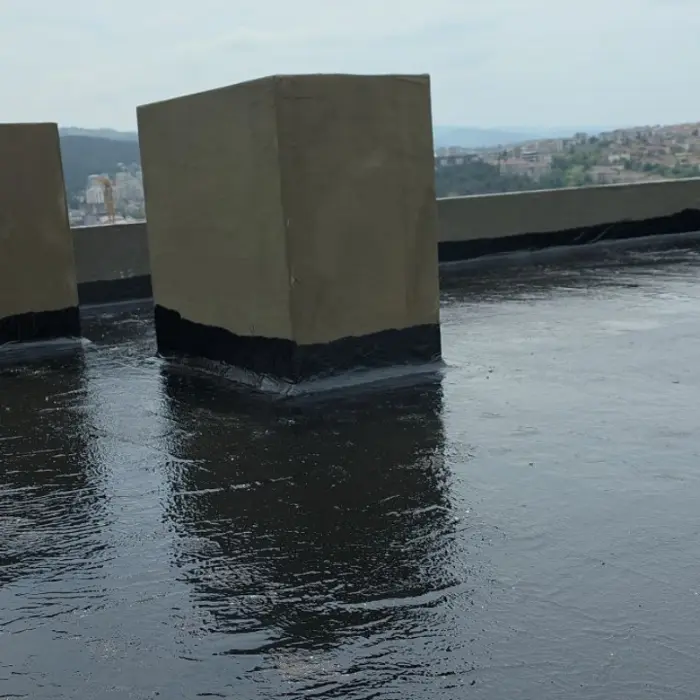
Bitumen is one of the most ancient and reliable insulation raw materials in the construction industry. This black, sticky substance obtained from petroleum refining has an inherent talent for water impermeability. Today, it appears not only in its raw form but in much more resistant forms modified with polymers. While this category finds a wide area of application on roofs, it eliminates the possibility of water seeping under the material thanks to the strong bond it establishes with concrete surfaces.
Bitumen-based waterproofing can be in the form of liquid coatings, roll membranes, or mastics. Each performs excellently in different details. In addition to types applied by melting with heat, cold-applied and self-adhesive versions are available. This diversity allows for the production of flexible solutions according to the technical challenges of projects.
Technical Specifications and Key Advantages:
- Excellent Adhesion: It grips different surfaces such as concrete, metal, and wood very tightly; it is extremely difficult to separate from the surface.
- Thermal Adaptation: Thanks to APP or SBS additives, it does not flow in extreme heat and does not become brittle in freezing cold.
- Economic Solution: In terms of square meter costs, it is a budget-friendly and high-performance option.
- Easy Repair: In case of possible physical damage, it can be quickly repaired with local interventions, ending the hassle of renewing the entire system.
| Material Type | Purpose of Use | Application Method |
| Liquid Bitumen | Primer or Vapor Barrier | Brush / Roller |
| Bituminous Membrane | Main Waterproofing Layer | Torch / Heat |
| Bitumen-Based Mastic | Joint and Crack Repair | Spatula / Trowel |
Protecting these materials from sunlight is of critical importance to maximize their lifespan. A layer of gravel, ceramic coating, or UV-protective reflective paints spread over it prevents the bitumen from drying and cracking over time. Correctly applied bitumen-based waterproofing materials act as an unshakeable barrier at the highest point of the building.
3. Polyurethane Foam
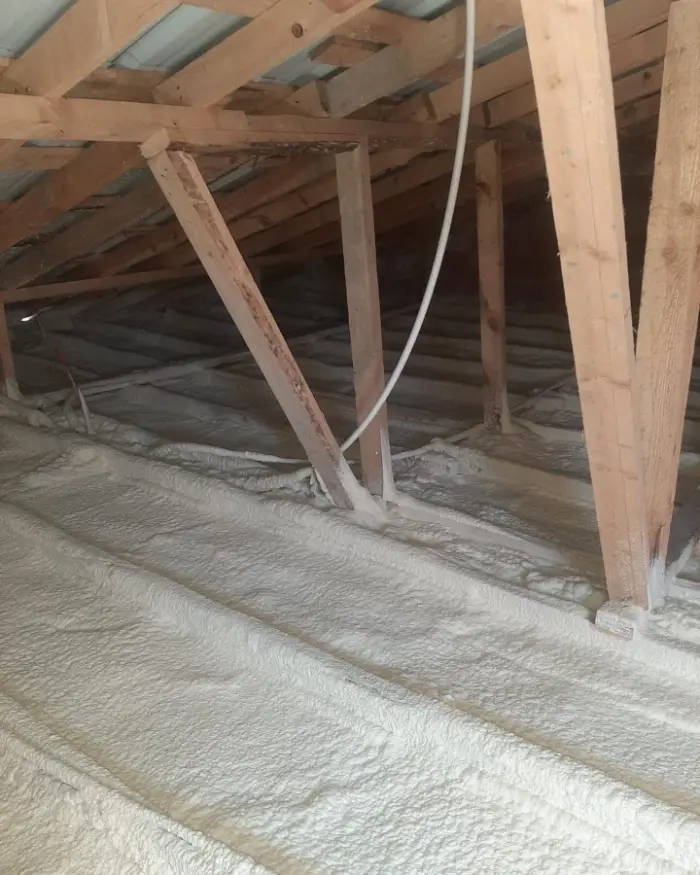
Spray Polyurethane Foam (SPF) is a unique technology that offers both water and heat insulation in a single step. When sprayed onto the roof, it hardens by expanding 30-40 times its own volume within seconds. This feature allows it to completely seal all cracks, gaps, and holes on the surface. Since it forms a monolithic structure, it eliminates the risk of "thermal bridges."
It is one of the most efficient materials in the world in terms of thermal insulation performance. The thermal conductivity coefficient ($\lambda \approx 0.022 \text{ W/mK}$) is remarkably low. This situation keeps the warm air inside during winter while preventing scorching heat from entering in summer. Regarding waterproofing, its closed-cell structure does not allow the passage of water.
Advantages and Application Areas:
- Speed: Very large areas (1,000 $m^2$ and above) can be covered in a single day.
- Lightness: It does not add weight to the building; instead, it adds structural rigidity.
- Adaptation: It adheres 100% to any surface, whether it be trapezoidal sheet metal, concrete, or wood.
In contrast, the weakest point of polyurethane foam is UV rays. When exposed directly to sunlight, it can crumble over time. For this reason, a protective paint or UV-resistant liquid coating must be applied over the foam on exposed roofs. Once this additional protection layer is provided, a lifelong insulation system is achieved.
4. Polyurea Waterproofing Materials
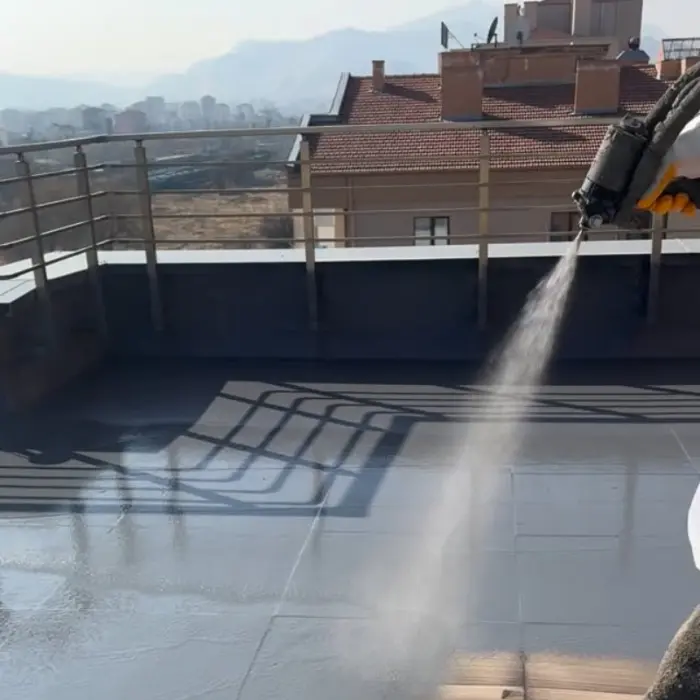
Accepted as the "pinnacle" of the waterproofing world, Polyurea is a high-tech coating system. This two-component material is sprayed hot with the help of special high-pressure machines. Its most impressive feature is that it cures (dries) and becomes ready for service in just 5 to 15 seconds. It is hard and durable enough to support vehicle traffic minutes after application.
Polyurea absorbs structural movements with its stretching capability of up to 400%. Its chemical resistance is so high that it does not lose performance even in the harshest environments, from acid factories to wastewater facilities. When used on roofs, it creates a "rubber armor" that leaves not a single point where water can leak.
Important Note: Polyurea application is a professional process requiring expertise. The calibration of the equipment used and the application temperature directly affect the quality of the result.
Why Should Polyurea Be Preferred?
- Fast Turnaround: It prevents disruption of life in areas such as terrace or parking lot roofs; the area can be opened for use immediately after application.
- Abrasion Resistance: It is more resistant to impacts and friction than concrete.
- Weather Independence: It can be applied even at very low or very high temperatures and is not affected by humidity.
Although polyurea-based waterproofing materials are in a higher segment in terms of cost compared to other methods, they stand out as one of the most profitable investments in the long run due to the definitive solution they provide and the lack of maintenance required for many years.