


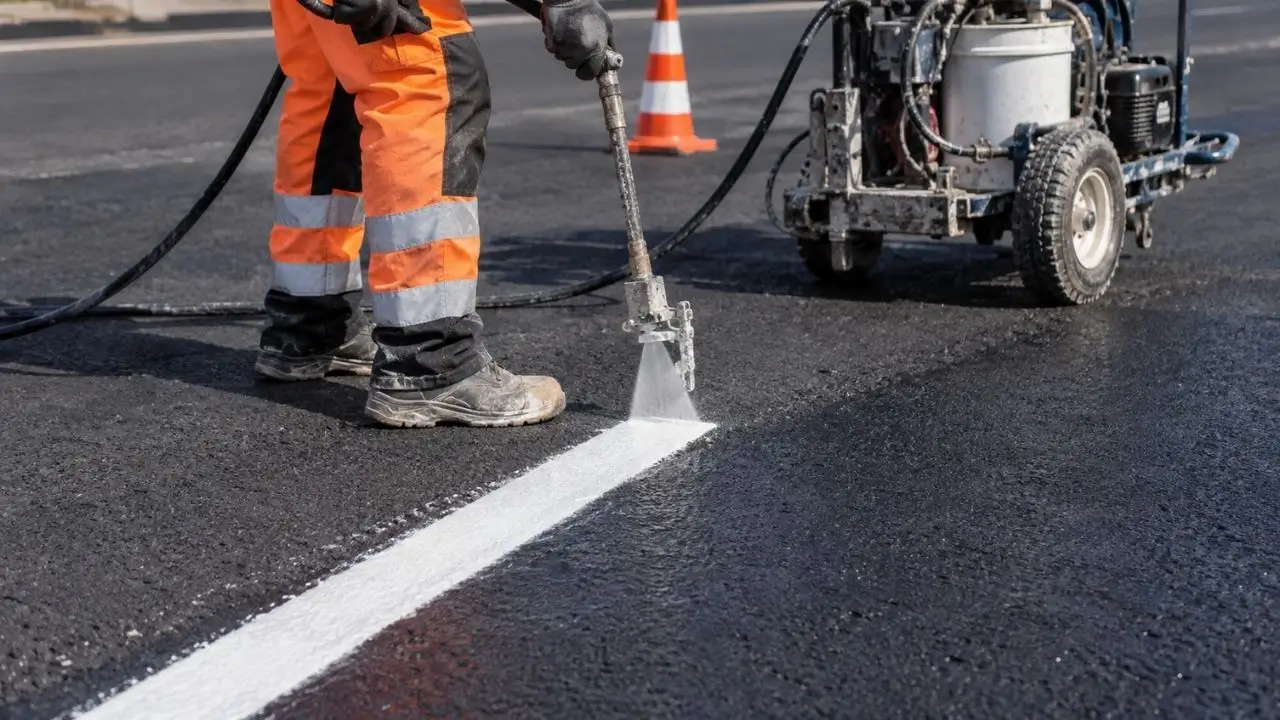
Asphalt is a highly durable floor coating material encountered in a wide range of areas, from parking lots to sports fields, walkways to cycling tracks. Painting these surfaces becomes a mandatory professional requirement to provide an aesthetic appearance, draw traffic routing lines, or protect them against external factors. A correctly selected asphalt paint extends the material's lifespan by protecting the ground from harmful UV rays of the sun, the wearing effect of water, and heavy mechanical abrasion created by intense vehicle or pedestrian traffic. Standard wall or metal paint types can in no way adapt to the flexible, porous, and petroleum-derived structure of asphalt. Therefore, it is strictly necessary to choose industrial chemicals specifically formulated for ground dynamics, providing high adhesion.
A successful and long-lasting ground coloring project does not end simply by purchasing a top-tier quality product; it also dictates executing surface preparation steps suitable for the chemistry in a complete hierarchy. Filling micro-pores on the asphalt surface, eliminating structural roughness, and maximizing the adhesion power between the ground and the paint film are the fundamental keys to permanence. For your project to conclude flawlessly, you must know in full detail which paint formulas integrate entirely with asphalt, which technical steps will be taken for application, and what critical mistakes must be avoided throughout the process.
What Are the Most Suitable Paint Types for Asphalt Surfaces?
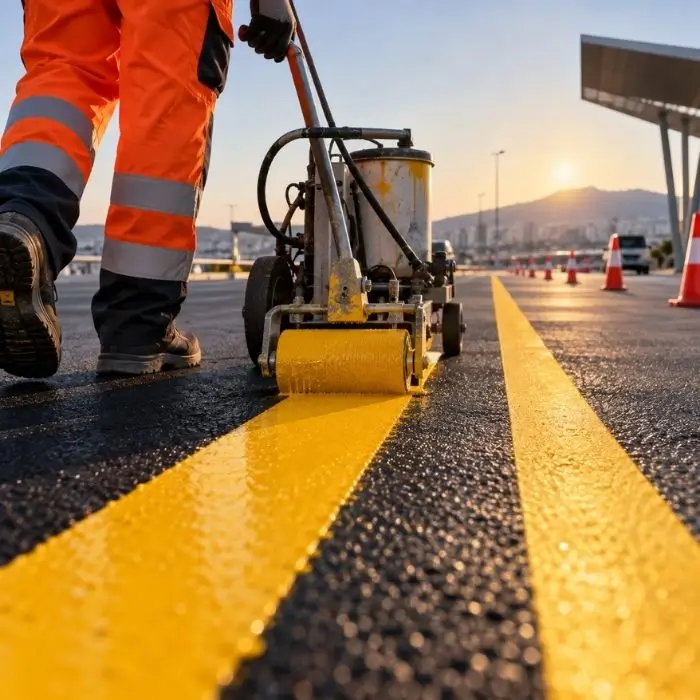
In coloring asphalt surfaces, special polymer-based paints that allow the ground to breathe, possess a flexible structure, and show direct resistance to harsh outdoor conditions are used. The chemical type of the paint to be selected becomes clear depending on the weight of traffic in the area, regional climate conditions, and the targeted net lifespan. Choosing an incorrect product formulation causes the paint to crack in a short time, lose its flexibility, and tear off the surface in layers. Hence, special resin-based formulas capable of integrating into the asphalt structure at a molecular level come to the forefront.
In the table below, you can examine the professional paint types that offer the highest technical performance in asphalt ground projects and their basic characteristics:
| Paint Type | Chemical Structure | Key Features and Proper Usage Areas |
| Acrylic Asphalt Paint | Water-Based Polymer | Dries fast, fully resistant to UV rays. Preferred for cycling tracks, tennis courts, and parks. |
| Epoxy Floor Paint | Dual Component (Resin + Hardener) | Possesses high mechanical and chemical resistance. Used in parking lots with heavy vehicle traffic and industrial facilities. |
| Polyurethane Paint | Polyurethane Resin-Based | Offers maximum ground flexibility. Does not crack, withstands harsh weather conditions. Ideal for helipads and pedestrian walkways. |
| MMA (Methyl Methacrylate) | Resin-Based (Cold Application) | Cures extremely fast. Can be applied at night or in sub-zero cold weather. Applied for inner-city traffic lines and pedestrian crossings. |
Create an impenetrable shield of protection on your floors with Dryfix Traffic Paint, defying tough conditions and the heaviest traffic. Flawlessly gripping any surface, whether concrete, asphalt, or ceramic, this superior formula adds long-lasting and aesthetic value to your spaces. To build safe and smooth grounds that defy the years, place your order immediately and secure your projects with Dryfix quality.
Step-by-Step Asphalt Paint Application and Surface Preparation

The secret to the permanence of a successful asphalt painting process lies in the perfection of surface preparation rather than the chemical quality of the paint. Asphalt, by nature, is highly porous, rough, and highly prone to holding environmental dirt. Microscopic dust, engine oil, or old weak paint residues on the surface directly prevent the new layer from adhering to the ground. To achieve a result that will last for many years and resist harsh conditions, a strict professional application sequence must be followed.
The steps that must be followed uncompromisingly for a complete asphalt painting process are:
- Surface Cleaning: In the first stage, all dust, leaves, and loose particles on the surface are cleaned using high-pressure air compressors or industrial vacuum cleaners. Oil and fuel stains dripping from vehicles are completely purged from the asphalt with the help of non-acidic industrial degreasers. Finally, the surface is washed with a high-pressure water jet and left to dry.
- Crack and Pothole Repair: Structural deformations and damages on the asphalt are unconditionally repaired before painting. Deep cracks are filled with epoxy-based flexible mastics, and wide potholes are filled with fine-grained cold asphalt patches, bringing the ground to zero elevation and leveling it.
- Primer Application: To increase the paint's gripping power on the asphalt, a primer layer with high penetration ability suitable for ground characteristics is applied. The primer saturates the pores, reducing the consumption of the main paint and maximizing adhesion quality.
- Paint Application: When climate conditions are suitable (rain-free and at ideal humidity level), the selected paint is applied to the surface using industrial rollers, stiff-bristled brushes, or airless spray machines. According to the product's technical specifications, the process is completed in two or three coats, strictly adhering to the drying times between coats.
Common Mistakes in Asphalt Painting and Preventive Measures
Technical mistakes made in floor coating and coloring projects yield consequences that are highly difficult to reverse and financially costly. The biggest technical error is painting freshly poured asphalt immediately without allowing a waiting period. The evaporation of volatile petrochemical oils and gases contained in asphalt requires a certain period. When paint is applied to a surface that has not completed its curing, meaning it has not finished its degassing process, the gases trapped underneath push the paint film upwards, causing massive blistering and flaking on the surface. To definitively prevent this problem, newly poured asphalt must be expected to complete its natural chemical reaction for at least three to four weeks, depending on weather conditions.
The second critical mistake is ignoring the ground moisture and ambient air temperature without measuring them. Even the presence of slight moisture trapped on the surface during application instantly stops the paint from bonding to the asphalt at a molecular level. Likewise, on extremely hot summer days, the paint dries much faster than required and cannot penetrate the pores; in very cold weather, the resins in the formula freeze and lose their binding function. To prevent adhesion losses due to such environmental factors, the ground must unconditionally be tested with digital moisture meters, and the application must be carried out in the early morning or late afternoon, within the ideal temperature ranges specified by the manufacturer on the packaging.
Finally, using thinners (cellulosic/synthetic thinner or water) contrary to the formula and in incorrect proportions in order to save on paint consumption ruins the entire chemistry of the coating. Excessively thinned paints lose their covering property, cannot form a shield against the sun's UV rays, and fade away within weeks in the face of friction created by vehicle traffic. Every industrial product has a specific mixture and thinning ratio determined in a laboratory environment. Strictly following the instructions on the technical data sheet located on the box and checking the coat thicknesses with a wet film thickness comb (micron measuring devices) guarantees that the paint exhibits the targeted performance.